
Why the Decorative Mirror Matters in a Residential Scheme
2026-10-30
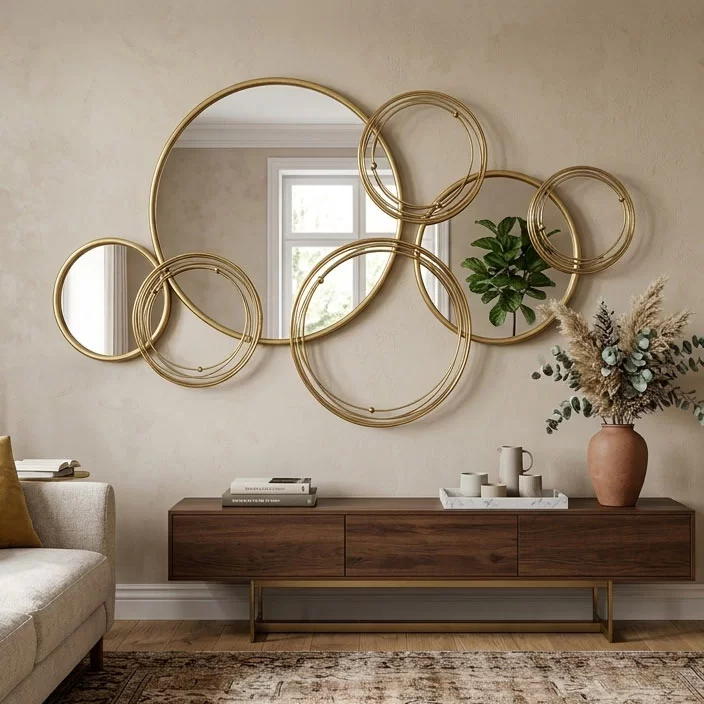
In a carefully designed home, a mirror is not an isolated accessory. It interacts with architecture, furniture, lighting and circulation. A well-proportioned mirror can establish a focal point, introduce a softer contour into a room dominated by straight lines, or reflect natural light into an area that otherwise feels visually flat.
For designers and model-home teams, the practical question is not simply “Which mirror looks attractive?” It is “Which shape, finish and scale completes the composition without overwhelming it?” KALEIFAUN develops decorative mirrors with distinctive profiles and supports project-specific adjustments to size, finish and selected design details.
Where Decorative Mirrors Make the Greatest Impact
Entryways and Foyers: Shape the First Impression
An entryway mirror works with the console, wall lighting and decorative objects to establish the visual language of the home. A tall arched profile can add height to a narrow foyer, while a carved or sculptural frame can introduce character when the surrounding furniture is intentionally restrained.
· Coordinate the mirror width with the console or chest below it rather than the total wall width.
· Use curved or arched frames to soften strong architectural lines and rectangular furniture.
· Repeat the finish of nearby lighting, cabinet hardware or stair details to create continuity.
· Check the reflected view from the front door; the mirror should capture light or an intentional design feature, not visual clutter.
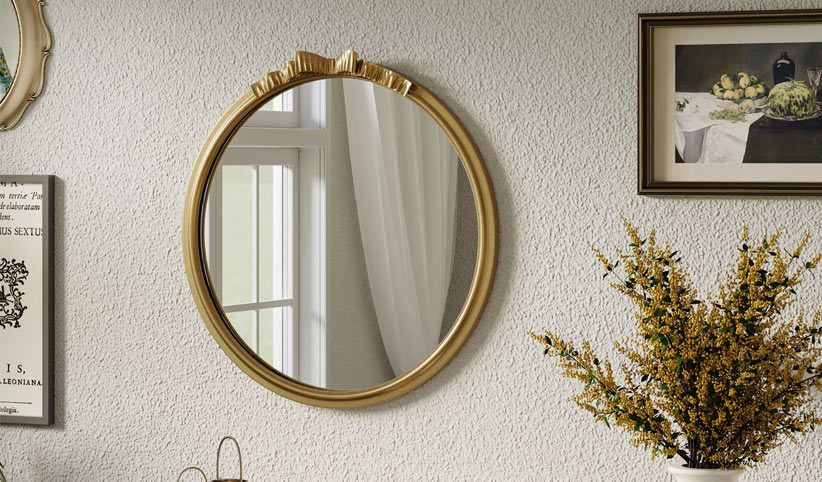
Entryway mirrors should be scaled to the furniture below and the viewing distance in front.
Living Rooms, Sideboards and Fireplace Walls
In a living room, the mirror often becomes part of a larger horizontal composition. Above a sideboard, it should feel connected to the furniture without appearing compressed. Above a fireplace, it should respect the width of the mantel and leave enough visual breathing room around the frame. Round, sunburst and water-ripple forms are particularly useful for interrupting a room that contains many straight furniture lines.
· Use round or radiating forms to create contrast against rectangular sofas, cabinetry and wall panels.
· Avoid reflecting televisions, storage areas or busy circulation zones whenever possible.
· Treat ornate mirrors as the primary decorative element; keep surrounding accessories quieter.
· For large walls, consider the entire composition—mirror, lamps, artwork and furniture—rather than increasing mirror size alone.
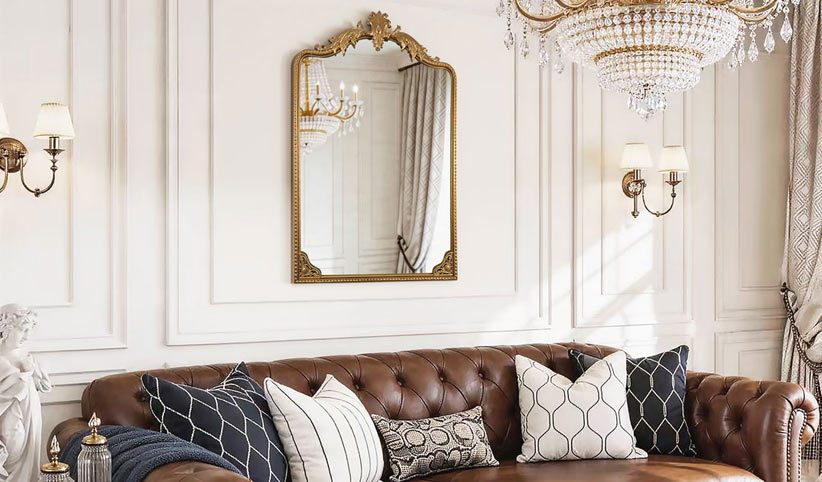
A mirror above a sideboard should complete the furniture composition, not float separately from it.
Bedrooms and Dressing Areas
Bedroom mirrors need to balance practical use with a calmer visual presence. A round bow mirror can soften a wooden vanity, while a slim arched mirror can add vertical emphasis beside wardrobes or dressing furniture. The reflected view is especially important in a bedroom: natural light, textiles and a well-composed wall are preferable to direct reflection of the bed or storage clutter.
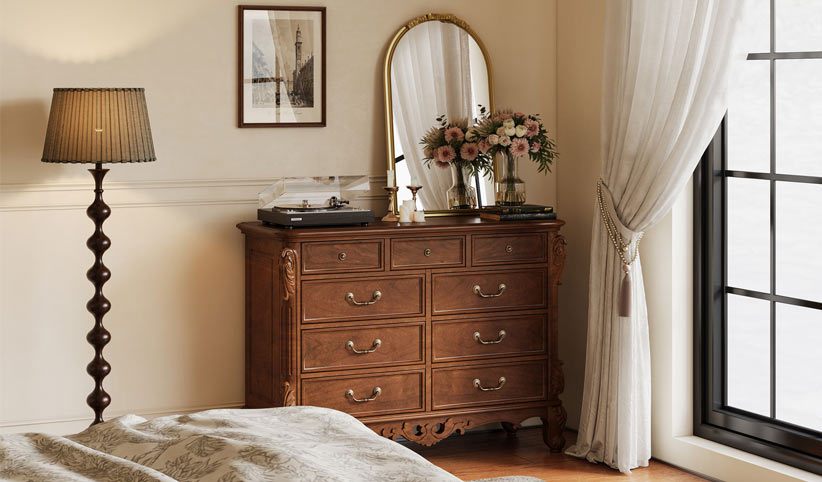
Soft curves and warm materials create a more relaxed dressing area.
Statement Walls and Transitional Spaces
Stair landings, corridor ends and other transitional areas often need a visual destination. Because mirrors do not occupy floor space, they can introduce scale and depth where furniture would interrupt circulation. A vertically proportioned mirror can lead the eye upward, while a compact decorative mirror can add identity to a narrow wall that would otherwise remain blank.
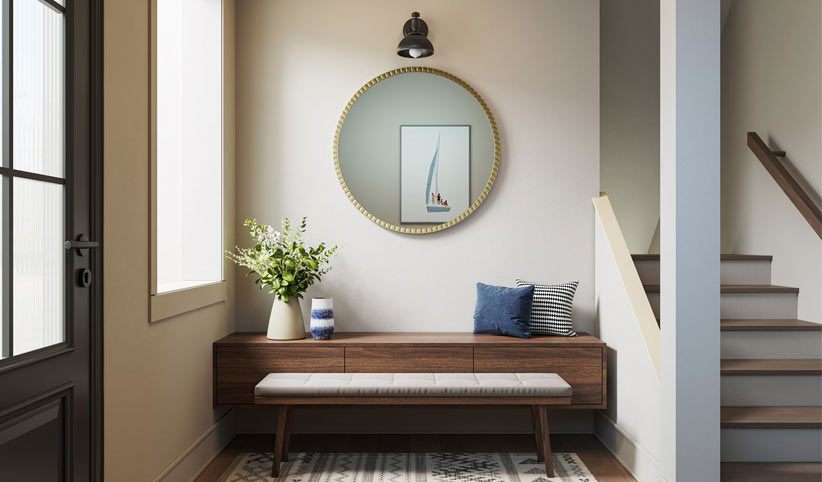
Soft curves and warm materials create a more relaxed transitional space.
Choosing the Right Mirror Scale
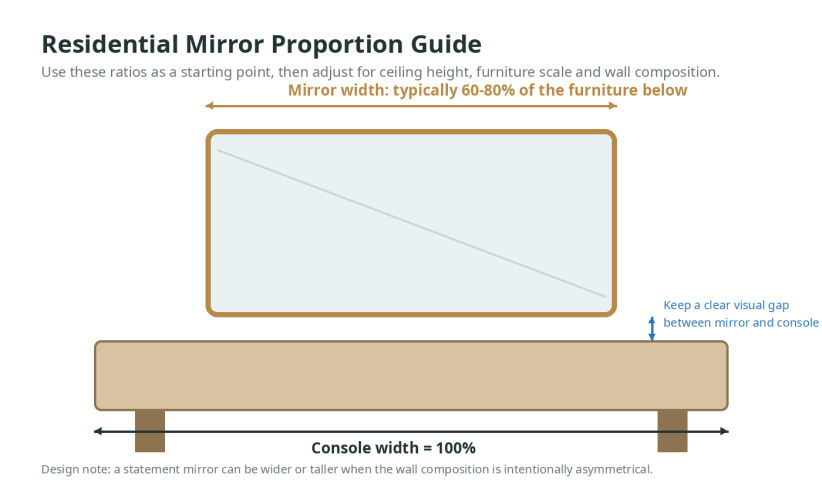
Starting point for mirror-to-console proportions.
A useful starting point is to select a mirror that is approximately 60-80% of the width of the furniture beneath it. The final decision should also consider frame thickness, ceiling height and whether the mirror is intended to act as a quiet supporting element or a statement piece. In a deliberately asymmetrical composition, a smaller mirror can still feel balanced when paired with lighting, artwork or tall decorative objects.
Custom Options for Residential Projects
Custom Dimensions Adjust selected mirror dimensions to suit console widths, vanity layouts, fireplace walls or narrow transitional spaces. | Frame Colors and Finishes Coordinate selected frame finishes with lighting, hardware, furniture and the overall design palette. |
Small-Batch Project Orders Low MOQ options are available for selected styles, helping designers test a concept or furnish a limited number of rooms. | Coordinated Multi-Room Selection Build a consistent mirror story across entryways, bedrooms, bathrooms and shared living areas without repeating one identical design everywhere. |
Who This Solution Is For
· Interior designers developing premium residential projects
· Model-home and home-staging teams
· Residential developers furnishing show units
· Boutique home décor retailers curating distinctive collections
· Design studios requiring custom dimensions or coordinated finishes
Concept Application: Model-Home Entryway
| Project Type | Premium model-home entryway |
Design Direction | Warm transitional interior with brass lighting and dark wood furniture |
| Space Challenge | A narrow wall above a console needed stronger vertical presence without blocking circulation |
| Recommended Solution | A slim arched mirror with a refined gold finish, sized to remain narrower than the console |
| Expected Design Result | A clearer arrival focal point, a more balanced console composition and additional reflected light |
Need Help Selecting the Right Mirror? Send the project dimensions or rendering and receive a focused recommendation instead of an oversized general catalog. [ Get a Mirror Recommendation ] [ Request Project Pricing ] |