
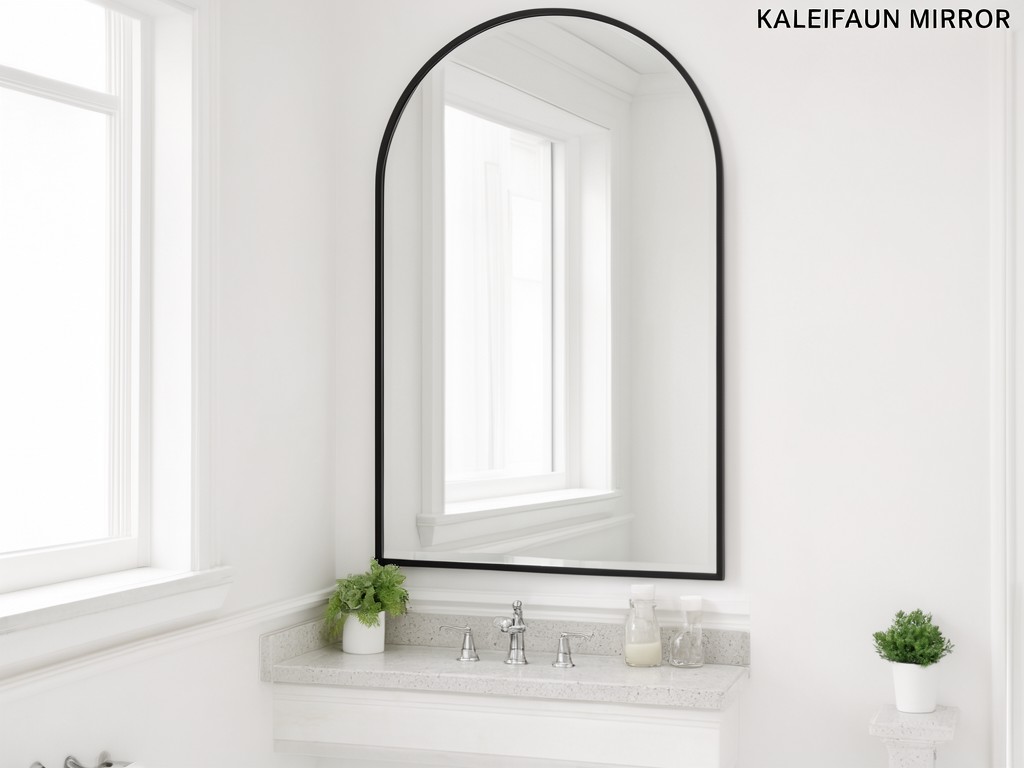
Affordable Cost-Effective Arched Bathroom Mirror Factory: What Buyers Should Check Before Ordering
An arched top gives a bathroom mirror a softer outline, but the curve also affects glass yield, edge finishing and carton design. For importers and distributors, the useful cost measure is not the lowest factory price; it is the cost per saleable mirror after damage, returns and installation complaints.
Academy and club buyers specifying changing-room washrooms face a different version of the same problem: frequent use and humid air can expose weak edge protection or inconsistent mounting details. Confirm the drawing, coating option and packing method together before comparing quotes.
Materials and Construction Trade-offs
A mirror’s appearance depends on the glass, reflective coating, protective paint and finished edge working as one assembly. A lower material price may be reasonable for a dry, low-use room; it is less attractive if exposed edges or coating defects lead to replacements.
| Construction option | What changes in use | Cost and selection point |
|---|---|---|
| Standard silvered mirror with protective backing paint | A common choice for general bathroom use when the glass edges are covered or kept away from persistent moisture. | Usually the lower-cost specification. Confirm the coating system and edge protection for the intended installation. |
| Copper-free silvered mirror with protective backing layers | An option for projects where coating resistance to humid conditions is a priority; performance still depends on edge finish and installation exposure. | May add material cost. Compare it against the expected replacement and return cost, not just the purchase price. |
| Optional safety backing film | Can help retain fragments on the backing if the mirror breaks; it does not prevent breakage or replace suitable installation support. | Adds a material and application step. Specify it where the project risk assessment or sales channel calls for it. |
Glass thickness commonly falls within 3–6 mm, subject to mirror size, support and design. Thicker glass adds mass and freight cost; choosing it without checking the mounting method may raise cost without addressing the actual failure point.
Construction Method and Its Effect on Consistency
Balance and load analysis shows why a stable outline matters: small differences in arch height or width can shift the mirror’s visual alignment and complicate wall mounting across a project. A controlled sequence typically cuts the glass to the approved profile, finishes the perimeter, cleans the surface, applies the reflective coating and protective layers, then adds the specified backing or hardware.
The curved profile needs its own dimensional check; a straight-edge check alone will not catch a flattened crown or uneven shoulders. Cutting templates and setup references help repeat the approved arch. For repeat orders, retaining the signed drawing and sample reference reduces the risk of a quiet profile change.
Cost rule: A new arch dimension may require a new cutting setup and can change sheet nesting yield. Grouping repeat sizes improves planning; frequent small runs can carry more setup cost per mirror and may extend the production schedule. Ask the factory to separate one-time setup costs from recurring unit price.
Specification Range and Customisation Limits
Consistency depends on a complete drawing, not a nominal size alone. State overall width and height, arch radius or profile coordinates, glass thickness, edge finish, coating choice, mounting details and dimensional tolerances. Confirm the measurement points for the arch before sample approval.
- Glass thickness is selected against panel dimensions, handling and support; it is not a substitute for a suitable mounting arrangement.
- Edge options may include polished or ground finishes, depending on whether the perimeter remains visible or sits inside a frame.
- Hardware, cut-outs and backing details should be fixed on the approved drawing because late changes can affect both processing sequence and packing.
Custom dimensions can be made within the factory’s equipment and sheet-yield limits. Very wide arches, narrow shoulders or multiple cut-outs may increase offcut, handling difficulty or reject risk, so request a manufacturability review before confirming a target price.
Assumptions Buyers Should Stop Making
The interface between parts determines whether a mirror arrives ready to install or becomes a site complaint. Price comparisons that omit the installation environment, edge exposure and carton protection often move cost out of the quote and into returns.
| Room or handling condition | Complaint seen after delivery or use | Specification to confirm |
|---|---|---|
| Humid washroom with exposed perimeter edges | Dark marks or deterioration that begins near an edge. | Coating system, edge finish and whether the installation covers or seals the perimeter. |
| Shared changing-room washroom with repeated daily use | A loose mirror, chipped perimeter or inconsistent fit across units. | Panel dimensions, finished edge, mounting points and compatibility with the specified wall support. |
| Long-distance export with mixed-carton handling | Corner or edge breakage despite an intact outer carton. | Individual separation, edge and crown cushioning, carton strength and pack orientation. |
A safety backing film does not make an untreated mirror unbreakable. Nor does thicker glass automatically solve a coating problem. Match the specification to the reported failure mode, then verify the proposed remedy in the sample and packing trial.
What Can Be Customised and What Cannot
A buyer can usually specify overall dimensions, arch profile, glass thickness, edge treatment, coating option, backing, hardware, logo marking and carton presentation. Each addition has a process cost: unusual profiles may reduce nesting yield, while custom hardware or branded packaging can add purchasing and setup steps.
Production cannot remove the physical limits of glass cutting, edge finishing, coating capacity or safe handling. A very tight radius, thin glass on a large panel, or hardware placed close to an edge may need revision. Ask for a drawing review before artwork or retail packaging is final.
Lower Setup Cost
Repeat a proven size, profile and pack format. Larger consolidated runs can spread setup and packing preparation across more saleable units, although the order still needs to fit the factory schedule.
More Configuration Changes
Multiple profiles, hardware sets or printed cartons divide order volume into smaller runs. That can raise unit cost and complicate lead-time planning, even when total order quantity is unchanged.
How Consistency Is Held Across Batches
Batch control starts with an approved reference sample and a drawing that defines the arch measurement points. During production, checks can cover overall dimensions, profile symmetry, edge finish, visible coating condition, backing adhesion and hardware position. The buyer should agree on inspection points and acceptable appearance before the order enters full production.
A practical inspection also looks for distortion in the reflected image and damage around the crown, where poor handling can go unnoticed in a face-only check. Record the lot, size and packing configuration so a later complaint can be traced to the relevant production batch rather than treated as an isolated anecdote.
Tooling amortisation is most favourable when approved profile references remain in use for repeat orders. A changed arch or hardware layout may require fresh setup and sample confirmation; agree whether that change resets the sample and production schedule before placing a reorder.
Packing, Marking and Freight Configuration
Arched mirrors need support at the perimeter and crown, plus separation that prevents glass-to-glass contact. Packaging should match the shipping route: parcel delivery, palletised freight and mixed-size container loads create different movement and compression risks. Approve the carton structure and orientation with the mirror sample, not as a separate afterthought.
- Set the unit count per carton and pallet, then check total packed dimensions against the importer’s freight plan.
- Mark carton orientation, fragile handling and product identification as required by the receiving and retail process.
- For branded cartons, supply approved artwork, label content and barcode placement before print preparation; late revisions can affect release timing.
A packaging change can reduce breakage but increase cube and freight cost. Compare the landed cost per saleable unit, including carton volume and expected transit handling, before selecting a pack format.
Review Your Mirror Specification Before Ordering
Send the dimensioned arch profile, glass and coating requirements, mounting details, order volume and destination packing needs for a specification review. A factory-side review can identify profile, yield and freight trade-offs before the quotation and sample are approved.
Request a specification review with your target order quantity and repeat-order plan to compare unit cost and production timing.







