
Custom arched bathroom vanity mirrors Suppliers: Specification, Ordering and Quality Notes
The limiting factor is rarely the headline specification. In bathroom use, complaints often start with a chipped edge, moisture reaching the mirror backing, or mounting hardware that does not match the wall layout. A thicker glass build can reduce flex during handling, but adds weight and freight cost; the right choice depends on mirror size, installation method and packaging route.
For distributors and retail buyers working to a launch date, the decision rule is to approve the full configuration early: finished dimensions, arch profile, backing, mounting points and carton plan. A late change to any of these can affect material preparation and packing schedules.
Scope of Supply and Physical Form
Supply typically covers a made-to-order mirror panel with a curved upper profile, finished edges and a protective backing layer. Mounting hardware, frame and retail packaging can be quoted as part of the item or handled as separate options. Confirm the intended orientation and mounting method before production; a visually symmetrical arch does not guarantee that the hardware layout is reversible.
Glass Panel
Common builds use 4–6 mm mirror glass. The selected thickness affects panel mass, edge handling and the fixing system.
Profile and Edge
The arch is cut to the approved width, height and crown shape. Polished or ground edges suit different price points and handling requirements.
Mounting
Hangers, brackets or a frame-mounted fixing system need to match the panel mass and the buyer’s wall-installation plan.
Material Options and Their Trade-offs
Copper-free silver mirror is a common choice for bathroom ranges where humidity exposure is expected. The coating system and backing paint protect the reflective layer, but they cannot compensate for standing water or an unsealed, damaged edge. Confirm the intended room conditions and cleaning practices when selecting the backing specification.
A frameless panel keeps the silhouette visually light and avoids frame-finish variation between batches. An aluminium frame adds edge coverage and can simplify the mounting detail, but increases packed dimensions and adds finish and colour matching to the approval process. For either build, a safety backing film can help retain fragments after breakage; it does not prevent the glass from breaking.
Edge-care rule: Specify edge finishing and backing coverage together. A polished edge improves touch and appearance, while sound backing coverage helps limit moisture access; neither makes a chipped edge suitable for installation.
Measured Performance in Real Use
Retail complaints tend to cluster around fit, edge damage and the backing rather than the nominal glass thickness. A small mismatch between the quoted overall height and the installed wall space can leave the arch too close to a light fitting or cabinet. Agree whether dimensions refer to the widest point and the total height, and record the arch profile on the approved drawing.
Weight affects both fixing choice and freight protection. As a planning estimate, 5 mm glass weighs about 12.5 kg per square metre before the frame, film and hardware; the final packed unit weighs more. If a mirror is large or shipped through several handling points, the buyer should price the added protection against the cost of damage claims and replacement shipments.
Optical appearance also depends on panel flatness, wall condition and how the mirror is fixed. Uneven support or uneven pressure at the mounting points can distort the reflected image or place stress on the glass. For a repeat order, use the approved dimensions, profile drawing, mounting layout and finish sample as the reference set rather than relying on a product name alone.
Matching the Product to the Buyer's Need
For a value-led retail line, a frameless 4 mm build can reduce material and shipping cost when the size and mounting arrangement suit that thickness. A larger mirror, heavier frame or more demanding installation may justify 5 or 6 mm glass and a matching fixing system. Compare the packed cost per saleable unit, not just the glass cost per piece.
Hotel and apartment project buyers usually need a defined mounting detail and repeatable dimensions across multiple rooms. Retail buyers may place more weight on carton handling, shelf or e-commerce packaging, and finish consistency across a range. Where a launch date is fixed, keep the first order close to an approved standard configuration; custom cut-outs, a new frame finish or late artwork changes can add approval steps and disrupt the production sequence.
What Can Be Customised and What Cannot
Width, height, arch geometry, glass thickness, edge finish, backing film, frame colour and mounting arrangement can usually be specified. Feasibility depends on panel size, processing route and the selected mounting system. Lock any holes or cut-outs before glass processing; their location can restrict later changes to the panel or frame.
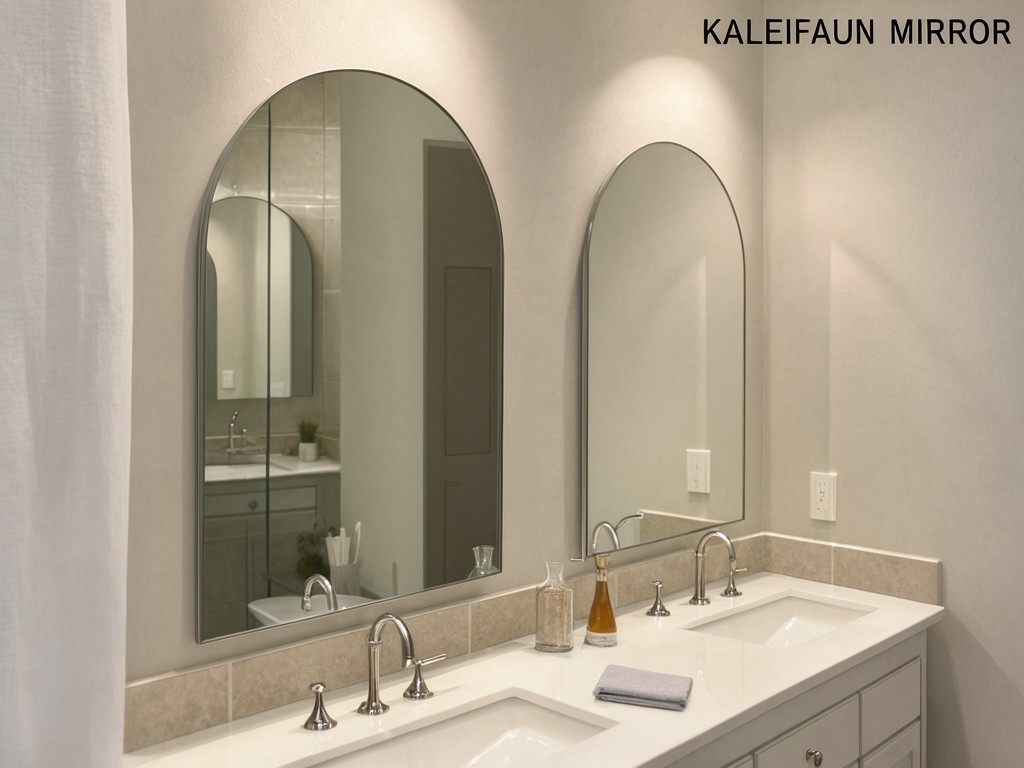
| Item | Typical range or choice | Buyer specification point |
|---|---|---|
| Overall size | Common retail formats are roughly 400–600 mm wide and 600–900 mm high; confirm current production capacity for the requested profile. | State maximum width, total height and arch shape on the drawing. |
| Glass and weight | 4, 5 or 6 mm mirror glass; 5 mm glass is about 12.5 kg/m² before added components. | Select thickness with the panel size, fixing method and packed-weight limit in view. |
| Mirror construction | Silver-backed mirror, with backing paint and optional safety film; frame can be omitted or specified separately. | Confirm bathroom exposure, edge treatment, frame finish and required mounting hardware. |
| Cut-outs and fixing points | Available subject to the glass-processing method and approved layout. | Provide a dimensioned drawing and freeze the position before production preparation. |
Custom work does not remove material limits. Tight arch transitions, narrow edge sections and cut-outs can affect handling and mounting options, while larger panels require more space in the carton and freight unit. Ask for a confirmed drawing and quoted configuration before approving labels or retail imagery.
Packing, Marking and Freight Configuration
Edge chips often occur before installation, at carton movement or during transfer between freight handling points. Specify individual edge protection, face separation and a carton or crate suited to the shipping route. A single-unit retail carton may suit parcel fulfilment, while palletised wholesale orders may need dividers and a stronger outer pack; added protection increases packed volume and freight cost.
Align carton dimensions, gross weight, unit count per pallet and shipping marks before the launch order enters production. Mark orientation and fragile handling clearly, and match carton labels to the buyer’s SKU and language requirements. For repeat shipments, use the same pack specification and pallet pattern wherever the destination and carrier conditions allow it.
Care, Storage and Service Life
Keep cartons dry and store them upright in the orientation marked on the pack, with stable support and no load pressing against the mirror face. Avoid sliding unprotected panels across one another; trapped grit can scratch the reflective surface or damage the edge coating.
After installation, clean with a soft cloth and a mild glass cleaner, then dry the perimeter rather than allowing liquid to collect at the bottom edge. Avoid abrasive pads and harsh cleaners that can attack the backing or frame finish. Good ventilation and dry edges reduce the conditions that lead to backing deterioration, but service life still depends on installation, cleaning habits and room humidity.
For a specification review tied to your launch schedule, send the target dimensions, arch drawing, mounting plan, destination market and required packing configuration through our contact page. Confirming those details before order placement helps keep production preparation and freight planning aligned.







