
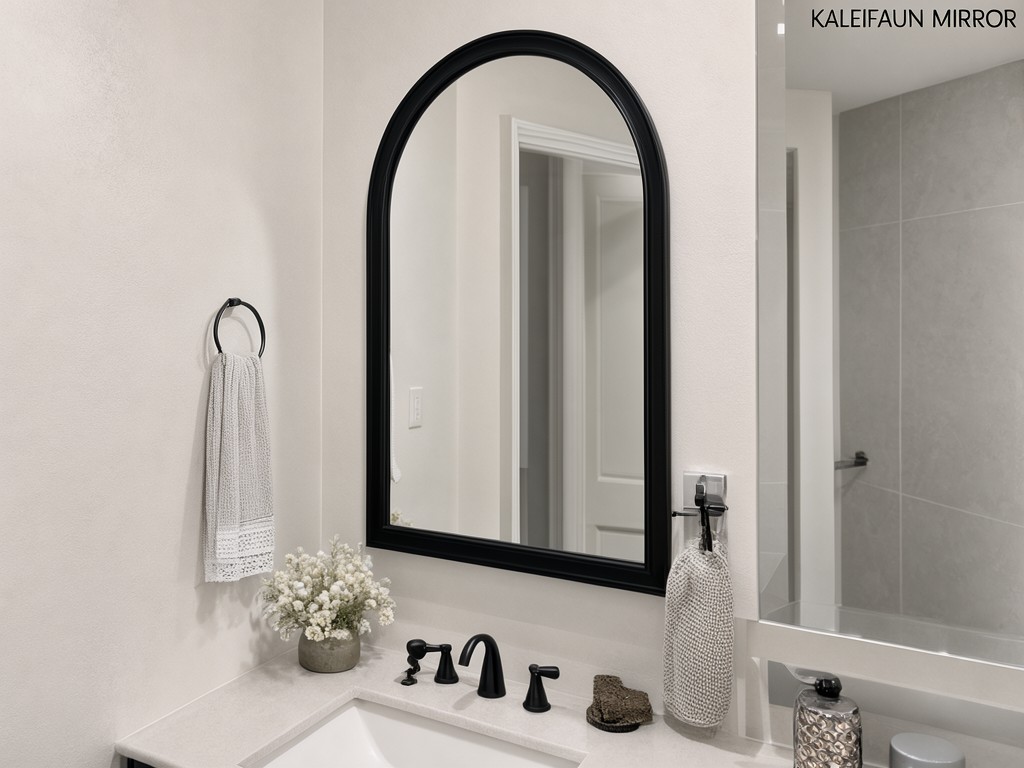
custom arched black bathroom vanity mirror factory: Specification, Ordering and Quality Notes
Replacement rate, not unit price, sets the real cost of a vanity mirror programme. Breakage in transit, a frame finish that varies between batches, or a mounting layout that does not match the site can erase the saving on a lower-priced stock item. A qualified second source should hold the approved dimensions and appearance while giving buyers a practical route to control reorder cost.
Design Constraints Behind the Specification
| Construction choice | Typical specification basis | Cost and service implication |
|---|---|---|
| Mirror glass | Commonly 4 mm or 5 mm, subject to size and mounting design | Thicker glass adds mass and freight cost; it may suit larger panels where handling and support need more rigidity. |
| Arched frame | Formed steel or aluminum profile; specify face width, return depth and arch radius | A repeatable bending setup reduces profile variation across production runs. A new radius or section may require a dedicated forming jig. |
| Black finish | Powder-coated metal, with colour and gloss confirmed against an approved sample | Finish selection affects appearance, process sequence and touch-up options; approve the visible face and edges together. |
| Wall attachment | Keyhole slots, brackets or another agreed mounting layout | Slot position and fastener access must match the installer’s wall conditions. Confirm the supplied hardware and wall type before release. |
Site returns often trace back to details that were absent from the purchase drawing: overall height measured to the arch crown, frame depth, glass reveal, or the distance between fixing points. Put these dimensions on one approved drawing and identify which face is the viewing side. For projects with several vanity widths, specify whether the arch radius stays constant or scales with the mirror width; those choices produce different silhouettes and forming requirements.
The table gives planning options, not a substitute for a product drawing. Final glass thickness and mounting details depend on panel size, frame support and the intended installation.
How It Is Built and What That Changes
A typical programme begins with the approved outline and glass size. The factory cuts the mirror blank, processes the edges, applies the backing system, forms the metal frame to the agreed arch, and coats the frame before final assembly. The exact order can vary with frame design and attachment method, but the glass edge must remain protected from contact with metal during assembly and packing.
Process rule: settle the arch radius, frame section and fixing layout before the first production batch. A forming jig is usually less costly than a large mould, but changes after jig approval still create setup time, sample review and material loss.
For black frames, powder coating gives a consistent opaque finish over formed metal when the part geometry and coating access are suitable. Tight returns, corners and concealed brackets need review on the sample because coating coverage and visible edge build can differ from a flat coupon. A change in frame profile after finish approval can also change the perceived gloss and shadow line around the glass.
Where This Product Beats Standard Alternatives
Cheaper stock options fail at the worst point in the season: during a bathroom renovation handover, a hotel room refresh, or a multi-unit installation where a replacement must match the original opening. A custom arch and fixed black finish reduce the chance that buyers need to source a visually different substitute after damage or a late project change.
Custom Programme
A controlled drawing, approved finish sample and repeatable forming setup support matching reorders. Tooling and setup costs are spread across volume, so the cost per unit generally improves as the same size and radius repeat.
Off-the-Shelf Alternative
Stock can be economical for small, immediate requirements when its dimensions and finish already fit. Buyers give up control over radius, frame depth, fixing position and repeat availability, which can add site adjustment or replacement expense.
For second-source qualification, compare landed cost rather than factory price alone. Include protective packaging, replacement handling, freight volume and the cost of holding a spare unit. A stable drawing also makes supplier transfer easier because the new source can quote against the same geometry and finish sample.
Option Comparison by Usage Level
Frequent room turnover and high-traffic washrooms justify a different specification from a low-volume residential range. The choice should reflect mirror size, installer handling, replacement access and the buyer’s freight profile rather than a blanket preference for heavier construction.
| Usage level | Practical build direction | Trade-off to price |
|---|---|---|
| Low-turnover residential or small-batch retail | Standard approved size, 4 mm glass where suitable, simple rear fixing and a common black frame profile | Lower material and freight weight; confirm that the selected mounting arrangement suits the wall and panel size. |
| Multi-unit residential or hospitality reorders | Locked drawing, documented finish reference, repeatable arch jig and installation-specific fixing points | Initial setup and sample approval take time; repeat runs can reduce setup cost per unit and simplify replacement matching. |
| High-use club or academy washrooms | Review 5 mm glass for larger formats, frame support and protected edges; specify attachment hardware for the actual wall build | Added mass raises handling and shipping requirements. Specify safe removal and replacement access for maintenance teams. |
Glass thickness alone does not determine service performance. Frame support, edge protection, attachment points and carton design all affect the risk of damage before installation and in use.
Usage Scenarios and Buyer Segments
Hotel purchasing teams usually need a repeatable look across guest bathrooms and a route to replace one damaged unit without changing the rest of the room set. Multi-family developers focus on matching dimensions across different vanity widths, predictable installation and carton handling at the jobsite.
Club and academy purchasing managers may specify arched black mirrors for locker-room vanity zones where multiple users share the space and maintenance staff need to remove a unit without disrupting adjacent fixtures. Wholesale buyers and importers often need a narrower core range, private-label packaging and stable repeat specifications rather than a new shape for every order.
For export orders, confirm carton dimensions, corner protection, unit separation and pallet configuration before approving the final pack. Mirror breakage is costly to replace and can delay a full bathroom installation even when the remaining units arrive intact.
Segment-Specific Requirements
Wholesale and Private-Label Buyers
A wholesale range works best when the buyer limits variations in glass size, arch radius and frame section. That keeps forming setups manageable and makes mixed-size shipments easier to plan. Share the carton mark, barcode or retail label artwork with the order specification so packaging changes do not arrive after production release.
Project and Facility Buyers
Project buyers should issue the wall fixing coordinates, finished vanity width and installation constraints with the mirror schedule. A drawing that captures only the outside dimensions leaves room for errors in mounting height, frame projection and installer access. Where a second source is being qualified, compare a physical sample against the original approved unit under the same room lighting.
OEM and ODM Programme Structure
OEM orders typically use the buyer’s drawing, finish reference, packaging layout and brand marks. ODM development can begin from a target width and height, preferred arch profile, frame appearance and mounting preference; the factory then prepares a drawing and sample for approval before volume production.
- Send overall dimensions, arch radius or reference profile, frame section, glass thickness preference and mounting coordinates.
- Provide a physical black finish sample or a defined colour and gloss target; monitor the approved reference across reorders.
- Confirm carton marks, private-label artwork, hardware pack and export packing requirements before the production file is frozen.
- Approve one complete sample with the intended glass, frame, finish, fittings and packaging rather than approving separate components only.
Artwork changes are easiest to absorb before packaging materials are ordered. For repeat programmes, keep the approved product drawing and branding files under the same revision reference; that reduces the risk of a correct mirror shipping in an outdated carton.
Capacity, Tooling and Scheduling
Cheaper stock options can shorten the first purchase cycle, but a custom programme needs time for drawing confirmation, jig preparation where required, sample approval and packaging setup. The schedule begins to firm up once the profile, finish, mounting layout and artwork are released together.
Order volume changes unit economics in two ways: fixed setup effort is divided across more mirrors, and repeat batches can reuse approved forming and packing arrangements. A small launch order may carry more setup cost per unit; a larger order may improve unit pricing but require more storage, working capital and freight planning. Mixing several arch radii or frame sections can reduce those volume benefits because each variation adds setup and scheduling complexity.
For a second-source plan, request separate estimates for the initial sample run and repeat production. Share the annual forecast, likely release quantities and acceptable shipment windows so the factory can assess jig use, material purchasing and capacity allocation without relying on a single large order assumption.
To start an artwork-and-branding review, send the product drawing, target order volume, finish reference and packaging files through the factory contact page. The review can confirm which details are ready for quotation and which need a sample or drawing decision first.







