
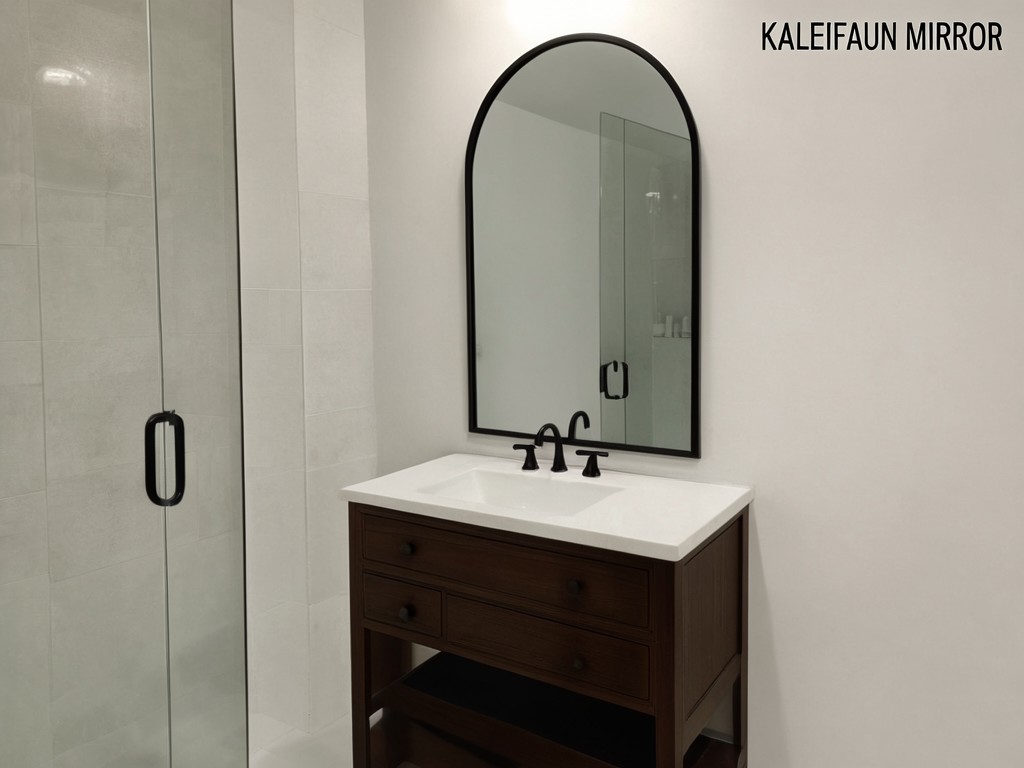
Specifying Custom black arched bathroom vanity mirror Suppliers for Wholesale and OEM Orders
Replacement rate, not unit price, sets the real cost. A stock mirror may look cheaper on a quote, but a mismatch in arch profile, frame finish or mounting can make it a poor substitute when a buyer needs replenishment. Keeping an approved specification intact across production runs reduces redesign work and makes reorder costs easier to forecast.
For wholesale and private-label orders, the main cost levers are glass size and thickness, frame construction, finish, and the amount of dedicated forming or welding setup. The right supplier can work from a stable drawing and sample rather than asking the buyer to redesign the mirror for each run.
Option Comparison by Usage Level
For occasional residential use, a standard formed frame and a common glass specification can keep the unit price down. Multi-unit residential projects and hospitality replacements put more weight on matching the original dimensions and mounting points. A thicker or more substantial frame can add material and handling cost, but may be the better fit where the mirror is expected to see frequent room turnover and replacement needs to be straightforward.
Standard Run
Choose an existing frame profile and a repeatable matte or satin black finish when the order must stay close to a stock construction. This avoids dedicated profile tooling and suits buyers who can accept the supplier’s established size and mounting options.
Private-Label Repeat Order
A fixed drawing, approved finish sample and reserved forming setup make repeat orders easier to align. If the design needs a non-standard frame section or arch radius, the first order may carry fixture or tooling cost; later volume spreads that cost across more units.
Higher order volume can lower the per-unit share of setup and material handling, but it does not automatically shorten the first production schedule. Confirm whether the supplier already has the required profile, bending fixture and finish route before comparing quoted unit prices.
Assumptions Buyers Should Stop Making
| Indicative mirror size | Typical glass and frame basis | Indicative unit weight | Buyer implication |
|---|---|---|---|
| About 500 × 700 mm | Around 4 mm mirror glass with a light formed frame | Roughly 5–8 kg | Confirm the mounting hardware and wall fixing method for the intended installation. |
| About 900 × 1200 mm | Around 4 mm mirror glass with a more substantial frame | Roughly 14–19 kg | Review the hanging points and handling requirements before fixing the specification. |
These are planning ranges, not guaranteed shipping weights. Glass thickness, frame section, mounting parts and the arch-to-width proportion all change the final figure. A size change can also require a new forming setup; it is not always a simple glass-cutting adjustment.
A black finish is not one universal colour match. Buyers should not assume that a supplier’s stock black will match an existing collection, or that changing from matte to satin has no effect on appearance. Approve a physical finish sample against the intended product range before locking the repeat-order specification.
Customisation Options and Their Limits
Keep the interface fixed if the goal is a specification match, not a redesign. Changes to overall size, arch radius, frame depth or mounting position can affect forming fixtures and assembly references. Agree which dimensions are controlled before artwork or private-label details enter the order.
Common OEM adjustments include overall width and height, arch profile, frame material, black finish sheen, glass thickness and hanging hardware. Steel frames can suit formed and welded constructions; aluminum may be selected where a lighter frame is needed, subject to the available profile and joining method. A non-standard cross-section or radius can require dedicated tooling, while a change to finish colour usually affects coating setup rather than the glass process.
- Provide a dimensioned drawing with the outside frame dimensions, clear mirror area, arch radius and mounting-point locations.
- Identify the preferred glass thickness and whether the edge is concealed by the frame or visible in the finished assembly.
- Specify the black finish by sheen and approved physical reference; a colour name alone may leave room for interpretation.
- For private label, submit logo artwork in a usable vector format and state whether branding belongs on the mirror, frame or accompanying identification.
Tooling economics depend on reuse. An existing frame profile and bending setup can keep a modest order closer to stock pricing; a custom profile is easier to justify when forecast volume can absorb the initial setup cost. Confirm ownership, storage and reuse terms for any dedicated tooling before approving a production order.
Usage Scenarios and Buyer Segments
Hospitality procurement teams usually need consistent dimensions and mounting positions across multiple bathrooms, with replacement units that match installed mirrors. For this buyer, an approved sample and controlled drawing matter as much as the black finish. A small change in the arch or frame depth can stand out across a coordinated room set.
Bathroom furniture brands and importers often specify a mirror as part of a vanity range. They need the glass size, frame finish and hanging method to align with the cabinet and intended retail assortment. Holding those interfaces steady across reorders can reduce the need to revise product listings and installation instructions.
Multi-property operators face another trade-off: a lower-cost stock option can increase replacement complexity if its fixing points or dimensions differ from the installed mirror. A specification built around common mounting references may cost more at the outset, but makes service replacement simpler when a single unit needs to be changed.
Working as a Production Partner, Not a Catalogue Supplier
A production partner should be able to carry an approved mirror specification from sample review into repeat manufacture without quietly substituting the frame profile, finish sheen or mounting arrangement. The buyer’s drawing, sample and revision record become the working reference; changes should be agreed before they affect tooling, material purchasing or unit cost.
For OEM orders, the practical division is clear: the buyer sets the dimensions, appearance and installation requirements, while the factory confirms which frame-forming and assembly route fits the order volume. A small run may be best served by an existing profile. Larger forecast quantities can support dedicated tooling when the resulting frame geometry is necessary to maintain the private-label specification.
Tooling review before price lock: send the current drawing, target order quantity, approved finish reference and any existing sample. The review can identify which features use standard production equipment, where a fixture or profile change is needed, and how expected reorder volume affects the unit-cost calculation.
To assess a tooling route or request a quote against an existing specification, send the mirror drawing and target order volume for review.







