
Custom Private Label Arched Gold Mirror Distributor - Bulk Supply and Specification Guide
An arched mirror is judged as both a reflective surface and a visible piece of room furniture. Buyers set the arch profile, frame width, gold tone and mounting position before approving a sample; otherwise, a small change in the curve or frame reveal can make a repeat order look unlike the display sample. Agreeing on a controlled drawing and finish reference is more useful than choosing a low unit price in isolation.
For importers and distributors, the cost that matters is the cost per unit sold after returns, replacements and slow-moving stock. A mirror with a consistent silhouette and a finish that matches its approved reference is easier to list and reorder. Confirming the glass dimensions, frame construction, hanging method and branding artwork before production gives both sides a clear basis for checking each batch.
The Problem Buyers Keep Paying For
Consistency depends on a shared reference for the arch radius, overall dimensions and gold finish. If those details are left to verbal description, visual differences can surface between the approved sample and the replenishment batch, even when the product name and nominal size have not changed.
Retail complaints commonly concern a mirror that appears off-centre, a frame that varies in tone, or a reflective surface with visible distortion. These issues are expensive because they affect the customer’s view of the whole item; a minor finish or alignment discrepancy can prompt a return rather than a discount sale. Record acceptable visual references and inspection points during sample approval, then use the same criteria for repeat orders.
What the Design Has to Balance
Balance and load analysis shows why the glass, frame and hanging points need to be specified as one assembly. A larger mirror adds weight and places more demand on the frame joints and wall fixings; a narrow frame can preserve a light visual profile but leaves less room to conceal the glass edge or accommodate hardware. The right combination depends on the final dimensions and the intended mounting orientation.
The drawing should identify overall height and width, arch geometry, frame-face width, glass thickness, rear clearance and hanger locations. Set dimensional tolerances against the approved drawing rather than relying on a photo, since camera angle can disguise an uneven curve or a change in frame reveal.
Approval checkpoint: Review a physical sample for reflection, edge finish, frame alignment and hanger position. Approve the gold finish under consistent viewing conditions and retain a signed or otherwise identified reference sample for batch comparison.
Material Options and Their Trade-offs
The interface between parts determines how cleanly the mirror sits in its frame and how well the assembly tolerates normal handling. Glass thickness, edge preparation and frame section should be selected together; changing one after sample approval may affect both the visible border and the finished weight.
Mirror Glass and Edge Finish
Standard silvered mirror glass suits many indoor retail and residential uses. Copper-free mirror glass is an option where the buyer prioritises resistance to backing corrosion in the intended environment. A ground or polished edge improves the exposed perimeter; specify whether the edge remains visible or sits behind the frame lip.
Metal Frame and Gold Finish
An aluminium frame can reduce assembly weight, while a steel frame may suit a design that calls for a more substantial section. Powder-coated or plated finishes produce different surface character and cost. Approve a physical finish sample and define the acceptable colour range before branding and bulk production.
Frame material alone does not determine the final feel. The joint design, visible seam, edge coverage and rear hardware affect how the mirror sits against a wall and how finished it looks at close range.
Assumptions Buyers Should Stop Making
A product photo is not a dimensional specification, and a finish name such as “gold” does not define a repeatable colour. Buyers get fewer surprises when the artwork, physical sample and drawing are treated as separate approval items.
- Do not assume that a matching nominal size guarantees the same arch. Record the curve geometry and overall dimensions on the controlled drawing.
- A gold finish shown on a screen is only a visual guide. Compare a physical finish sample before sign-off, especially when an existing furniture range must match.
- Changing glass thickness, frame depth or hanging hardware after approval can change finished weight and rear clearance. Recheck the assembly rather than approving the change by email alone.
- Private-label artwork needs final dimensions, colours and placement. Confirm the logo treatment and product identification before release to avoid late revisions or a label that conflicts with the frame design.
Who Uses It and Where It Matters
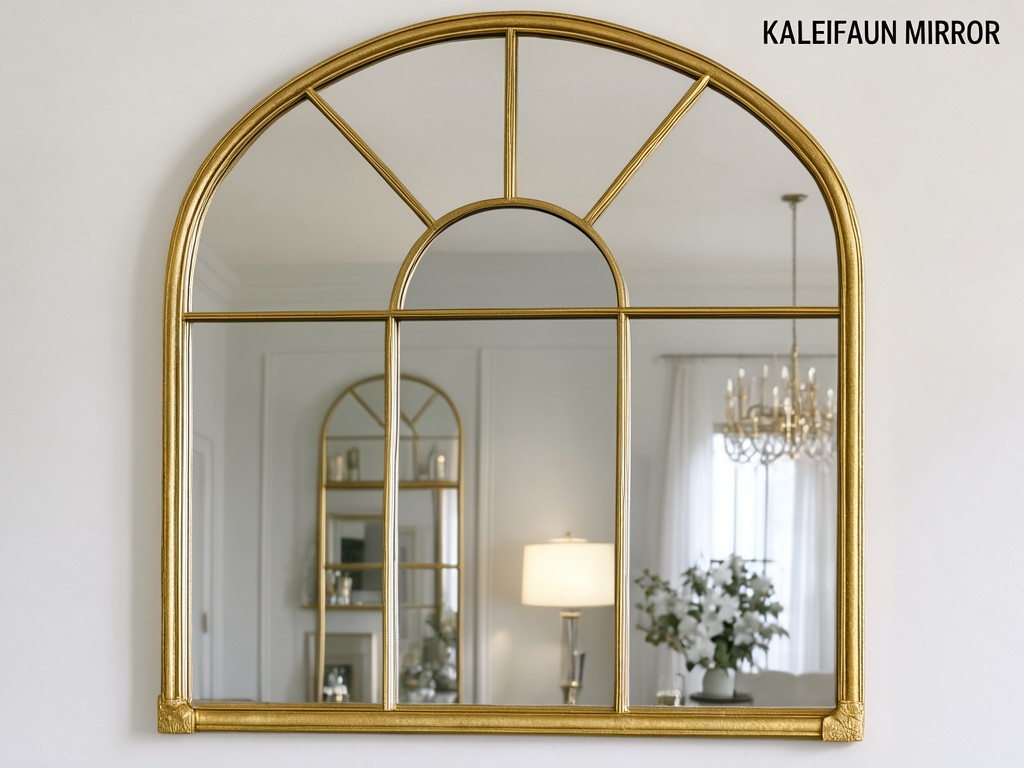
Retail furniture and home décor distributors select arched gold mirrors for customers who want a decorative focal point with a usable full or partial reflection. The product is commonly placed in bedrooms, dressing areas, hallways and boutique retail interiors, where the frame finish and reflected image are visible at close range.
For a multi-store buyer, consistent dimensions matter when mirrors are displayed beside coordinated furniture or installed in repeated room layouts. Hospitality and interior fit-out purchasers may prioritise a specified mounting arrangement and finish match across several rooms. In each case, select the glass and frame for the installation conditions, then confirm the hardware and wall-fixing requirements with the installer.
Volume Planning and Lead Time
Order timing depends on how quickly the buyer closes the drawing, physical sample and private-label artwork. The lead-time plan should begin after those approvals, not at the first price request. Separate stock design choices from custom frame dimensions or finish requirements, since added variations can affect sourcing, setup and the minimum economical production quantity.
| Planning Item | What Sets the Schedule or Quantity | Buyer Approval Needed |
|---|---|---|
| MOQ basis | Frame material, finish batch, mirror dimensions and label configuration. A single specification across the order generally supports a clearer cost-per-unit calculation than multiple low-volume variants. | Confirm the SKU mix, finish choice and branding scope before requesting a firm quantity offer. |
| Sample and approval stage | Drawing revisions, finish sampling and artwork changes can extend the pre-production schedule. | Return consolidated comments and approve the physical sample, drawing and artwork as distinct records. |
| Production lead time | Confirmed after specification approval and material availability; custom finishes or non-standard sizes require schedule confirmation. | Request the committed schedule against the final approved configuration and order quantity. |
For a lower cost per unit sold, compare the full configuration rather than only the quoted mirror price. Fewer finish and size variations can simplify stock allocation, while a defined sample and inspection reference can reduce avoidable disputes on reorders.
Care, Storage and Service Life
In normal indoor use, service life depends on keeping moisture and harsh cleaners away from the mirror edge and backing. Clean the glass with a soft cloth and a suitable glass cleaner; apply liquid to the cloth rather than allowing it to run behind the frame. Avoid abrasive pads and strong chemicals on the gold finish, since surface damage can be visible even when the mirror remains usable.
Inspect the frame joints, rear hardware and reflective surface before installation. Use wall fixings suited to the wall material and the finished mirror weight. For stock held before sale, keep mirrors upright in a dry, protected area and prevent contact between reflective faces; follow the supplier’s handling instructions for the approved configuration.
To review a private-label project, send the target dimensions, reference images, preferred frame and glass options, finish direction, logo artwork and expected order quantity. Request an artwork and branding review before sample approval so placement and product identification can be checked against the final design.







