
Specifying durable arch wall mirror top suppliers for Wholesale and OEM Orders
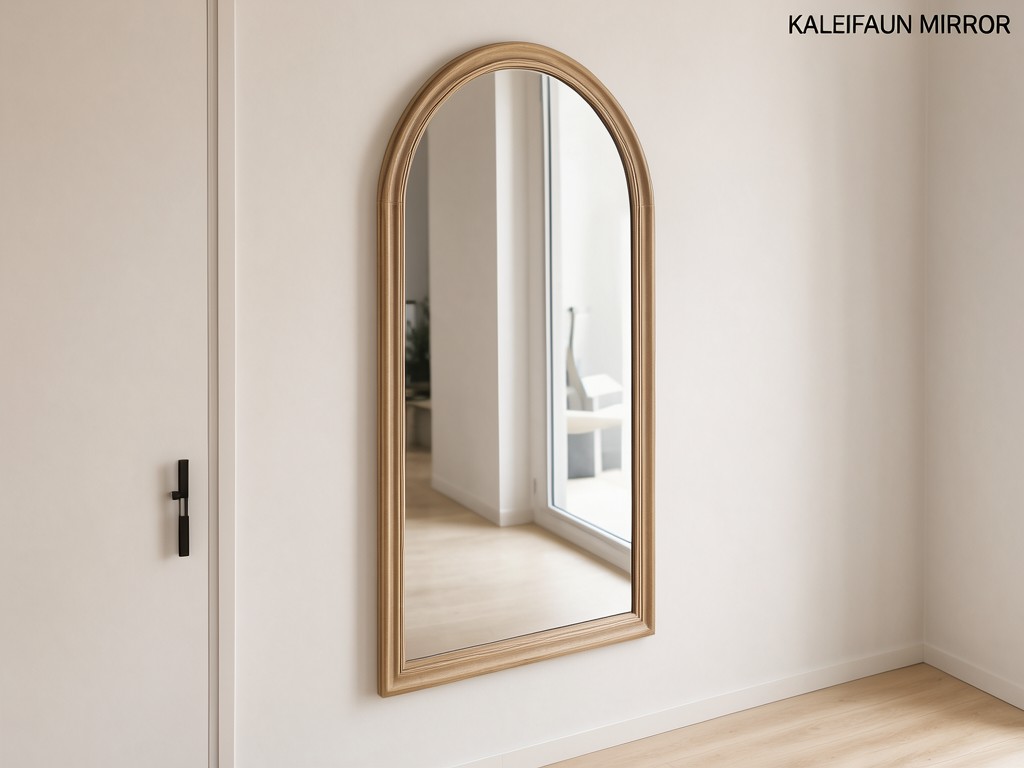
Balance and load analysis shows why an arch mirror can look right in a sample and still cause trouble in a repeat order. A small shift in the arch profile, frame depth or hanging point changes how the mirror sits on the wall. For an OEM buyer qualifying a second source, the specification needs to control the silhouette and the finished-unit weight, not just the glass size.
The practical comparison is cost per accepted unit. A lower quote has little value if frame colour drifts between lots, edge chips appear after transit, or installers need to reposition hardware to level the mirror.
Where Cheaper Alternatives Fall Short
Complaints often start at the arch edge or the hanging points. Inconsistent cutting can leave one side fuller than the other; a weak frame joint can open under the mirror’s weight; and poor packing can turn a clean edge into a chipped edge before the carton reaches a distributor.
- An exposed edge needs consistent polishing. If the frame covers the perimeter, confirm the overlap so small cutting variation does not become a visible gap.
- A thin or flexible backing can allow movement during handling. That movement may stress the mirror near clips, brackets or frame joints.
- A dark, metallic or stained frame finish can vary across batches when the process or colour reference changes. That variation is especially noticeable across paired mirrors and multi-unit retail displays.
For a second-source review, compare the approved sample with a production-intent unit. Match the arch outline, overall dimensions, complete-unit weight, frame finish and hardware position before you assess the quote.
Assumptions Buyers Should Stop Making
Consistency depends on a shared drawing and reference sample, not on the product name. “Arch top” does not define the radius, shoulder transition, frame reveal or whether the bottom corners are square or rounded.
Nor does a stated glass thickness define the finished-unit weight. The frame material, backing, adhesive, protective film and hanging hardware all contribute. Agree on whether the order tolerance applies to glass dimensions, finished outside dimensions or both; otherwise two suppliers can meet their own readings of the specification and still deliver visibly different mirrors.
Set the reference before comparing samples. Record the overall width and height, arch geometry, frame depth, finish reference, hanging-point locations and target finished weight. Confirm which dimensions are critical to fit and which allow production tolerance.
What Can Be Customised and What Cannot
Most design changes are straightforward when they do not alter the glass-cutting layout or the frame tooling. A change to the arch profile, outside size or frame section can affect nesting, material use and packing dimensions, so it may change unit cost and sampling time.
Glass and Edge
Specify glass thickness, mirror backing, exposed polished edge or frame-covered edge, and any safety backing film. Glass choice affects mass and the way the finished mirror must be supported.
Frame and Finish
Choose a frame material and section, then define the colour or surface reference. Painted, stained and metallic-look finishes need an agreed sample so a reorder does not rely on a colour name alone.
Mounting and Pack-Out
Set hardware location, portrait or landscape orientation, protective corners and carton format. The wall fixing must suit the installation substrate; hardware supplied with the mirror cannot compensate for an unsuitable wall anchor.
The arch outline and finished outside dimensions can be changed, but every profile change needs a controlled drawing revision. A finish can be sampled and matched to an agreed reference; exact visual uniformity across different materials or production processes should not be assumed.
Segment-Specific Requirements
Retail assortments need stable outside dimensions and finish tone across a set, since variation is easy to spot when several units hang together. Hospitality and multi-property buyers tend to place greater weight on repeatability, replacement matching and packaging that protects the arch edge through consolidated freight and site handling.
The ranges below are planning guides, not fixed catalogue specifications. Final mass depends on the selected glass, frame and hardware; confirm it from the approved production construction before freight costing.
| Usage level | Common finished size | Indicative finished weight | Typical material direction |
|---|---|---|---|
| Compact retail or bedroom assortment | About 400 × 600 mm | Roughly 3–5 kg, depending on frame and hardware | Mirror glass with a slim wood or metal frame |
| Full-length home retail or apartment fit-out | About 600 × 900 mm | Roughly 7–11 kg, depending on frame and hardware | Mirror glass, safety backing option and reinforced frame joints |
| Large hospitality or design-led project order | About 800 × 1,200 mm | Roughly 12–20 kg, depending on frame and hardware | Thicker or otherwise specified mirror glass with a frame and mounting layout matched to the unit mass |
Ordering, Tooling and Lead-Time Questions
The interface between parts determines whether a mirror arrives ready to hang or needs adjustment. For a second-source order, send the approved drawing, reference sample, finish target, hardware positions, pack-out requirements and carton marks together. A change to the arch profile or frame section may require a new sample and can affect the production schedule.
Which dimensions should the drawing control?
Define glass size, finished outside width and height, arch shape, frame depth and hanging-point locations separately. Mark the dimensions that affect fit or alignment so incoming lots can be compared on the same basis.
Does a new size always require new tooling?
Not always. A size change may use existing cutting and frame processes, while a substantially different arch profile, frame section or joint design may need dedicated tooling or a revised production setup. Confirm the tooling scope and ownership before sample approval.
How do MOQ and lead time change with finish customisation?
A standard frame finish usually gives more flexibility than a custom colour or material. Custom finishes can require a separate sample, colour approval and purchase quantity tied to the finish supplier’s production batch. Ask for MOQ and timing by configuration, not only by mirror size.
What should be approved before the first bulk shipment?
Approve a production-intent sample for arch geometry, finished weight, frame colour, edge treatment, hardware location and packaging. Keep the signed drawing and finish reference with the order record so later batches have a usable comparison point.
Qualifying a second source? Share your target dimensions, current sample or drawing, preferred frame finish and forecast order volume. A project discussion can establish which details need a controlled match and where a cost-saving change is practical.
Discuss your arch mirror specification






