
factory price arched oversized floor dressing mirror exporter - Bulk Supply and Specification Guide
Balance and load analysis shows why a low unit quote can become an expensive mirror program: an oversized panel may flex in transit, while a narrow or light support can leave the mirror unstable in use. Agree the glass, frame, floor support and packing as one specification before comparing factory prices.
For importers and club or academy purchasing teams, the useful comparison is cost per saleable unit. Glass breakage, finish complaints, inconsistent dimensions and replacement freight all affect that figure. A signed drawing and approved sample give production and inspection teams a common reference.
Materials and Construction Trade-offs
Deflection under load governs the choice between thinner glass with a lighter frame and a heavier assembly. Glass thickness, mirror backing, frame section and support geometry should be reviewed together; a change to one can alter both packed weight and stability.
Glass and Backing
Thicker glass adds mass and can provide a firmer panel feel, but raises handling and freight costs. A rear safety film can help retain fragments if glass breaks; it does not make the mirror unbreakable. Specify the mirror coating, backing protection and exposed-edge treatment on the approved sample.
Frame and Support
A metal frame can keep the perimeter section relatively slim, while a wood frame changes the visible profile and finish options. A rear support or floor stand must match the mirror’s height and mass. Confirm the frame finish, joint appearance and anti-tip provision before artwork or retail packaging is released.
Where This Product Beats Standard Alternatives
An arched oversized floor mirror provides a full-length view without the visual break of a smaller wall mirror. Against a standard rectangular floor mirror, the arch is a design distinction rather than a performance upgrade; the value depends on whether the shape and frame finish support the buyer’s retail positioning.
Compared with a wall-mounted mirror, a floor model avoids fixed installation at the point of use, but needs a stable support and careful handling. This trade-off matters in wholesale costing: a stand or anti-tip component adds material and packing volume, while omitting it may create a return or safety complaint. Approve the complete assembly, not just the glass panel.
Size, Weight and Specification Range
Set the outer frame dimensions, visible mirror area and arch profile on a dimensioned drawing. Nominal size alone does not settle the curve, edge reveal or support footprint. The ranges below are indicative; final weight depends on glass thickness, frame material, hardware and packaging.
Overall height
Approx. 1,600–2,000 mm
Overall width
Approx. 500–900 mm
Glass thickness
Typically 3–6 mm
Assembly weight
Confirm from final drawing
| Parameter | Indicative range or option | Agree before production |
|---|---|---|
| Overall dimensions | Height 1,600–2,000 mm; width 500–900 mm | Outside frame size, arch radius or profile, and mirror viewing area |
| Glass | Typically 3–6 mm, subject to size and assembly design | Thickness, edge finish, backing and acceptable visual appearance |
| Frame and support | Metal or wood frame; floor support or wall anti-tip hardware as specified | Material, finish, joint detail, support footprint and included hardware |
| Net weight | Calculated from approved configuration; obtain a packed sample weight for freight costing | Tolerance and whether quoted weight is net, gross or both |
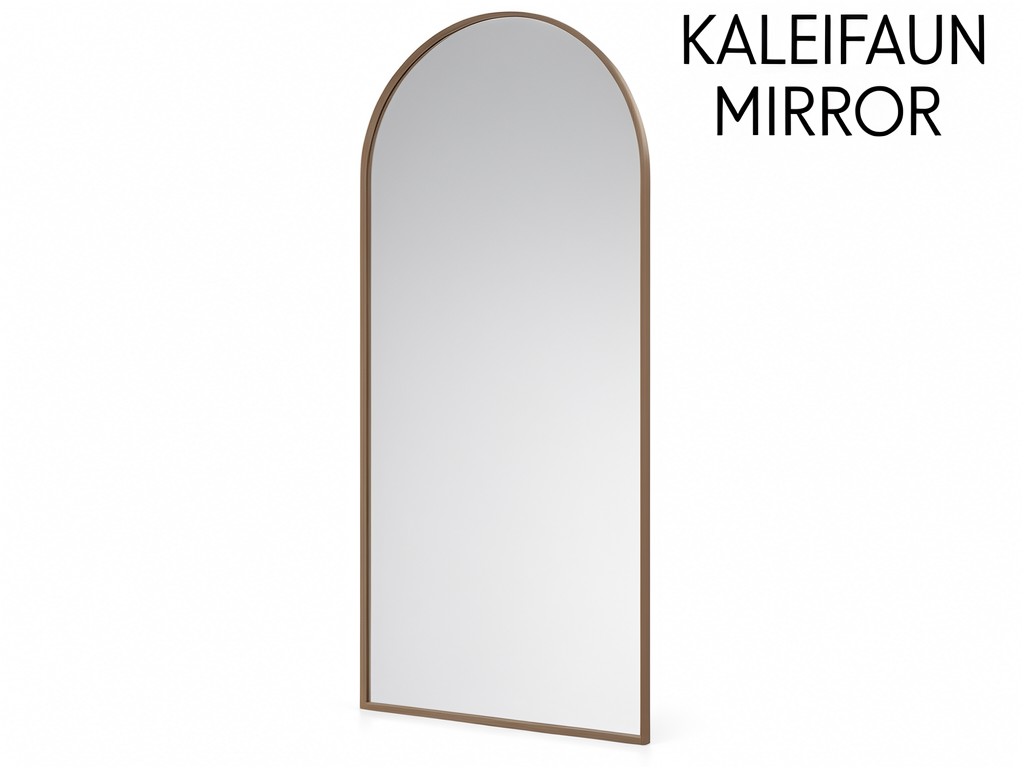
Drawing control: record dimensions, tolerances, frame finish, logo position and packaging marks in the same approval file. A sample signed against that file reduces disputes when the first production lot is checked.
How Consistency Is Held Across Batches
Consistency depends on a controlled reference sample, a dimensioned drawing and written acceptance limits. If an arch profile is judged only by appearance, small changes in curve or frame reveal can pass through as “close enough” and become visible across a retail display. Define measurable points and retain the approved sample for comparison.
| Inspection point | Factory check | Acceptance basis |
|---|---|---|
| Dimensions and profile | Measure overall height, width, frame depth and agreed arch reference points | Approved drawing and stated tolerances |
| Mirror appearance | Visual review for distortion, coating marks, edge damage and surface defects | Approved sample and agreed viewing conditions |
| Frame and support assembly | Check joint fit, finish coverage, hardware presence and support stability | Signed assembly sample and agreed inspection checklist |
| Pack and identification | Verify protective materials, carton marks and batch identification against order records | Approved packing specification and artwork |
Artwork should be approved at actual placement and scale, not only as a digital logo file. For repeat orders, keep the drawing revision, sample approval, inspection record and batch identification linked to the purchase order so a replacement can match the original configuration.
Packing, Marking and Freight Configuration
Oversized glass needs protection at the face, corners and perimeter. A compact carton can lower freight volume, but only if the frame and mirror cannot shift against the internal supports during handling. Confirm carton dimensions and packed gross weight from a finished pack sample before the shipment booking.
- Specify the face protection, corner protection and internal bracing so the mirror is held in place rather than supported at isolated pressure points.
- Agree carton strength and pallet or container loading orientation against the destination route and handling method.
- Approve shipping marks, SKU, barcode, country-of-origin text and retail labels before bulk packing; label positions should not cover handling instructions.
- Request a pack-out photo and a record of carton count, dimensions and gross weight for the shipment file.
A sample pack can add time before order release, but it exposes avoidable freight and damage costs before the full quantity is packed. Changes to glass thickness, frame depth or support hardware require a fresh packed-weight check.
Questions Buyers Ask Before Ordering
What information is needed to quote an arched mirror accurately?
Provide overall dimensions, arch profile, glass thickness, frame material and finish, support style, order quantity and destination. A drawing or reference sample helps clarify visible mirror area, edge reveal and hardware. Quotes based only on outer height and width may not represent the same construction.
Can the factory match a buyer’s frame finish and logo artwork?
Usually, subject to the selected frame material, finish method and production quantity. Send vector artwork with dimensions and placement notes. Approve a finish sample and artwork proof before production; a screen image alone cannot confirm the final colour or sheen.
How should MOQ and lead time be confirmed?
MOQ and lead time depend on glass size, frame material, finish, packaging and any custom tooling or artwork approval. Confirm the production schedule after the drawing and pre-production sample are signed, since design revisions at that stage can affect both.
What should be checked before the first bulk shipment?
Check the finished mirror against the approved sample, review the written inspection limits, and approve the packed sample with carton marks and final dimensions. Keep the signed documents with the order record so any service or replacement request can be matched to the correct batch.
Request a Specification Review
Send the target dimensions, frame and glass preferences, artwork files, order quantity and destination. We can review the drawing, packed configuration and approval steps before quotation so the comparison reflects cost per saleable unit.
Contact us to review your specification






