
oem arched black bathroom vanity mirror wholesale: What Buyers Should Check Before Ordering
Selection trade-off: A slim aluminum frame keeps the mirror easier to handle and less exposed to bathroom moisture; a steel frame gives a firmer, more substantial edge but adds weight and calls for closer control of coating and cut edges. Lock the frame profile, glass thickness, finish sample and hanging method before approving the wholesale order.
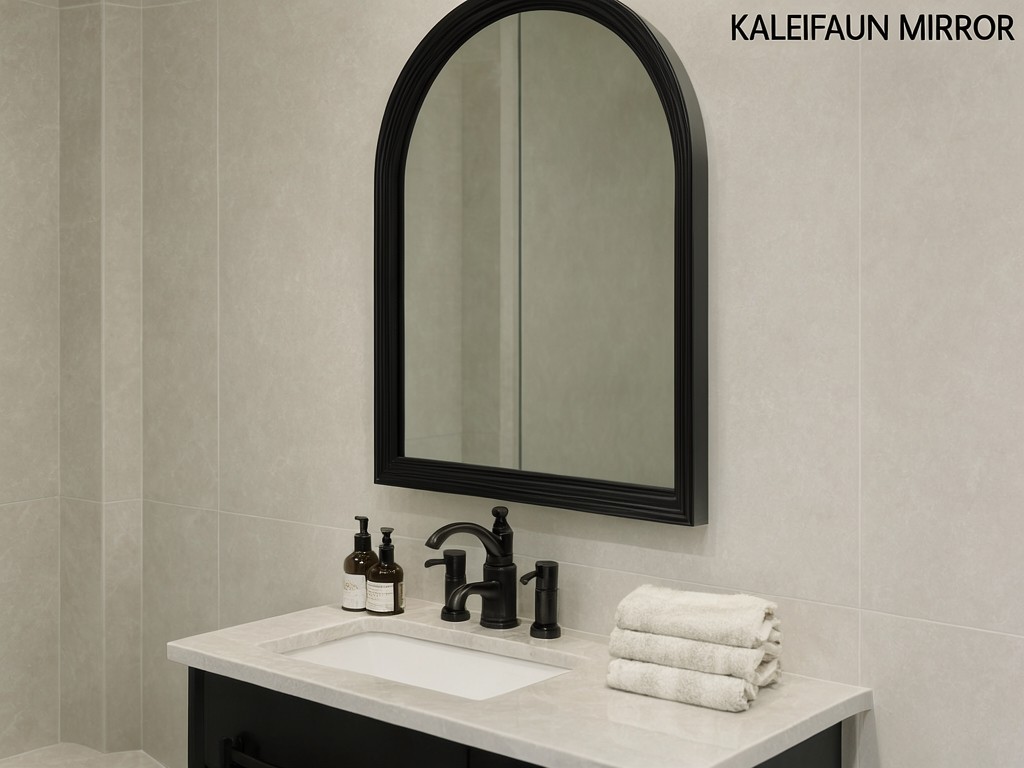
For a retail launch, the arched outline is only one part of the decision. Buyers also need cartons, mounting hardware and the black frame finish to match the approved sample across the full lot; a small shift in arch height or colour can create mismatched displays and avoidable returns.
Design Constraints Behind the Specification
The interface between parts determines whether the arch reads as a clean silhouette or shows uneven gaps at the frame joints. Agree the overall width, straight-side height, arch radius and frame face width on one drawing. A wider frame can hide small edge variations and gives the mirror a heavier visual presence, while a narrow profile uses less material but makes joint alignment and glass centring more noticeable.
For humid bathrooms, aluminum is a practical frame choice because it avoids the red-rust risk associated with exposed steel. A powder-coated finish can add a consistent black appearance, but the coating at corners, joins and mounting points deserves specific sample review. If the design calls for steel, confirm how cut edges and concealed joints receive protection before volume production.
| Indicative overall size | Typical net weight range | Common placement |
|---|---|---|
| 450 × 600 mm | About 3.0–4.5 kg | Compact vanity or powder room |
| 500 × 700 mm | About 3.8–5.5 kg | Single-basin residential vanity |
| 600 × 800 mm | About 5.2–7.5 kg | Larger vanity with a wider viewing area |
| 700 × 900 mm | About 7.0–10.0 kg | Large wall installation; check fixing substrate |
These are planning ranges, not fixed order weights. Glass thickness, frame section, backing and hardware alter the packed and net weights; confirm both against the approved production sample before freight booking.
How It Performs in Use
Deflection under load governs how firmly the mirror sits against the wall and whether its edge remains aligned after installation. The result depends on the mirror’s mass, hanger position and wall fixing—not the frame alone. For larger sizes, specify the intended hanging orientation and mounting points, then confirm that the supplied hardware suits the destination market’s typical wall construction.
In daily bathroom use, steam and splashes reach the lower frame and mirror edge first. A well-seated glass panel and protected frame joints reduce the chance of moisture reaching vulnerable areas, but no framed mirror should be treated as waterproof. Buyers should review the edge finish and backing condition on a sample, particularly for installations close to a shower or frequently wet basin.
The main commercial trade-off is weight against perceived frame strength. A lighter aluminum assembly can lower handling and freight burden; a heavier steel construction may suit a design brief that calls for a broader, more pronounced border. The selected wall fixings and carton protection must match the finished unit rather than a nominal size alone.
Measured Performance in Real Use
Balance and load analysis shows whether the hanging points suit the finished mirror’s centre of mass. For retail programs with several sizes, keep a separate approved drawing and sample for each SKU; copying the same hanger position across a size range can produce uneven wall clearance or a tilted installation.
| Specification point | Configurable option | Buyer check |
|---|---|---|
| Mirror glass | Typically 4–5 mm, subject to size and design | Check reflection across the viewing area and confirm the glass thickness on the approved sample. |
| Frame material | Aluminum or steel, according to profile and weight target | Match section depth, corner fit and hanger arrangement to the drawing. |
| Black surface finish | Powder-coated or another agreed coating system | Approve colour, sheen and texture under consistent viewing light; inspect edges and joins. |
| Backing and hanging | Backing treatment and hardware set to order requirements | Confirm orientation, fixing-point spacing and included installation parts. |
Use the signed drawing and retained sample as the reference for dimensional and appearance checks. An acceptable reflection should not show distracting waviness at normal vanity viewing distance; any numerical optical tolerance needs agreement before the order, since size and glass construction affect the inspection method.
Quality Control and Batch Consistency
Lot-to-lot drift often appears first in the arch profile, frame width or black finish. Even when each unit remains usable, visible variation across a store display can weaken the range presentation and increase exchanges. Record the approved overall dimensions, arch geometry, frame section and finish reference against the purchase order, then check production samples against those same points.
A practical factory inspection covers overall dimensions, diagonal alignment, unit weight, glass condition, frame-joint fit, coating appearance and hanger attachment. Weight checks can flag a change in glass or frame build, but they do not replace visual inspection. For moisture-exposed orders, agree how the coating and exposed edges will be reviewed; do not assume a finish is suitable for every bathroom environment without sample evaluation.
Keep finish approval and any packaging changes tied to the same SKU revision. A substituted frame profile or carton insert can alter net weight, packed dimensions and mounting fit, so a late change should trigger renewed sample approval before the launch shipment is released.
Packing, Marking and Freight Configuration
Glass breakage and frame scuffing are the shipment risks to address before confirming a launch date. The carton should restrain the mirror at its edges and protect the arched top from concentrated impact; the exact insert design depends on unit size, shipping route and whether cartons travel individually or in a master pack. Ask for a packed sample when the final packaging changes the carton dimensions or handling method.
Confirm carton marks, SKU labels, orientation symbols and any retail barcode placement before printing. A mixed-size shipment needs clear identification on both the unit packaging and outer cartons, while pallet configuration should keep heavy mirrors stable and prevent edge contact. Share destination, order mix and required ship window early; packaging approval and label corrections can affect the release schedule.
Care, Storage and Service Life
Routine care helps preserve the black frame and mirror edge. Clean glass with a soft cloth and a suitable glass cleaner, then wipe moisture from the frame and lower edge; avoid abrasive pads and prolonged contact with harsh cleaners. Do not let water sit at frame joints or behind the mirror, particularly in rooms with poor ventilation.
Before installation, store cartons upright only if the packaging is designed for that position; otherwise follow the carton’s handling marks and keep units dry, level and protected from impact. A cracked corner, loose hanger or damaged coating should be set aside for assessment rather than installed. Service life depends on the installation substrate, moisture exposure and care routine, so care instructions should match the selected frame and finish.
To protect the launch schedule, submit the target size range, frame material, finish reference, mounting preference, order quantity and destination market for a tooling and specification review. A drawing and pre-production sample can settle arch geometry, colour and packing details before the wholesale lot is released. Request a tooling review.







