
wholesale arched black metal wall mirror suppliers: Specification, Ordering and Quality Notes
Before comparing quotations, confirm the finished frame stays square to the mirror after welding and coating. A lower frame cost can come with more visible distortion or finish repair; the decision rule is to approve a production sample against agreed dimensions, frame profile, colour and packing before releasing a repeat order.
For wholesale, private-label and OEM programmes, the arched black metal wall mirror is a coordinated assembly: shaped frame, mirror glass, rear support and wall-fixing points, plus export packaging. Suppliers commonly cut and form the metal profile, weld or join the frame, apply a black finish, then fit the glass and hanging hardware. A matching specification depends on controlling those steps as a set, not on the silhouette alone.
Scope of Supply and Physical Form
The supply scope can include a steel or aluminum perimeter frame, shaped mirror glass, rear backing or safety film, hanging hardware, protective pads and a retail-ready carton. Arch radius, overall height and width, frame face width, finish sheen and hardware position should be recorded on the approved drawing. Confirm whether the quoted item includes screws and wall plugs; wall substrates vary, so standard hardware may not suit every installation market.
- Specify glass thickness and edge treatment against mirror size and frame support; larger formats need a reviewed assembly rather than a copied small-size specification.
- Record the black finish as a sample or defined finish target. “Black” alone does not settle texture, gloss or the appearance of welded joints.
- List label location, barcode artwork, carton marks and pack quantity in the purchase specification for private-label orders.
The Problem Buyers Keep Paying For
Two suppliers quoting the same specification may deliver different arrival condition. Freight damage is the obvious complaint, but frame twist, coating chips at contact points and dark marks at the mirror edge can also trigger claims. The table ties common use and handling conditions to a preventable specification or packing decision.
| Use or Transit Condition | Complaint Seen by Buyer | Specification or Pack Control |
|---|---|---|
| Parcel or mixed-load freight with repeated carton handling | Cracked glass, dented arch or chipped frame edges on arrival | Use corner and edge protection, immobilize the mirror within the carton, and approve the packed configuration through a buyer-agreed handling check. |
| Repeated installation in humid indoor rooms | Edge darkening or finish corrosion near joints and exposed edges | Specify protected glass edges and a coating system suited to the stated indoor exposure; do not describe the mirror as exterior-rated without a separately validated design. |
| Wall mounting on varied substrates | Mirror sits crooked or a hanger loosens after installation | Approve hanger position and attachment method on the drawing, then state the intended wall type and installation guidance in the pack. |
Packaging should match the route and sales channel. A pallet pack for consolidated freight may not protect an individual carton through parcel sorting, so approve the final pack against the actual distribution path.
Design Constraints Behind the Specification
The arch profile sets the frame-forming path, but the finished outline also depends on joint location, weld sequence and cooling. A frame that pulls out of plane can leave uneven glass clearance or a visible gap, even when the glass itself meets its cut dimensions. Define the measurement points for overall size, arch symmetry, frame face and glass-to-frame fit, then inspect finished assemblies against the approved sample.
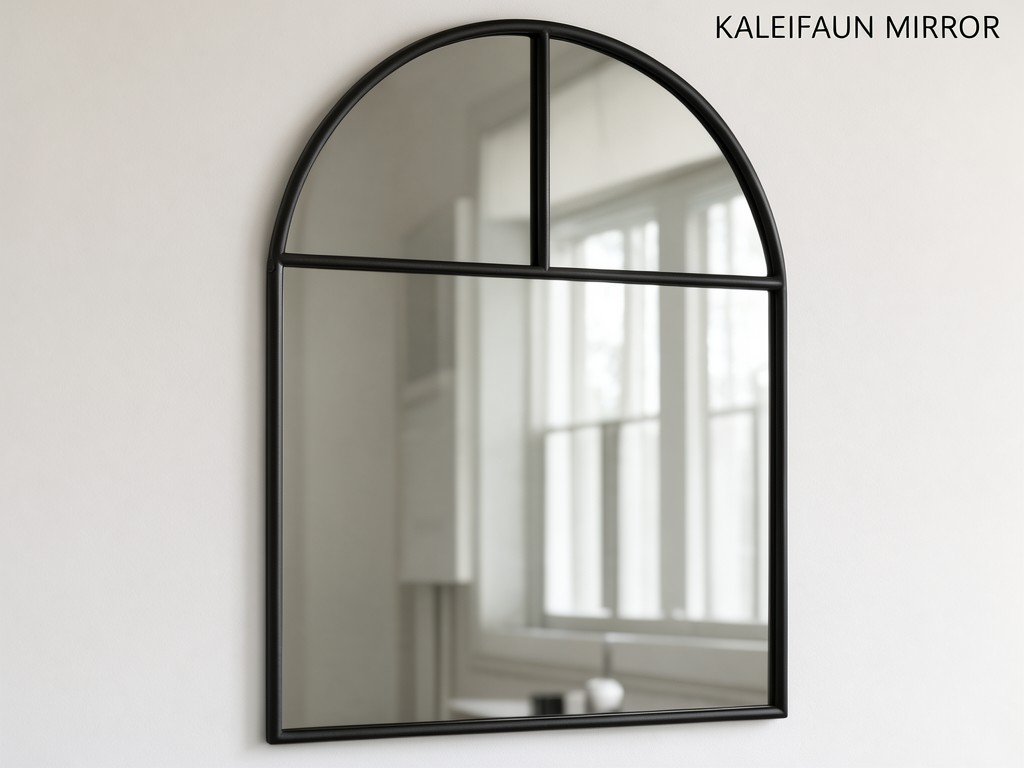
Mirror glass needs support that limits movement without point-loading the edge. The backing, clips or adhesive method must suit the chosen frame depth and glass thickness. For humid interior placement, specify edge protection and the intended room conditions; ordinary indoor mirror construction should not be sold as suitable for direct rain or persistent exterior exposure.
Factory checks can include dimensional comparison to the drawing, visual review of the coating and weld area, hanger attachment inspection, and examination for glass chips or scratches. Set sampling and acceptance criteria with the buyer before production, especially when a private-label reorder must match an existing retail line.
Material Options and Their Trade-offs
Steel Frame
Steel suits a defined narrow-profile look and can provide a firm perimeter at a competitive material cost. The added mass affects freight and wall loading, while weld preparation and coating coverage matter at corners and joints. Choose it when the design depends on a crisp metal outline and the pack can accommodate the finished weight.
Aluminum Frame
Aluminum can reduce shipping weight, but profile design and joining method affect stiffness and corner appearance. The finish route must suit the selected alloy and surface preparation. Choose it where lower unit weight offsets profile or finishing costs; confirm the approved sample rather than assuming the black finish will match a steel version.
Glass thickness, backing and edge treatment are separate cost decisions. A thinner glass option can reduce material and freight cost, while a larger mirror may require a different support arrangement; the supplier should confirm the complete assembly at the target dimensions before quotation approval.
Option Comparison by Usage Level
Unit price and service life diverge when the mirror moves from occasional home use to repeated handling in a hospitality or multi-unit fit-out programme. For a standard retail range, a proven indoor frame and protective carton may meet the brief. For humid rooms or frequent installation, price the coating, edge protection, hanger attachment and pack validation as part of the product, not as optional extras after a complaint.
Compare landed cost per saleable unit, including pack volume, freight damage allowance and replacement handling. The appropriate choice is the least-cost configuration that passes the buyer’s appearance, installation and distribution checks for its stated use.
OEM and ODM Programme Structure
OEM supply is the direct route when the buyer already has a drawing, finish target and pack artwork. ODM work can adapt an existing arch profile, frame width or hardware arrangement, but a change to the forming tool or joining sequence needs a fresh sample review. Keep approved drawings, finish references and packaging files tied to the same revision for repeat orders.
- Share target overall dimensions, arch shape, frame material, finish appearance and intended placement conditions.
- Confirm glass specification, backing approach, hanger position and whether installation hardware is included.
- Approve a pre-production sample and packed sample before production release; record any permitted variation in writing.
- Provide final branding artwork and carton requirements early enough for label and pack review.
Capacity, Tooling and Scheduling
Production timing depends on whether the supplier can use an existing profile and fixture or must develop new forming and joining tooling. A new arch size or frame cross-section can add sample and correction rounds before the first production run. Glass supply, coating batches, hardware procurement and printed packaging also affect the schedule, so request a milestone plan that separates sample approval from production and dispatch.
For continuity across reorders, agree batch identification, inspection records and the retained reference sample. Ask the supplier to confirm production capacity against the order mix and delivery window rather than relying on a general monthly figure; a size change can alter line balance and carton availability.
Discuss Your Mirror Programme
Send the target drawing or dimensions, material preference, finish reference, order quantity and destination market for a specification review. Include the intended installation environment and distribution route so the frame, glass support and packaging can be quoted against the actual requirements. Contact the team to discuss your project.







