
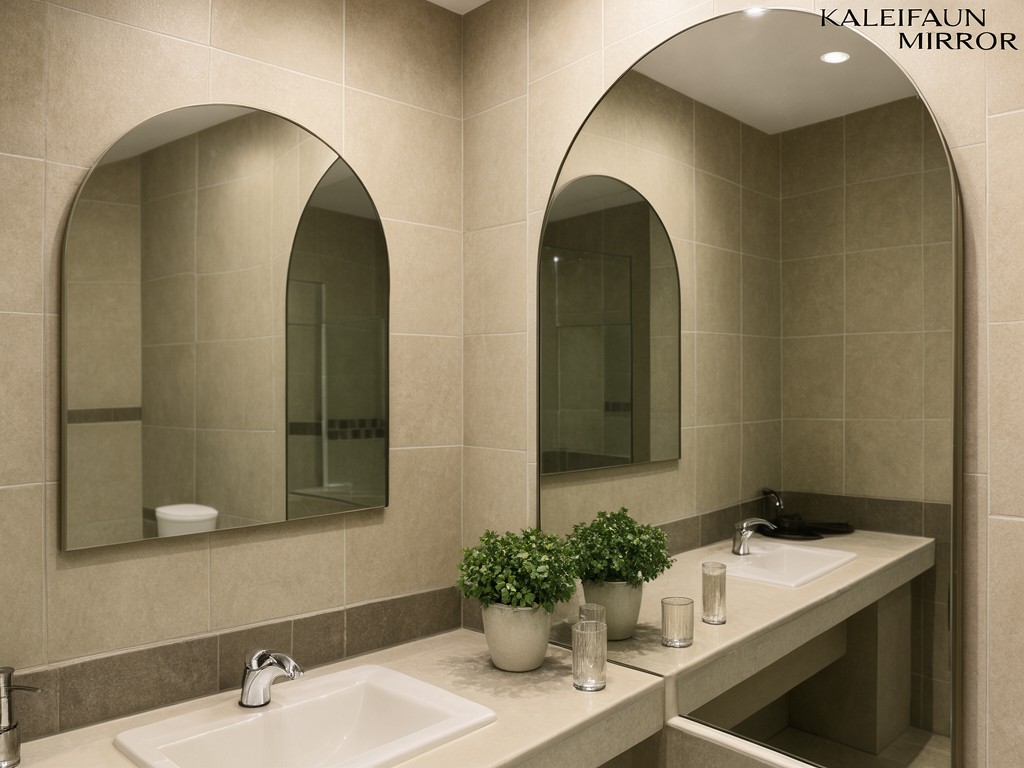
Wholesale high quality arched bathroom mirror supplier - Bulk Supply and Specification Guide
Moving from sample orders to container loads changes the complaint profile: small differences in arch shape, edge finish or carton protection become visible across an entire installation batch. For procurement teams qualifying a second source, the useful comparison is not only unit price. It is whether the supplier can hold the approved drawing, surface finish and packing method across repeat orders.
A bathroom mirror may arrive with a clean face yet fail early at the perimeter. Moisture can reach exposed edges or damage the reflective backing, while poorly restrained glass can chip in transit. Specify the shape, mirror substrate, backing protection and export pack as one purchase configuration, then approve that configuration before scaling volume.
Scope of Supply and Physical Form
Supply covers arched-top bathroom mirrors for importers, retail programs, hospitality projects and private-label ranges. The product is typically a flat glass mirror cut to a straight-sided body with a shaped arch, supplied frameless with a finished perimeter or assembled into a metal frame.
A purchase specification should identify overall width and height, arch profile, glass thickness, reflective coating, edge treatment, backing or safety film, frame finish where applicable, mounting hardware and pack-out. A photograph alone does not define the crown radius or the transition from the arch to the vertical sides.
Design Constraints Behind the Specification
Lock the profile before approving the sample. The arch is defined by the drawing, not by the overall height alone. Changes to crown radius, shoulder position or side length alter the visual proportions and can leave replacement stock mismatched with installed mirrors.
A larger mirror adds glass area and carton dimensions, so freight cost and breakage exposure rise together. A narrow arch may also show edge chips more clearly than a frame-covered perimeter. Set the edge finish and visible edge allowance on the approved drawing; otherwise, samples and bulk goods can differ in ways a buyer notices only after installation.
Bathroom use makes edge sealing and backing protection part of the specification. Where the mirror is installed near a shower or basin, clarify expected exposure and installation clearance rather than relying on the general label “bathroom mirror.”
Material Options and Their Trade-offs
Copper-Free Silver Mirror
A common choice for bathroom ranges where buyers prioritize a familiar mirror appearance and a protected reflective layer. The coating and backing system add cost compared with value-grade alternatives; specify the intended room exposure and keep the edge protection consistent with the approved sample.
Aluminum Mirror
An option for price-led programs where the buyer accepts a different reflective-layer specification and confirms the appearance against a physical sample. Compare reflection tone, backing construction and edge protection before approving it for a wet-area assortment.
Glass thickness commonly falls within 4–6 mm, subject to size, mounting method and supplier capability. A thinner substrate can reduce material and freight cost, but the complete mirror still needs to suit the intended support points and pack design.
Construction Method and Its Effect on Consistency
Production generally starts with flat mirror glass. The supplier cuts the arched outline, finishes the exposed edges, applies the reflective coating and protective backing, then adds the frame or mounting components where specified. If heat-treated glass is required, the shape and edgework must be completed before heat treatment and the coating process must follow the agreed construction route.
The arch profile is a repeatability risk at volume. Tooling, cutting paths and reference dimensions need to match the approved drawing; otherwise, small deviations can shift the crown or create uneven shoulders. Edge grinding and polishing also affect how a frameless perimeter looks under direct light.
For second-source approval, compare a production-intent sample rather than a hand-finished showroom sample. Confirm the glass, coating, backing, edge treatment, hardware and packaging match the quoted build before placing a container order.
Comparing Two Standard Configurations
The following are common starting points for supplier review, not fixed catalogue limits. Final dimensions, attachment details and glass specification depend on the approved drawing and installation plan.
| Configuration | Typical Build | Buyer Trade-off |
|---|---|---|
| Frameless, polished edge | 4–6 mm mirror glass; shaped and finished perimeter; mounting method defined by project | Clean edge-to-edge appearance, but carton restraints must protect the full perimeter from impact. |
| Slim metal frame | Mirror glass with an aluminum frame; frame profile, finish and attachment points set on drawing | Covers the glass edge and can simplify the finished look, with added frame, assembly and finish variables. |
Frameless construction removes frame cost but places more importance on edge finish and protective packing. A framed version adds material and assembly cost; the frame finish and joints then become additional points to approve for repeat orders.
What Can Be Customised and What Cannot
- Arch radius, overall width and height, side length, and the transition between the arch and straight sides can follow a buyer’s dimensioned drawing.
- Glass thickness, reflective coating, backing, edge finish, safety film and mounting hardware can be quoted as a defined configuration.
- Frame profile and finish, retail label, carton graphics and protective inserts can be matched to the approved range requirements.
- A change to glass source, coating system, arch tooling or packaging should be treated as a specification change, not a silent production substitution.
Not every requested contour is economical at low volume. A nonstandard profile may need dedicated cutting setup or a separate approval sample, while stock-like dimensions usually offer a simpler route to repeat orders. Ask the supplier to identify any tooling or setup charge before final price comparison.
Requirements by Buyer Segment
OEM and Private-Label Buyers
Range consistency depends on controlled drawings, signed sample references and clear rules for approved substitutions. Confirm carton marks, barcode placement, assembly instructions and spare mounting parts before packaging artwork is released.
Importers and Project Procurement
Mixed-size orders require clear SKU separation and packaging that limits glass movement through export handling. Project buyers should also confirm mounting method and wall interface before production, since hardware changes after packing can delay installation.
For a second source, keep one controlled specification file for the current supplier and the candidate supplier. Record the approved sample date, drawing revision, packaging configuration and any accepted deviations so a lower quote does not conceal a different product build.
Ordering, Tooling and Lead-Time Questions
What information should accompany a quotation request?
Send a dimensioned profile drawing, target quantities by size, glass and coating preference, edge and backing requirements, frame details, mounting method, destination and packaging needs. Include photographs only as references; they do not replace dimensions or finish descriptions.
How do tooling and sample approval affect the schedule?
Lead time depends on profile setup, frame or hardware sourcing, sample approval, order mix and production capacity. A new arch or finish may require a separate sample stage; confirm the schedule after the drawing and finish are frozen, and agree how changes affect the ship date.
Can the supplier quote a trial quantity before container volume?
Ask for the available MOQ by configuration. Glass size, frame finish, packaging print and custom profile setup can each affect the minimum; a mixed-size order may be priced differently from a single-SKU run. Confirm whether a trial order uses the same materials and packing method proposed for repeat volume.
Request a Specification Review
Send your drawing, target order mix and current sample details for a second-source review. Confirming profile, coating, edge finish and export packaging before quotation helps keep the comparison focused on equivalent builds.







