
Specifying Wholesale high quality arched gold mirror factory for Wholesale and OEM Orders
A return often starts at the glass edge or frame joint, not in the mirror’s gold colour. Humid rooms, rough freight handling and repeated installation can expose weak backing protection, an uneven arch or a finish that varies between production lots. For OEM buyers, a defined approved sample and inspection record can cost more at the start but reduce replacement freight and warranty claims on repeat orders.
How to Choose Before Requesting a Quote
| Order stage | Planning MOQ | Indicative lead time | Main schedule variables |
|---|---|---|---|
| First OEM run | Often 100–300 pieces, subject to size and packing plan | Typically 30–45 days after sample and artwork approval | Arch dimensions, frame profile, finish batch and export carton design |
| Repeat order to an approved specification | Quote-specific; may follow the first-run quantity | Typically 25–40 days after order confirmation | Glass and profile availability, production queue and any specification revision |
| Pre-production sample | One or more approval units, as agreed | Often 7–14 days, depending on process sequence | Glass shaping, frame finish sample and brand packaging review |
These are planning ranges, not a production commitment; confirm the quoted schedule against the approved drawing, order quantity and destination packing requirement. For a comparable quote, specify overall height and width, mirror thickness, edge finish, frame material, gold tone, mounting method and the room conditions the mirror will face.
A typical construction uses shaped glass with a silver reflective layer and protective backing, held by an aluminum frame with a metallic gold powder-coated finish. If local rules or the installation location call for safety glass, confirm that requirement before sampling: glass treatment must be compatible with the mirror-coating process. A thicker glass or heavier frame can improve handling rigidity, but it also raises unit weight, carton size and freight cost.
Use the signed sample and drawing as the batch reference. Record the visible gold tone, arch profile, edge treatment, backing coverage and mounting details together; a colour chip alone cannot control the finished mirror.
Buying Mistakes That Lead to Returns
The limiting factor is rarely the headline glass thickness. A mirror can meet its nominal size and still arrive with reflection distortion, exposed backing at the edge or a frame finish that differs from the approved sample. Those differences become visible in side-by-side retail displays and multi-room installations, where a small batch mismatch can trigger multiple complaints.
- Ordering from a product photo without a dimensioned arch drawing leaves the curve, shoulder position and overall proportions open to interpretation.
- Treating “gold” as a single finish description invites visible variation. Approve a physical finish sample under consistent lighting and retain it for repeat-order comparison.
- Ignoring bathroom or changing-room humidity can expose weak edge protection or a frame finish that is not suited to the installation environment. Specify indoor conditions; do not assume an indoor mirror is suitable for exterior use.
- A low unit price can be offset by breakage, rework or replacement freight. Compare the packed cost per saleable mirror, not only the ex-factory piece price.
Repeat loading drives the failure at vulnerable points: a loose frame joint can shift during handling, while an unprotected glass edge can chip before installation. Ask the factory to state how joints are secured, how backing is protected at the perimeter and how individual units are restrained inside the carton.
Requirements by Buyer Segment
Private-Label Buyer
Lock the arch drawing, gold finish reference, logo location and carton artwork before the first production lot. Keep a retained approval sample and revision-controlled files so a reorder does not rely on memory or a supplier’s verbal colour description.
Retail Buyer
Prioritize repeatable dimensions, a consistent visible finish and shelf-ready marking. In a multi-store rollout, carton identification and batch traceability help staff isolate a damaged unit without confusing it with a finish or size variation.
Club or Academy Purchasing Manager
For changing areas, studios or shared washrooms, specify mounting hardware, cleaning exposure and expected humidity. Smooth, finished edges and a stable wall fit affect day-to-day user contact; confirm that the installation substrate and fixing method suit the mirror’s packed and installed weight.
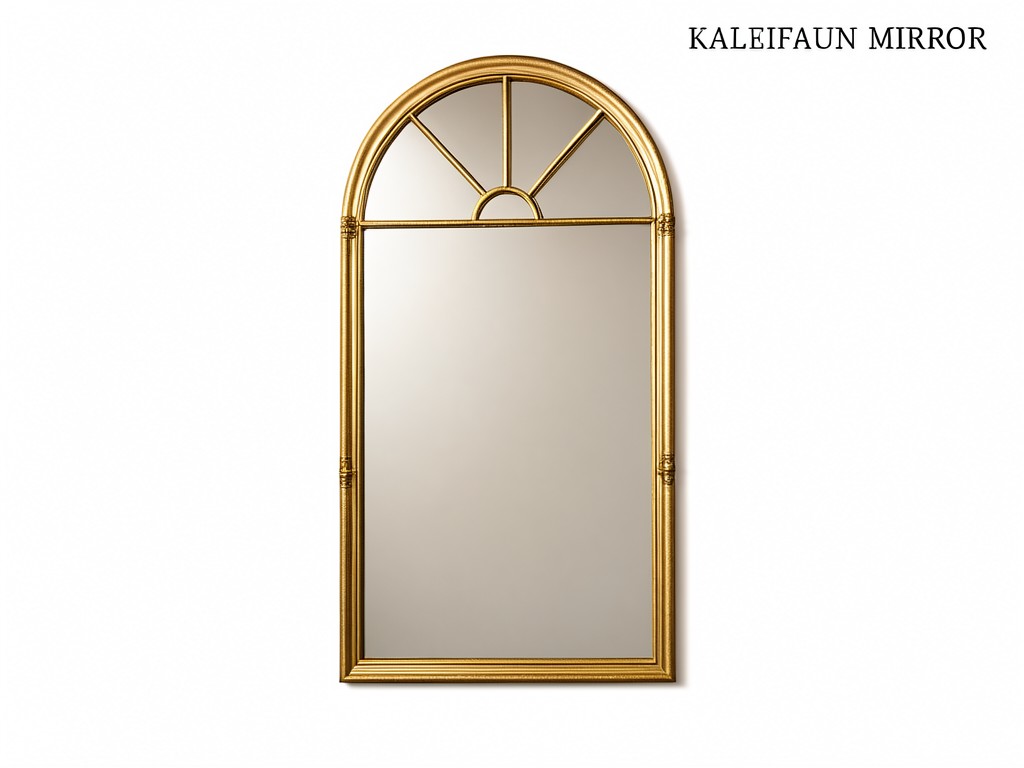
Comfort and feel in this category are practical: users notice clear reflection, a clean edge, a frame without sharp projections and a mirror that sits flat after installation. The right balance is an easy-to-handle unit that still has adequate frame support and edge protection for its intended room and mounting method.
Inspection Items and Test Methods
Fatigue appears at the stress concentration: frame corners, joining points, mounting areas and exposed glass edges deserve more attention than broad, undamaged surfaces. Agree acceptance limits on the approved drawing and sample before production. A clear inspection record lets the buyer compare batches and trace a complaint to a specific order lot.
| Inspection item | Factory check | Buyer acceptance reference |
|---|---|---|
| Overall dimensions and arch profile | Measure height and width; compare the curve and symmetry with the controlled drawing or template. | Approved drawing with stated tolerances |
| Reflection and visible glass | Inspect under agreed lighting; check for scratches, spots, visible distortion and edge defects. | Signed sample and agreed visual limits |
| Backing and edge condition | Check coating coverage, exposed edges, chips and any early signs of backing damage. | Approved construction sample and defect criteria |
| Gold frame and joints | Compare finish under consistent light; inspect coating coverage, joint alignment and frame movement. | Retained finish sample and assembly reference |
| Packed unit | Review corner and face protection, internal movement and carton condition; validate packing with representative handling checks. | Approved pack-out sample and destination handling needs |
For humid installations, discuss the limits of the mirror backing and frame finish with the supplier rather than treating a general visual check as proof of weather resistance. Record the inspection date, lot identification, sample size and any rejected units; keep the same acceptance method for later production runs.
Capacity, Tooling and Scheduling
Arched profiles depend on stable cutting and edge-finishing setup, while repeatable gold appearance depends on consistent frame preparation and coating conditions. A factory may use a cutting template or controlled digital profile for the glass; confirm how it stores the approved geometry and checks the first pieces of each run. The drawing and tooling reference should identify revision changes before any altered profile enters production.
A first order needs time for sample review, finish approval, packaging validation and any required safety-glass process. Reorders can move faster when the buyer makes no changes to glass size, frame section, finish, branding or carton. A late artwork revision or a new gold shade can reset approvals and delay production even when the mirror shape is unchanged.
Ask the supplier to separate sample timing, production time and transit time in the quotation. Confirm whether the stated capacity covers finished mirrors or only glass processing, and agree which inspections must be complete before shipment. These details make the landed-cost comparison more useful than a unit-price comparison alone.
Packing, Marking and Freight Configuration
An arched mirror needs face separation and edge restraint; a carton that prevents glass-to-glass contact but lets the frame move can still arrive with chipped edges or finish rub. Match the internal supports to the mirror’s outline, and test the packed unit before approving a large export run. Larger sizes also change pallet layout and container cube, so request packed dimensions and gross weight during costing.
- Mark each carton with model or SKU, size, quantity, handling orientation and batch identification as agreed for the destination market.
- Use corner protection and a face buffer that do not press directly on vulnerable glass edges or rub the powder-coated frame.
- Confirm barcode, retail label and carton artwork files before print; keep the approved file revision linked to the production order.
- For mixed-size shipments, identify each size clearly and review pallet stability so larger units do not bear uncontrolled loads from smaller cartons.
The packed sample should represent the actual production carton and separators, not a hand-built sample with extra protection. A controlled pack-out can reduce freight damage and the added cost of reverse logistics, replacement stock and retail credits.
To request a sample, send the target dimensions, installation environment, mounting preference, finish reference and destination market. Include your expected order quantity and retail-pack requirements so the sample and quotation reflect the same production conditions. Request an arched mirror sample and OEM quotation.







