
Wholesale tall gold arched wall mirror Factory: What Buyers Should Check Before Ordering
Returns usually trace back to the same weak point: a mirror arrives with distortion near the arch, a finish that differs from the approved sample, or a frame that shifts during transit. These problems often begin with differences in glass cutting, frame forming, or packing rather than with the gold appearance alone. Buyers reducing repeat-order claims should compare the factory’s process controls and approved tolerances before comparing unit price.
What Actually Determines Performance
A wall mirror reflects from a silvered layer applied to the back of the glass. The glass surface, silvering uniformity, backing protection, and flatness all affect the image; the arched outline adds another point of control because small cutting or assembly errors show clearly along the curve. For a tall mirror, buyers should also check frame rigidity and hanger placement, since the product’s height increases leverage on the wall fixings.
Thicker glass can add stiffness, but it also raises packed weight and freight cost. A larger profile can support the glass and conceal its edge, though it changes the visible frame proportion and the amount of metal in each unit. Set glass thickness, overall dimensions, frame section, and hanging arrangement together; changing only one of these after sample approval can shift both cost and fit.
Construction Method and Its Effect on Consistency
A typical production route starts with glass inspection, cutting to the arched profile, edge grinding, and mirror coating with a protective backing. The metal frame profile is cut and formed to the arch, finished in the selected gold tone, and assembled around the glass with the specified supports and hanging hardware. The factory then checks the assembled mirror and prepares it for protective packing.
Repeatability depends on fixtures and reference points. A controlled cutting template keeps the arch shape consistent; a forming jig limits variation in the frame curve; and a defined assembly sequence reduces uneven gaps or pressure against the glass. A custom frame profile may require dedicated tooling or a forming fixture. That initial cost can be spread across a larger order and later reorders, while small runs may carry a higher per-unit setup cost and a longer preparation period.
Order rule: confirm whether the quoted price uses an existing frame profile and arch fixture. If the profile, radius, or frame depth is custom, ask how setup charges, sample approval, and repeat-order storage of tooling affect the unit price and lead time.
Measured Performance in Real Use
A mirror intended for a bedroom, dressing area, or retail fitting space needs a clear reflection across the usable height and a frame that stays square after normal handling. Inspect the reflected image near the arch and side edges, where localized waviness or a poor fit is easiest to notice. Check the gold finish under neutral lighting against the approved reference; warm and cool lighting can make the same finish appear different.
For freighting, the practical limit is often package protection rather than the mirror’s use indoors. Corner supports, face protection, and a restrained fit inside the carton help prevent edge chips and frame movement. Ask the factory to evaluate the packed configuration as well as the assembled item, especially if a distributor plans parcel delivery or repeated warehouse handling.
Comparing Two Standard Configurations
Aluminum profile with gold anodized finish
A lighter frame can reduce packed weight, which may suit distributors watching freight cost. Finish tone and sheen depend on the aluminum surface and process; confirm a physical sample before approving a large repeat run.
Steel profile with gold powder coat
A steel frame can provide a firmer section at a given profile shape, but adds weight and requires careful coating coverage at cut edges and joints. This option may fit buyers prioritising frame feel over the lowest shipping weight.
Neither finish should be selected by a colour name alone. Compare the actual sample, frame section, edge treatment, and packed weight, then lock those details into the purchase specification.
Matching the Product to the Buyer's Need
Use the following selection path to align the order with the buyer’s price point, installation setting, and repeat volume:
- If freight cost is the main constraint, compare aluminum framing and carton dimensions first; retain the required glass thickness and protection rather than reducing both without sample checks.
- If the mirror will move through parcel networks, request a packed sample or a documented packing review before confirming the order quantity.
- If delivery is palletised, check pallet footprint, carton count, and edge protection against the distributor’s receiving process.
- If a firm frame feel and a heavier visual profile matter more, assess steel framing and coating coverage at joints and exposed edges.
- If the required arch or frame section is custom, compare the tooling charge with forecast reorder volume. Higher volume can spread setup cost across more units; a short run may have a higher unit price and more time for fixture preparation.
- Before production release, approve one reference sample for dimensions, reflection, finish, hardware position, and packaging. Use the same reference for subsequent batches.
Customisation Options and Their Limits
Factories can usually adjust overall height and width, arch radius, frame depth, gold tone, hanger arrangement, and retail packaging. Each change affects a different production control: a new size changes the glass cutting plan, a new curve can require fixture work, and a finish change may need a fresh sample and process setup. Keep the approved size drawing and finish reference tied to the order rather than relying on a colour description or product name.
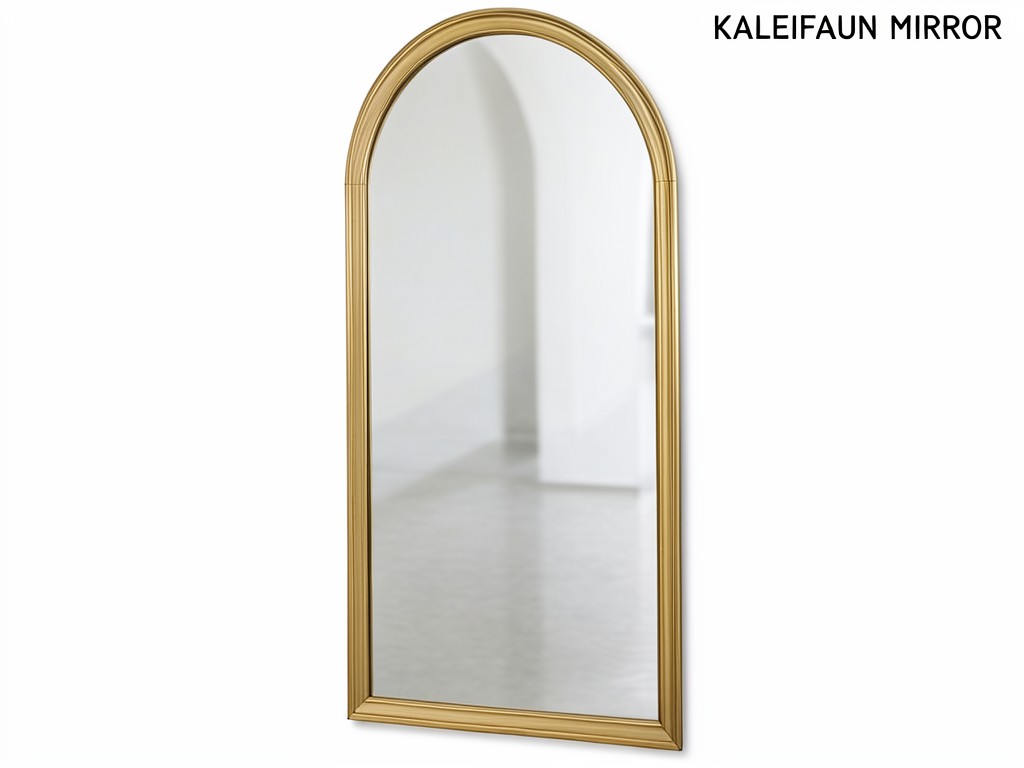
Custom artwork or labels are easiest to manage before cartons enter production. Confirm label placement, barcode artwork, language requirements, and carton markings with the factory during quotation review; late changes can add handling or delay dispatch. Ask which options use existing tooling and which require a new jig, profile, or packaging die.
Segment-Specific Requirements
Home-furnishing distributors often need a compact carton that fits mixed-product shipments, clear hardware instructions, and a gold finish that remains consistent across replenishment orders. Their receiving teams may handle cartons more than once, so corner protection and an agreed visual inspection method can reduce damage disputes.
Hospitality and interior-project buyers usually need dimensions and hanger positions to match a fixed wall layout across multiple rooms. A small dimensional drift can complicate installation across a site, so the purchase specification should identify the finished outside dimensions, arch profile, and fixing points. Retailers selling full-length mirrors also benefit from a display sample that matches the production frame and reflection, not just the finish swatch.
Quality Control and Batch Consistency
A useful inspection plan links each common return reason to a check that the factory can repeat. Agree the acceptance method and tolerance with the supplier before production; do not treat a sample photo as a substitute for a dimensioned drawing or physical finish reference. Batch records should identify the order, approved sample, finish specification, and inspection outcome so the next reorder has a clear comparison point.
| Control area | Factory check | Buyer specification or record |
|---|---|---|
| Glass and arch dimensions | Measure finished height, width, and profile against the approved drawing; inspect the edge for chips and visible grinding defects. | Dimensioned drawing with agreed tolerances and an approved sample. |
| Reflection and backing | Review the reflection under consistent viewing conditions; check for visible coating defects and backing damage. | Defined visual inspection conditions and an agreed defect-acceptance reference. |
| Frame and gold finish | Check frame alignment, joints, exposed edges, finish coverage, and colour against the retained approved sample. | Frame material, finish type, reference sample, and any agreed colour tolerance. |
| Custom options and hardware | Verify custom dimensions, arch radius, hanger location, and supplied fixing parts against the order drawing and packing list. | Approved specification for each custom option, with tooling or fixture changes noted for repeat orders. |
| Pack-out and traceability | Review carton fit, face and corner protection, labels, and carton condition during a packing check. | Packing configuration, retail labelling requirements, and batch identification agreed before dispatch. |
For repeat orders, compare inspection records with the retained sample before authorising shipment. If a complaint appears, photographs of the mirror, carton, and batch mark help separate production variation from freight damage and direct the corrective action to the right process step.
Review the quotation against your reorder plan
Share target dimensions, annual or repeat-order volume, preferred frame material, finish reference, and packaging needs for a quotation review. Ask the factory to identify existing tooling, any setup charge, sample timing, and the inspection points recorded for production batches. Send your specification for quotation review.







