
Wholesale vintage arched wall mirrors Factory - Bulk Supply and Specification Guide
Main specification trade-off: A heavier frame and thicker mirror glass can give a more substantial feel, but they increase wall load, carton weight and freight cost. Fix the arch profile, finished dimensions, hanging method and acceptable finish variation against an approved sample before comparing unit prices.
Assumptions Buyers Should Stop Making
Consistency depends on more than the mirror’s overall height and width. Two pieces with the same outer dimensions can look different if the arch radius, shoulder position, frame depth or reveal around the glass changes. Put those details on the approved drawing or sample, then use them as the reference for repeat orders.
An “antique” or “vintage” finish is not a single fixed colour. Hand-applied or layered finishes can vary in tone and texture; a more uniform finish may suit a coordinated retail range better, while controlled variation may better fit a distressed look. Agree on what variation is acceptable, rather than treating every visible difference as a defect after delivery.
Deflection under load governs whether the hanging hardware, frame and wall fixing work as a system. A mirror’s own weight does not confirm that a customer’s wall anchors are suitable. Specify the supplied hanger type and installation guidance, then assess mounting performance with the intended wall and fixing arrangement.
Usage Scenarios and Buyer Segments
Home décor importers often need a repeatable profile and finish across several sizes, with cartons that suit warehouse handling and parcel or pallet distribution. Their main cost exposure is not just breakage; mismatched arch proportions or frame colour can make a coordinated collection harder to sell and increase returns.
Hotel and interior-project buyers tend to prioritize a consistent visual feel across rooms, secure hanging points and a finish that tolerates routine dry dusting. Retail brands may place more weight on private-label presentation, barcode placement and a defined finish sample. In both cases, the mounting arrangement and service access should be decided before artwork and carton dimensions are finalized.
A balance and load analysis shows how frame mass and hanger position affect installation requirements. For oversized formats or heavier glass, confirm the finished weight and fixing layout for each size rather than carrying one mounting assumption across the entire range.
OEM and ODM Programme Structure
An OEM order follows the buyer’s approved profile, dimensions, finish reference, branding and packing specification. ODM work can adjust an existing factory design, such as changing the arch proportions, frame depth or hanger position. Keeping the base construction close to an existing design usually avoids new tooling and shortens sample revisions; custom profiles or new frame details can add setup cost and approval time.
Frame construction affects perceived weight, freight and the way the finish presents at the edge. The comparison below is a starting point for a private-label brief; exact suitability depends on mirror size, frame section and the approved design.
| Construction option | Buyer-facing trade-off | Specification points to approve |
|---|---|---|
| Fabricated steel frame | Can support a more substantial frame profile and vintage-style surface treatment. Added mass raises handling and freight demands. | Section shape, corner and joint appearance, finish tone, edge coverage, hanger position and finished weight. |
| Fabricated aluminum frame | Can reduce frame mass for a given profile, though the look and feel may differ from a heavier traditional frame. Finish selection affects the final appearance. | Profile depth, surface finish, joint detail, glass retention and mounting hardware compatibility. |
| Framed mirror with selected glass thickness | Thicker glass can feel more substantial but adds weight and can raise transport cost. Glass thickness must suit the frame and retention detail. | Glass thickness, visible distortion limits, backing or edge treatment, and the glass-to-frame fit. |
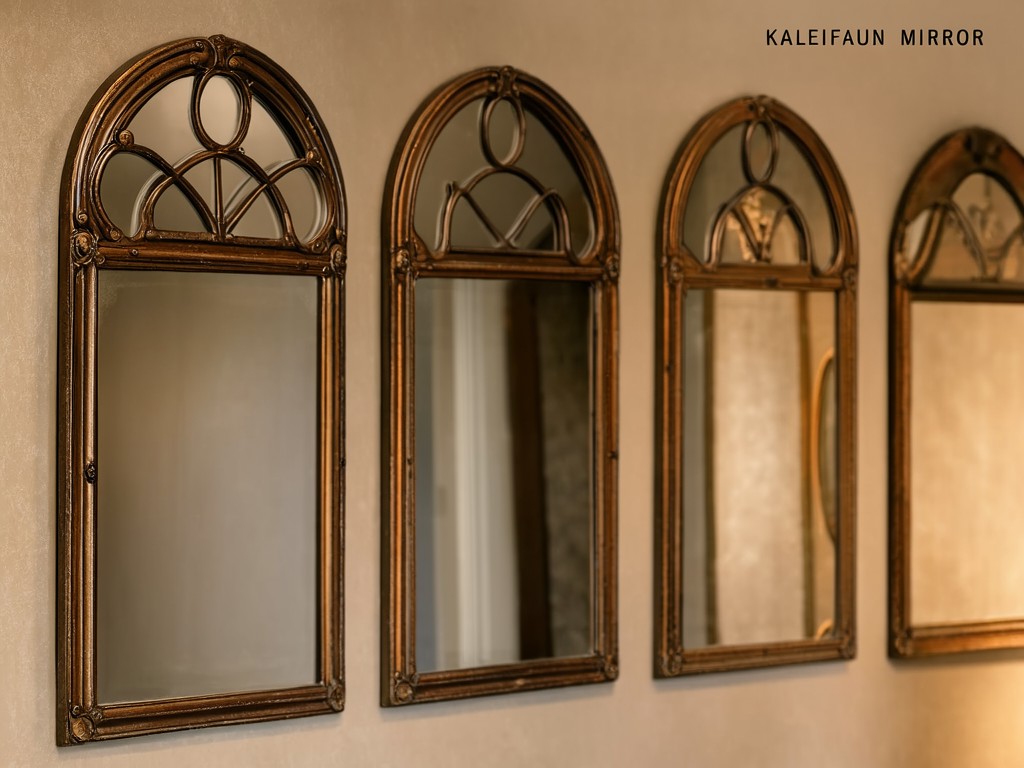
For a private-label range, record the approved sample’s finish, logo location, label copy and carton artwork version. Any change to the frame section, glass thickness or hanger can affect both the approved weight and the packing design, so treat those as specification changes rather than artwork-only revisions.
How Consistency Is Held Across Batches
Batch control starts with a signed drawing and a retained approval sample. The factory can check overall dimensions, arch shape, squareness, frame depth, glass fit and hanger location against the agreed limits. If the reference is only a product photograph, small changes to the arch or frame reveal can pass unnoticed until units sit side by side in a retail display.
Finish checks should compare colour and surface character under consistent viewing conditions. Glass inspection should cover visible blemishes, edge condition and the reflection across the usable area. The acceptance criteria need to distinguish a cosmetic variation from a defect that affects the mirror’s use or appearance.
Mounting checks can confirm hanger placement and assess the assembled unit with an agreed test setup. Keep findings tied to the production lot and approved specification. A defined inspection record costs less than sorting a mixed batch after arrival or processing avoidable warranty claims.
Volume Planning and Lead Time
Order timing depends on whether the range uses an existing frame profile and finish or needs new tooling, samples or colour matching. A repeat order against a stable specification generally avoids some approval steps, while a new arch profile or revised packing format adds work before production can be released.
MOQ can vary by frame material, finish batch, glass size and carton configuration. Combining several sizes may share artwork and some packaging components, but it does not always reduce the minimum for each frame or finish. Request a schedule that separates sample approval, material availability, production, inspection and dispatch; confirm the dates against the final specification rather than an early concept quote.
Forecasting repeat volumes also helps limit specification drift. A stable annual forecast can support planned material purchasing and reduce last-minute substitutions that change frame appearance, weight or carton dimensions.
Packing, Marking and Freight Configuration
Glass breakage risk is concentrated at edges and corners, while frame finishes can rub or mark if the mirror moves inside its carton. Specify edge and corner protection, separation from the frame, and an inner fit that limits movement during handling. Large or heavy formats may need a stronger outer carton or a crate, depending on the route and freight method.
Confirm packed dimensions and gross weight by size before booking freight. Carton marks should match the importer’s receiving and retail requirements, with product identification, orientation or handling instructions where agreed. Private-label artwork should be approved against the actual print area and label placement; a late change can hold packing even after the mirror itself has passed inspection.
Care, Storage and Service Life
For routine cleaning, use a soft cloth and apply cleaner to the cloth rather than directly to the mirror. Liquid that reaches the glass edge can affect the reflective backing over time, particularly if it remains there. Include care instructions that match the supplied finish and avoid abrasive pads or harsh cleaners unless the finish supplier has confirmed compatibility.
Store cartons dry, upright and secured against movement in line with the packaging design. Do not leave unpacked mirrors leaning where they can slide or take pressure at one corner. Service life depends on installation, moisture exposure, cleaning habits and handling; warranty terms should state how transit damage, installation damage and finish or glass defects are assessed.
For serviceability, retain the batch reference and approval details with the order record. If replacement glass or hardware is required, the original dimensions, retention method and hanger specification help establish whether a repair is practical without replacing the full unit.
Questions Buyers Ask Before Ordering
Can the factory match an existing vintage finish?
A physical sample is the best reference for tone and surface character. Provide the approved sample or a clear finish brief, then confirm the acceptable variation before bulk production. A photograph alone may not show texture or colour consistently across screens and lighting.
What information is needed to reproduce an arched profile?
Share the overall height and width, arch curve or radius where available, shoulder position, frame width and depth, and the visible glass opening. A dimensioned drawing or physical sample reduces interpretation differences during sampling and repeat orders.
Can branding be added without changing the mirror design?
Usually, private-label branding can be handled through carton artwork, product labels or supplied inserts. Confirm the logo file, colour requirements, placement and label dimensions before packing approval. Branding on the frame itself may require a separate finish or application review.
What affects MOQ and the confirmed lead time?
The main variables are frame profile, finish batch, mirror size, packaging configuration and whether the order needs new tooling or samples. Provide the size breakdown and target quantity by finish to receive a schedule that reflects the actual programme.
Send the arch drawing or reference sample, finish target, size mix and draft packaging artwork for review before sampling. Request an artwork and branding review alongside the product specification so both can be approved against the same private-label brief.







