
Specifying Affordable Crowned Arch Mirror Company for Wholesale and OEM Orders
What This Product Is and Where It Fits
Repeated wiping and routine handling expose a crowned arch mirror’s weak points: chipped edges, moisture reaching the reflective backing, and movement at poorly planned mounting points. A lower purchase price does not offset those returns if the next production run changes the arch profile or edge finish.
This product is a wall mirror with straight sides and a curved, crowned top, made for home furnishings, hospitality fit-outs, and decorative retail ranges. Importers and procurement teams typically specify the overall dimensions, glass thickness, edge treatment, backing, and mounting arrangement before approving a production sample.
Where Cheaper Alternatives Fall Short
A small edge chip can expose the reflective layer to moisture; a backing gap or loose mounting point can then turn a cosmetic defect into a replacement claim. Compare quotations against the same approved outline, edge finish, backing coverage, and packing plan—not glass thickness alone.
The curved crown needs a controlled cutting path and a smooth, even edge. If the template changes between orders, the curve can look uneven beside a straightedge or fail to align with a frame. Specify a drawing revision and retain an approved sample as the visual reference for repeat orders.
Backing quality and packing also affect serviceability. Select edge protection and carton support for the mirror’s shape and shipping route, then confirm whether the buyer or supplier provides wall fixings and installation instructions.
Construction Method and Its Effect on Consistency
Production normally starts with a dimensioned template for the straight sides, crown radius, and transitions between them. The glass is cut to that outline, its edges are ground and polished to the agreed finish, and a reflective silver layer with protective backing paint is applied. A protective safety film can be specified on the rear face where the intended use calls for it.
Profile Control
Approve a dimensioned drawing that identifies the crown shape and overall height. Use the same revision for the sample and each reorder.
Edge and Backing
Confirm polished or ground edges, backing coverage, and any safety film before the sample is signed off.
Order Checks
Check the outline, key dimensions, edge condition, and backing appearance against the approved sample before packing.
| Parameter | Typical Starting Point | Order Approval Check |
|---|---|---|
| Overall size | Common retail formats include approximately 600 × 900 mm and 800 × 1200 mm; custom proportions are drawing-based. | Confirm width, total height, crown profile, and dimensional tolerances on the approved drawing. |
| Glass thickness | 4 mm or 5 mm mirror glass, subject to size and mounting requirements. | Approve the thickness and mounting method together; confirm finished product weight for freight planning. |
| Glass and reflective backing | Float glass with a silver reflective layer and protective backing paint. | Review the sample for clear reflection, backing coverage, and visible defects. |
| Finished weight | Varies with glass area, thickness, frame, and fittings; confirm per approved SKU. | Record the sample weight and packaging dimensions before confirming the shipment configuration. |
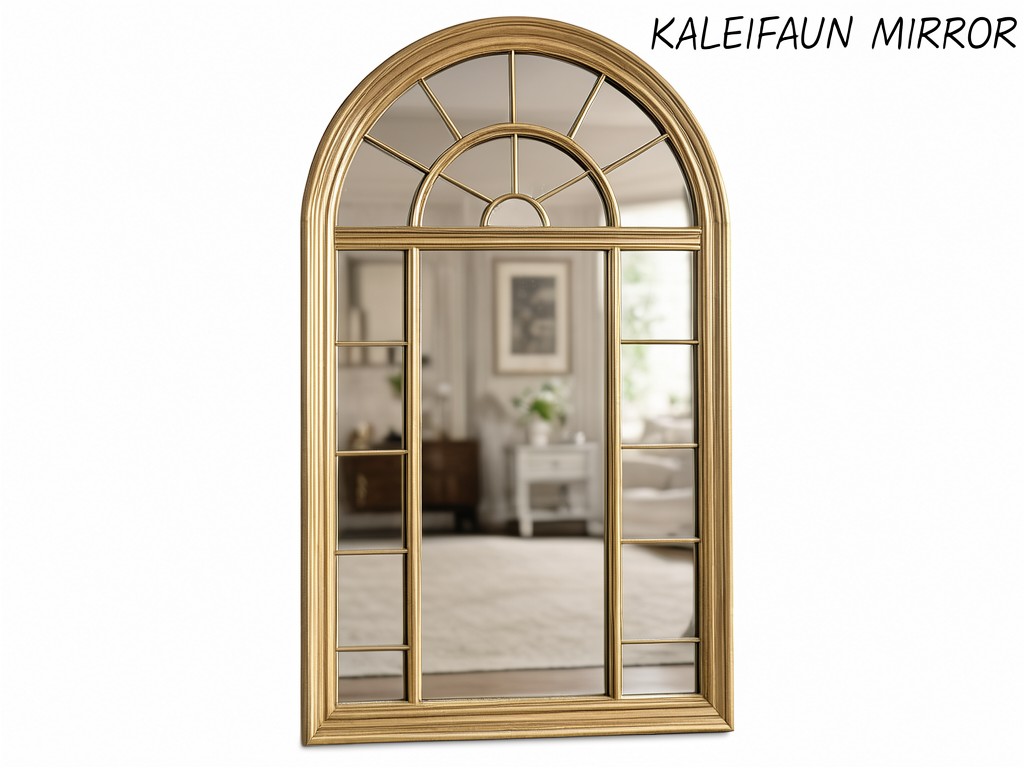
Comparing Two Standard Configurations
Weight and stiffness trade off against one another. A frameless mirror keeps the visual line spare and reduces added frame material, but its exposed perimeter needs careful edge finishing and carton protection. A framed version adds perimeter support and a defined finish; frame material and profile add cost, weight, and another fit check.
Frameless, Polished Edge
Choose this option for a clean edge-to-wall appearance and fewer visible components. The quote should define the polished edge, rear safety film if required, mounting hardware, and individual corner protection.
Framed, Perimeter Protected
Choose a frame when the product needs a finished border or added protection around the glass edge. Approve the frame profile, finish, corner joints, and fit to the crowned outline on the sample.
Who Uses It and Where It Matters
Retail importers select crowned arch mirrors for coordinated bedroom, entryway, and dressing-area ranges. In those settings, the mirror must arrive without edge damage and repeat the same silhouette across replenishment orders.
- Hospitality purchasing teams use wall-mounted mirrors in guest rooms and suites, where frequent cleaning makes backing condition and wipeable edge details relevant.
- Furniture and homeware distributors need carton dimensions and packed weight to plan warehouse handling and reduce breakage in mixed-product shipments.
- Private-label buyers rely on a retained, signed sample and controlled drawing revision to keep the crown shape and branding consistent between purchase orders.
OEM and ODM Programme Structure
A repeatable programme begins with the buyer’s drawing or a jointly developed profile. The factory prepares a production drawing, confirms the glass and edge specification, then supplies a sample for dimensional, finish, and packaging review. Production follows only after written approval of the sample, artwork, tolerances, and packing details.
| Customization Point | Available Direction | Approval Record |
|---|---|---|
| Shape and dimensions | Standard size or buyer-specific width, height, and crown profile. | Dimensioned drawing with revision number and agreed tolerances. |
| Edge, frame, and backing | Edge finish, frameless or framed build, backing paint, and optional rear safety film. | Signed physical sample and written construction specification. |
| Branding and packaging | Carton print, product labels, protective inserts, and export packing configuration. | Approved artwork proof and packaging sample or specification. |
| Order quantity and timing | MOQ and production lead time depend on size, frame choice, packaging, and sample approval status. | Confirmed order schedule after specification and sample sign-off. |
For reorders, link the purchase order to the approved drawing, sample record, artwork, and packing specification. That reference set helps distinguish a genuine production deviation from a change requested after approval.
Request a sample: Share your target dimensions, crown profile, glass and frame preference, destination market, and packaging needs. Contact the team to discuss a sample request and agree the approval steps before production.







