
Specifying Custom capsule full length wall mirror Factory for Wholesale and OEM Orders
Cheaper stock options fail at the worst point in the season: a replacement mirror arrives with a different capsule profile, glass thickness or frame finish, and the buyer absorbs both the return and the reorder cost. A lower unit price can make sense for a one-off purchase, but repeat OEM orders need stable dimensions and a construction record that the factory can reproduce. Set the decision rule against expected replacement cost, not the purchase price alone.
Materials and Construction Trade-offs
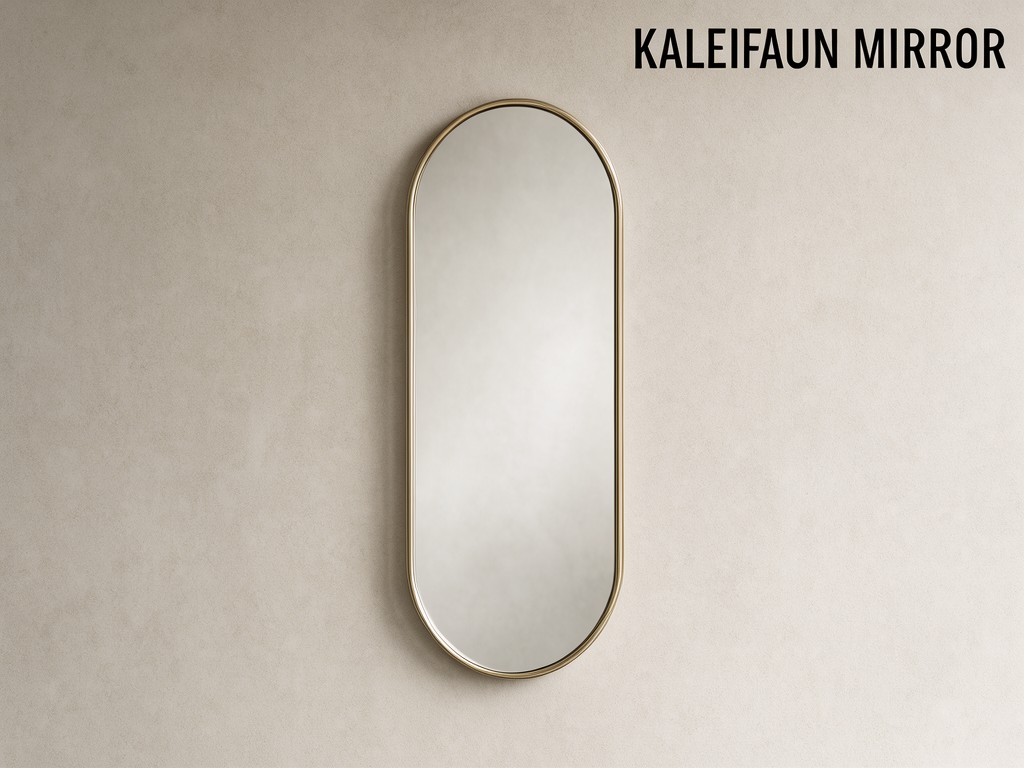
For a capsule full-length wall mirror, glass thickness, edge finishing, reflective coating and backing protection drive most of the cost and return risk. A thinner glass specification lowers material and freight weight, but it has less stiffness across a tall panel and places more importance on wall support and installation. A thicker panel adds weight and cost; specify it when the dimensions, mounting method or expected handling justify the change.
Silvered mirror glass is a common choice for a clear household reflection. The backing paint protects the reflective layer, while an optional safety film helps retain fragments if the glass breaks; it does not replace safety glazing where a market or installation requires a particular glazing type. Frameless polished edges keep the outline minimal, while a metal frame covers the edge and adds a defined finish at additional material and assembly cost.
Cost rule: lock glass thickness, capsule outline, edge treatment and backing or frame finish as one approved specification. Changing any one of these between purchase orders can alter weight, fit or appearance enough to trigger buyer complaints.
How It Is Built and What That Changes
Production starts with a controlled glass blank and a drawing that defines the overall height, width, corner radii and mounting details. The blank is cut to the capsule profile, then the perimeter is ground and polished. After edge work, the glass receives its reflective coating and protective backing layers; a frame, if specified, is fitted only after the finished glass dimensions are confirmed.
Each operation affects the next. A profile that varies at the curved ends can leave uneven clearance in a frame, and a poorly finished edge is more vulnerable to chips during handling. For repeat orders, the approved drawing, edge profile, glass thickness and finish should remain the production reference. The factory can compare sampled units against those references with dimensional checks, edge inspection and a visual review of the mirror surface and backing.
Tooling amortisation decides whether a dedicated cutting fixture or repeatable template pays back across the forecast volume. A stock outline may reduce setup cost for a small order, while a customer-specific capsule profile can justify dedicated setup when it protects shelf identity and avoids fit variation across replenishment batches.
Measured Performance in Real Use
A mirror is judged first by a clear, undistorted reflection and then by whether it stays intact and presentable through installation and everyday use. Tall, wide glass can show distortion if the substrate or mounting surface is uneven; wall fixings also need to suit the mirror’s finished weight and the wall structure. A heavier panel is not automatically a better choice if the mounting specification does not account for its load.
For warranty control, check consistency across the full unit rather than relying on a centre-only visual review. Look for coating blemishes, backing damage, edge chips, profile mismatch and frame gaps. Fixing these issues before shipment costs less than processing a return after retail delivery, especially when the replacement must match an existing batch.
Size, Weight and Specification Range
The figures below are starting points for a custom quotation, not fixed catalogue tolerances. Final weight depends on the glass area, thickness, frame and fittings; confirm the approved drawing and finished-unit weight before costing wall hardware or freight.
Overall Size
Common starting range: about 400–600 mm wide and 1,200–1,800 mm high. Capsule proportions and end radius are set by the approved drawing.
Glass Thickness
Typically specified at 4–6 mm, subject to finished dimensions, mounting design and the buyer’s market requirements.
Finished Weight
A 500 × 1,600 mm panel with 5 mm glass is approximately 10 kg for the glass alone; frame and fittings increase the total.
Edge and Finish
Choose polished exposed edges or a frame-covered perimeter. Specify backing, frame material and colour with the same revision-controlled drawing.
Assumptions Buyers Should Stop Making
A shared product name does not guarantee a shared outline, thickness or mounting arrangement. These assumptions often create avoidable claims:
- “Full length” is a dimension. State finished height and width, not just the product description.
- A capsule silhouette is not a universal template. Define the end radius and straight-side length on the drawing.
- Safety film does not make every mirror suitable for every location. Confirm applicable market and installation requirements before approving the construction.
- A repeat purchase is not automatically identical to the first batch. Keep the approved sample, drawing revision, finish and component specification tied to the purchase order.
- Mounting hardware is not interchangeable by appearance alone. Confirm the mirror’s finished weight and the wall-fixing arrangement.
Requirements by Buyer Segment
Brand Product Managers
Protect visual identity across launches and replenishment by locking the capsule outline, frame colour, branded components and approved sample. A controlled specification limits appearance drift that can prompt customer returns.
Procurement Officers
Compare landed cost against glass thickness, frame construction, approved dimensions and the cost of a replacement claim. Confirm that quoted tooling and any minimum order apply to the exact SKU and finish, rather than to a broad product family.
Working as a Production Partner, Not a Catalogue Supplier
OEM and private-label orders need a stable reference set, not a verbal description passed from one order to the next. The production file can hold the approved drawing, material choices, finish references, mounting details, branding artwork and sample approval status. Those records give both parties a way to resolve a dimensional or finish query before it becomes a batch-level dispute.
For the first order, custom profile setup and sample approval can add time before production release. On repeat orders, a confirmed specification and unchanged materials simplify planning, but new finishes, glass thickness changes or revised artwork may require fresh approval. MOQ depends on the selected dimensions, frame and finish; lead time should be confirmed against sample status, material availability and order quantity.
| Order Stage | MOQ Basis | Lead-Time Basis |
|---|---|---|
| Prototype or approval sample | Quoted separately; custom profile setup and sample quantity affect cost. | Begins after drawing and material details are confirmed; approval changes may extend the schedule. |
| Initial OEM production | Set by the selected size, frame, finish and production setup. | Confirmed after sample approval, order quantity and material availability are known. |
| Repeat order | Quoted against the retained specification and current order quantity. | Reconfirmed for each purchase order; specification or finish changes require a schedule review. |
Questions Buyers Ask Before Ordering
Can the factory reproduce a customer-specific capsule outline?
Yes. Provide a dimensioned drawing or approved physical reference with overall size, end radius, edge finish and mounting details. Confirm any setup cost and sample requirement before placing the production order.
How should we choose between 4 mm and 6 mm glass?
Choose against the mirror dimensions, mounting arrangement, expected handling and local requirements. The thicker option adds weight and material cost, so include those effects in the mounting and freight review rather than selecting by thickness alone.
What information is needed to quote MOQ and lead time?
Share the target dimensions, glass thickness, frameless or framed construction, finish, order quantity and whether artwork or a custom profile is required. The factory can then quote the MOQ and schedule for that configuration instead of a generic stock item.
Can the first approved sample control repeat-order consistency?
It can serve as a visual reference alongside a controlled drawing and written material and finish details. Keep the sample approval tied to a revision; a physical sample alone may not capture dimensions or construction details needed for repeat production.
Review the Quotation Against Your Return-Cost Targets
Send the drawing, target quantity, finish requirements and approved market details for a quotation review. Confirm the sample plan, MOQ and repeat-order reference before committing to the unit price.
Request a quotation review






