
Custom Ornate Long Wall Mirror Cost: What Buyers Should Check Before Ordering
Tooling amortisation decides whether a custom ornate long wall mirror makes financial sense across the first order and its reorders. A lower unit quote can be misleading if the frame profile, finish, or packing method leads to breakage, touch-up work, or a replacement run during peak season.
What the Design Has to Balance
| Indicative mirror size | Typical finished weight | Common build basis | Cost and handling effect |
|---|---|---|---|
| About 1200 × 400 mm | Approximately 8–12 kg | 4–6 mm mirror glass with a molded ornate frame | Lower glass area, but frame detail and protective packing still affect the quote. |
| About 1500 × 500 mm | Approximately 12–19 kg | 4–6 mm mirror glass; weight varies with frame depth and backing | Confirm carton dimensions and wall-fixing capacity before locking the specification. |
| About 1800 × 600 mm | Approximately 15–24 kg | 4–6 mm mirror glass with a deeper or more detailed frame profile | Greater glass area raises freight and breakage exposure; use the packed dimensions for landed-cost planning. |
These are planning ranges, not a final weight commitment. Glass thickness, frame depth, backboard, hanger hardware, and protective corners all change the finished figure. A larger mirror also needs enough frame stiffness to keep the glass seated without putting uneven pressure on its edges.
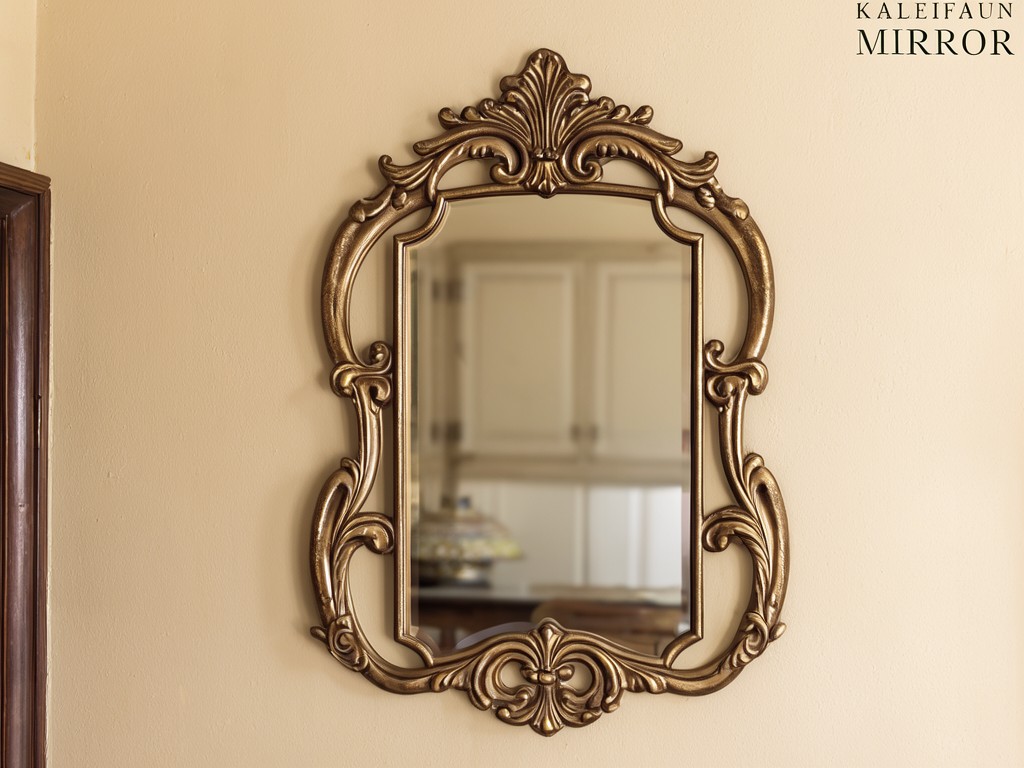
The ornate profile sets more than the look. Deep relief costs more to mold, finish, inspect, and protect in transit; shallow details are easier to repeat and less likely to collect dust or suffer edge knocks during handling.
Construction Method and Its Effect on Consistency
A practical repeat-order route uses a molded polyurethane frame profile, a separately fabricated mirror blank, and final assembly after the frame finish has cured. The factory cuts and edge-finishes the glass, molds and trims the frame, applies primer and decorative finish, then assembles the mirror with the specified backing and hanging hardware. Matching the approved profile and finish across batches depends on holding the mold, coating sequence, and assembly position constant.
Repeat Profile with Standard Finish
A fixed mold and a controlled finish recipe spread setup cost across multiple orders. This route suits buyers who need the same outline, relief depth, and colour on seasonal replenishment.
New Profile or Hand-Applied Detail
A new mold, revised relief, or extra hand-applied finish work adds setup and labour. It can be justified for a distinct private-label design, but small runs carry more tooling cost per unit.
Approve a physical sample for frame colour, relief depth, glass fit, hanger position, and rear finish before mass production. A digital image cannot show how a metallic or antiqued coating shifts under store lighting.
Assumptions Buyers Should Stop Making
Cheaper stock options fail at the worst point in the season when the frame finish chips, a glass edge arrives damaged, or a replacement does not match the original batch. Unit price alone will not show the cost of returns, re-packing, or a delayed display reset.
- A decorative finish is not automatically suited to damp rooms. Humidity can reach the frame joints and mirror edge; specify the intended room conditions and ask how those areas are sealed.
- “Wipe clean” does not mean resistant to every cleaner. Abrasive pads and strong solvents can dull a painted or metallic-look surface.
- A matching colour name does not guarantee a matching batch. Keep an approved finish sample and define acceptable variation for repeat orders.
- A long mirror needs more than a larger carton. Unsupported glass edges and frame corners can take impact during sorting and final-mile delivery.
Replacement rate, not unit price, is the useful comparison. Ask for the packed configuration and proposed inspection points alongside the product quote.
Usage Scenarios and Buyer Segments
Use conditions shape both the frame finish and the landed cost. Indoor display and dressing areas place different demands on the mirror than a humid changing room or a bright wall beside a large window.
- Furniture and home-decor retailers need a stable finish appearance across showroom samples, boxed inventory, and later replenishment.
- Hotels and residential developers often require coordinated dimensions and hanging positions across multiple rooms, with packing suited to site delivery and installation.
- Dance, barre, and fitness studios need a clear reflective surface and a frame that tolerates routine wiping. Sweat residue and cleaning chemicals should not sit on the frame or exposed mirror edge.
- Changing rooms near pools or spas need a specific review of ventilation, chlorine-bearing air, and cleaning routines. A standard indoor decorative finish should not be treated as an outdoor or poolside specification.
Requirements by Buyer Segment
Private-label buyers usually need a frozen reference sample, repeatable branding placement, and a clear process for approving any finish or hardware change. Retail buyers tend to focus on carton dimensions, barcode position, visible-face protection, and the cost of handling damaged units. Project buyers need the size, weight, mounting method, and room conditions confirmed before installation planning.
Specify the Use Before the Finish
For mirrors exposed to direct sunlight, frequent wiping, or humid air, request a finish and edge-protection review against those conditions. UV can shift some decorative coatings over time; repeated abrasion can dull raised details; moisture at an unprotected edge can damage the reflective layer.
Stock Availability and Reorder Planning
Stock status usually depends on whether the frame profile, mirror size, finish colour, and hardware are already in the factory schedule. Standard dimensions and established finishes can reduce setup delays; a new profile or custom colour may require sample approval and tooling before the production slot is confirmed.
For seasonal retail, agree the forecast, reorder trigger, and approved sample early. Record the mold reference, finish specification, mirror dimensions, and hanger position on the purchase specification. That record helps prevent a visually similar but dimensionally different substitute when the original configuration is unavailable.
Lead time should be confirmed against tooling status, sample sign-off, material availability, and packing requirements rather than estimated from assembly time alone.
Packing, Marking and Freight Configuration
Glass breakage often starts at a corner or edge, so packaging needs to restrain the mirror rather than only cushion its face. Confirm corner protection, face separation, frame support, and whether cartons travel as individual retail packs or in an outer master carton. Long formats may need a different pallet pattern from compact mirrors.
Check packed dimensions and gross weight before booking freight. Retail labels, carton marks, handling orientation, and batch identification should match the destination market and the buyer’s warehouse process. If cartons may face damp storage during transit, specify suitable outer protection without trapping moisture against the frame.
Setup, Use and Replacement Parts
Install using fixings suited to the wall substrate and the confirmed finished weight. Check that hangers sit level and carry the load evenly; do not use the frame ornament as a lifting point. For site projects, keep the installation guide with the delivery and confirm the fixing method before units reach the room.
For routine cleaning, use a soft cloth and a cleaner approved for the mirror and frame finish. Apply liquid to the cloth rather than soaking frame joints or allowing cleaner to pool at the glass edge. Avoid abrasive pads, and wipe sweat, sanitizer, or chlorine-bearing residue from the frame promptly where those exposures occur.
Store replacements upright with edge protection and a stable separator; do not leave a mirror flat where uneven pressure can load the glass. Ask the manufacturer whether matching frame sections, hangers, or backing components can be supplied separately, since ornate molded profiles may not be practical to repair after impact.
Request an Artwork and Branding Review
Send the target dimensions, reference images, finish sample, logo or label files, annual quantity, and delivery market for a cost review. The review can confirm whether the existing frame profile fits the brief or whether new tooling and a separate approval sample are needed.







