
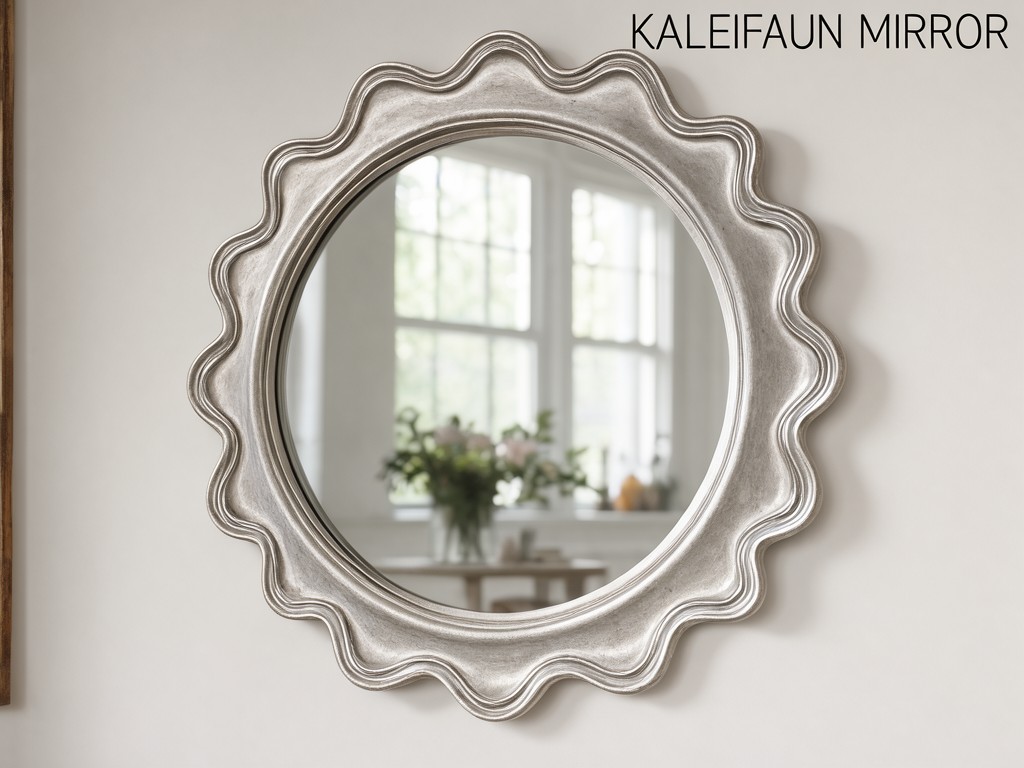
Durable scalloped round wall mirror Suppliers - Bulk Supply and Specification Guide
Two suppliers quoting the same specification can deliver mirrors that differ in scallop depth, edge finish, backing fit and hanger position. Those differences affect the wall appearance, installation effort and chance of damage in service. Agree the drawing, tolerances and approved sample before comparing unit prices against a launch date.
A production specification should identify the finished diameter, glass thickness, outline, backing, mounting method and acceptable visual variation. Suppliers of scalloped round wall mirrors can then quote the same build rather than similar catalogue descriptions.
Drawing Release
Set the finished diameter, scallop count and depth, and the reference point for all dimensions.
Sample Approval
Approve the mirror’s outline, reflection appearance, backing fit and hanging position against a signed reference sample.
Launch Control
Tie production release to artwork approval, sample sign-off and the agreed shipping date.
What This Product Is and Where It Fits
A scalloped round wall mirror combines a reflective glass panel with a shaped perimeter and a rear support or mounting arrangement. The outline is part of the product specification, not a minor decorative detail: changes to lobe depth or spacing alter the visible profile and may affect the glass-cutting program and backing template.
For importers and retail buyers, the useful purchasing unit is a repeatable finished configuration. Confirm which diameter, glass build, backing and hanger belong to each SKU before production starts.
What the Design Has to Balance
Before comparing quotations, settle the intended viewing distance and wall location. A deeper scallop makes the outline more pronounced, but it also leaves less glass between adjacent curves; narrow transitions need a drawing that the glass cutter and edge-finishing process can reproduce consistently.
A smooth, finished edge matters wherever users may handle the mirror during installation or cleaning. The trade-off is additional edge work and processing time compared with a simpler perimeter. Choose the profile for the room and handling conditions, then approve it at full scale rather than from a small screen image.
Approval rule: freeze the outline and mounting coordinates together. A late hanger change can require a revised backing pattern even when the front-view drawing stays the same.
What Actually Determines Performance
Unit price and service life diverge when glass thickness, perimeter finishing or backing construction changes between quotes. The figures below are planning ranges, not a substitute for a controlled product drawing; scallop depth, backing and hardware affect final weight.
| Finished diameter | Indicative unit weight | Common material build | Specification point to confirm |
|---|---|---|---|
| About 600 mm | About 3–5 kg | Silvered mirror glass, commonly 3–5 mm; shaped backing may be MDF or plywood. | Finished outline, edge treatment and hanger position. |
| About 800 mm | About 5–8 kg | Silvered mirror glass with a fitted MDF or plywood backing and specified hanging hardware. | Backing coverage, attachment points and wall-fixing assumptions. |
| About 1,000 mm | About 8–12 kg | Silvered mirror glass and a backing build selected for the panel size and mounting design. | Finished weight, fixing arrangement and installation instructions. |
A larger mirror places more load on its wall fixings and makes handling less forgiving. Confirm the finished weight and the intended fixing method with the buyer’s installation requirements; the mirror supplier’s hanger does not establish the capacity of the wall or anchor.
Buying Mistakes That Lead to Returns
A catalogue image rarely defines a scalloped edge closely enough for repeat orders. Buyers who approve only the general shape can receive a profile that looks noticeably different beside the approved display sample.
- Dimension the finished outer edge, scallop depth and spacing on the same drawing.
- Specify whether the stated diameter is measured across the widest points of the scalloped outline.
- Do not approve a front view without checking the backing fit and hanger location on the sample.
- Record acceptable visual characteristics, including reflection appearance and edge finish, before bulk release.
- Keep artwork and branding files tied to a named SKU and revision so later changes do not drift into an open order.
A dated sample approval and a revision-controlled drawing give procurement and production the same reference when an order is repeated.
Who Uses It and Where It Matters
Retail and Home-Furnishing Importers
A coordinated size range suits retailers that need a consistent outline across several room displays. Buyers should lock the approved profile and SKU dimensions before they release product photography or store-set plans.
Hotels, Salons and Club Facilities
Shared-use rooms call for an edge finish that feels smooth during routine cleaning and a mounting arrangement suited to the installation surface. Specify the room conditions and cleaning routine so the backing and placement are appropriate for the site.
Working as a Production Partner, Not a Catalogue Supplier
A production partner translates the buyer’s reference into a drawing that covers the glass outline, backing pattern, hanging hardware and finish. The buyer then reviews a sample against that drawing and records any changes before bulk production.
For private-label orders, supply vector artwork, placement dimensions, colour references and the required revision. Confirm whether branding belongs on a label, backing or retail insert, and approve its position on the sample rather than relying on an artwork proof alone.
Serviceability also belongs in the specification. A replaceable hanging component or clearly defined backing attachment can simplify repair, but each option must suit the mirror’s weight and intended installation.
Volume Planning and Lead Time
A retail or facility launch date depends on decisions that precede production: drawing release, sample approval, artwork sign-off and allocation of production capacity. Keep those approval dates on the same schedule as the required ship date.
Mixed sizes or several outline revisions can add separate setup and approval steps. Consolidating the first order around approved sizes can shorten the decision path; later variants can follow once the shared profile and finish are established.
Ask suppliers to quote production timing from sample approval, not from the date of the first inquiry. Confirm the order quantity by SKU and the latest date for changes to drawings or artwork before placing the purchase order.
Care, Storage and Service Life
Use a soft, non-abrasive cloth on the reflective face and keep liquid away from exposed edges and the rear backing. Repeated moisture at an unsealed edge can damage the mirror coating or backing over time, so the product specification should match the room’s humidity and cleaning practice.
Store units upright on a stable support with protection between faces, and avoid pressure on the scalloped perimeter. Before installation, check that the hanger and wall fixing suit the finished unit weight and the actual wall surface.
For a launch-critical order, send the proposed drawing, target quantities and required ship date for a tooling and production review. Request a tooling review before sample approval so the outline, backing and mounting details are aligned before bulk release.







