
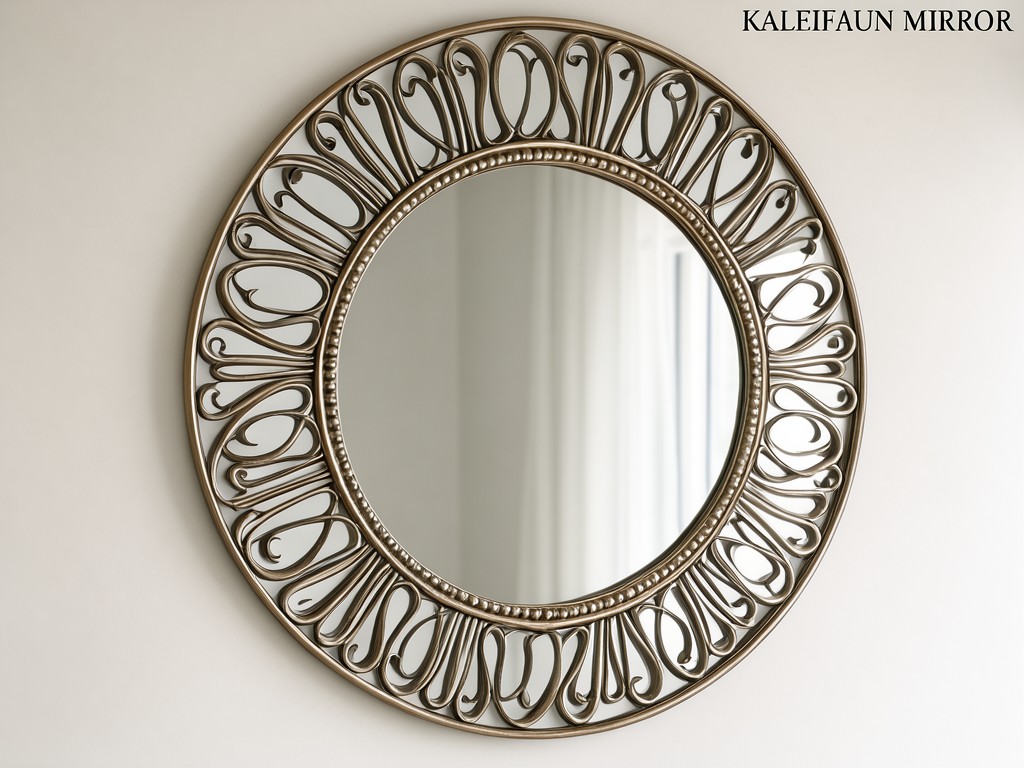
Specifying wholesale big round curved decorative wall mirror suppliers for Wholesale and OEM Orders
Material choice starts with the conditions the mirror will meet. A large convex glass face, its backing and the frame each affect image character, weight, moisture tolerance and the chance of damage in transit.
For wholesale and OEM orders, settle the intended curve, diameter, edge treatment and frame material before comparing unit prices. A lower-cost frame can save at purchase but may loosen at its joints or show finish wear after repeated handling. Convex glass also produces a wider, curved reflection rather than the undistorted view of a flat mirror; buyers should approve a physical sample before they commit to a repeat order.
FACE
Convex mirror glass
Approve the curve and reflected image on a sample.
BACKING
Protective mirror backing
Specify edge coverage and moisture exposure.
FRAME
Metal, wood or composite
Match the finish and support to the mirror weight.
INSTALLATION
Hanging hardware and wall type
Confirm the intended fixing method before packing.
Where Cheaper Alternatives Fall Short
Cost and durability pull in opposite directions once the mirror is large enough for glass support, frame stiffness and freight protection to matter. The first complaints tend to be visible: a distorted reflection that differs from the approved sample, finish marks around the rim, or a frame that shifts after installation.
- A thin or uneven frame can flex around a large face. That movement places stress near the glass edge and can loosen joints during handling.
- Insufficient protection at the mirror backing and edges leaves the reflective layer more exposed to damp air. Dark spots or edge deterioration may appear sooner in humid rooms.
- A low-cost hanging fitting may not suit the finished unit's weight or the buyer's wall type. Returns then follow from installation problems rather than appearance.
- Minimal corner protection can allow rim dents, chipped glass edges or frame abrasions before the product reaches retail or a project site.
Buying rule: Treat the approved sample as the reference for curvature, visible finish, frame profile and hardware position. Price comparisons are useful only after those details match.
Assumptions Buyers Should Stop Making
A decorative mirror is not automatically suitable for an exposed outdoor location. Unless the supplier confirms the frame, backing, joints and fixings for that exposure, specify indoor use. Bathrooms and other humid spaces also need clear limits; moisture can reach vulnerable edges even when the front face is easy to wipe.
Do not treat all round convex mirrors as optically interchangeable. Curve depth changes the field of view and the apparent size of reflected objects. A product intended for decoration should not be presented as a safety or traffic mirror unless its function and suitability have been separately established.
Nor does a matching diameter guarantee a matching finished weight. Glass thickness, frame section, backing and hanging hardware all contribute. Request a finished-unit weight and packing dimensions for the approved configuration before calculating freight or confirming wall hardware.
Capacity, Tooling and Scheduling
Diameter, curve specification and frame design determine whether an existing supplier setup can support the order or whether new patterns, forming fixtures or frame tooling are required. A custom profile can improve the match to a retail design, but it adds approval steps and setup cost. Reusing a documented profile usually reduces repeat-order variation.
Ask suppliers to separate sample approval, material procurement, production scheduling and export packing in the quoted lead time. A revised finish or late artwork approval can move the dispatch date even when the mirror size stays unchanged. For repeat orders, keep the approved drawing, finish reference, hardware layout and packaging specification tied to the same revision.
Before placing a volume order, request confirmation of available diameter ranges, order quantity thresholds by finish, sample charges, tooling ownership and the process for handling replacements. Suppliers should state their current schedule against the exact specification rather than rely on a general production estimate.
Setup, Use and Replacement Parts
Install the mirror on a wall that can support the finished weight, using fixings suited to the wall construction. Keep hanging hardware aligned with the approved layout; improvised changes can concentrate load at the frame or put pressure on the glass edge.
For routine care, use a soft cloth and a cleaner suitable for mirror glass. Keep liquid away from the frame joints and exposed backing. Abrasive pads, strong solvents and standing moisture can mark finishes or affect the reflective layer. In spaces with frequent humidity, inspect the lower edge and frame connections as part of routine maintenance.
| Receiving checkpoint | Acceptance reference | Complaint it helps prevent |
|---|---|---|
| Diameter and frame profile | Compare with the approved drawing and sample. | Size mismatch or a visibly uneven rim. |
| Convex face and visible reflection | Review under consistent viewing conditions against the approved sample. | A curve or image character that differs from the sample. |
| Glass edge, backing and frame finish | Check for chips, exposed backing, scratches, finish gaps or loose joints. | Edge damage, early finish wear or frame movement. |
| Hardware and export pack | Confirm the specified fittings are present and the packed unit has intact corner protection. | Installation delays or transit damage. |
For replacement planning, ask whether the supplier can provide matching hanging hardware, frame components or a complete replacement unit. Glass curvature and finish shade can vary between production runs, so a replacement face may not visually match an older installation unless the supplier retains the approved specification and reference sample.
Ordering, Tooling and Lead-Time Questions
The figures below are planning ranges, not a substitute for a supplier's finished-product drawing. Curvature, glass thickness, frame construction and hardware can change both packed dimensions and unit weight.
| Configuration | Typical planning size and weight | Material and trade-off | Selection note |
|---|---|---|---|
| Light frame, convex face | About 600-800 mm diameter; roughly 4-8 kg | Mirror glass with a slim metal or composite frame; lower shipping weight, with less frame material at the rim. | Confirm frame stiffness and how the hanging fitting transfers the load. |
| Wide metal rim, convex face | About 800-1,000 mm diameter; roughly 7-12 kg | Mirror glass with a broader metal frame; a heavier rim can add support but raises freight and installation load. | Specify finish sample, joint detail and packed weight. |
| Decorative wood or composite frame | About 600-1,000 mm diameter; roughly 6-14 kg | Mirror glass in a profiled surround; detail and finish options increase, while joints and surface protection need closer control. | Review finish consistency and moisture limits for the intended room. |
Which details should be fixed before a sample is approved?
Confirm the diameter, convex profile, frame section, finish, backing, hanging position, included hardware, carton protection and retail labelling. If branding appears on the frame or packaging, supply final artwork and placement dimensions before sample production.
How do tooling and order quantity affect the quote?
A new frame profile, custom finish or non-standard diameter may require setup or dedicated tooling. Ask for those charges separately from the unit price, and confirm which costs recur on a reorder. Minimum quantities may differ by frame material, finish and packaging choice.
What should the lead-time quotation include?
Request a schedule from sample approval through material confirmation, production, packing and dispatch. Get the supplier to identify the date that starts the production clock, especially if finish approval, artwork or tooling remains open.
Can the mirror be specified for humid or outdoor use?
Do not assume outdoor suitability. State the installation environment and ask the supplier to confirm the limits for the backing, frame finish, joints and fixings. For outdoor exposure, require a separately specified construction and approval sample before placing a bulk order.
Share the target diameter, curve, frame finish, installation environment and order quantity for a specification review. A written sample reference and confirmed packing details help reduce avoidable warranty claims and reorder differences.
Request a specification review before artwork, tooling or production approval.







