
Wholesale black metal round decorative wall mirror Suppliers: What Buyers Should Check Before Ordering
During a private-label launch with a fixed ship date, a round mirror can hold up the range if its drawing, finish sample or carton plan remains open after the order is placed. Agree the frame profile, glass size, mounting position and approval sequence before the production slot is confirmed. That gives procurement a clear basis for checking the first unit and tracking the batch through packing.
Scope of Supply and Physical Form
| Item | Common order scope | Confirm before production |
|---|---|---|
| Overall diameter | Often specified within a 400–800 mm range; other sizes depend on the frame and glass layout. | Dimensioned drawing, measurement points and agreed tolerance. |
| Mirror glass | Thickness and exposed edge detail vary by diameter, backing method and target price. | Glass specification, visible area and edge coverage in the approved sample. |
| Metal frame | Formed steel ring with a welded or joined closure; profile depth and face width are configurable. | Profile cross-section, seam location and allowable variation around the circle. |
| Black finish | Powder-coated black, with gloss level and surface texture set by the selected finish sample. | Colour reference, gloss expectation and acceptable surface marks. |
| Mounting and packing | Hanging hardware and protective carton configuration are matched to the mirror size and sales channel. | Hardware position, wall-fixing assumptions, label artwork and carton drop-risk review. |
A typical unit combines a circular glass mirror with a formed steel surround, a black powder-coated finish and rear mounting hardware. The exact build changes with diameter and frame depth: a wider face uses more steel, while a deeper profile can increase both packed dimensions and freight cost. Buyers should approve a dimensioned drawing alongside a physical finish sample; a colour reference alone cannot show texture, edge coverage or the appearance of the frame joint.
The factory should record which sample and drawing revision governs the order. If either changes after approval, recheck the unit cost, production timing and packaging fit before releasing the revision.
Measured Performance in Real Use
In retail handling and home installation, the recurring complaints are a frame that looks uneven, a finish mark at the joint, glass damage at the edge or a hanging point that does not sit level. These faults are easier to control when the inspection plan uses the approved sample as its visual reference and the drawing as its dimensional reference.
Approval rule: Set the diameter, frame profile, mounting location and acceptable finish appearance on the signed-off drawing and sample. A tolerance that is not agreed before production is difficult to apply consistently at incoming inspection.
For mirrors used in bathrooms or other humid rooms, specify the intended environment before choosing the frame finish and rear construction. A powder-coated steel frame is not a substitute for a wet-area specification; coating damage or exposed metal can raise corrosion risk. If the product is intended for a dry interior, state that use condition in the order documents instead of implying a moisture rating.
Packaging also affects the delivered condition. Edge protection, separation between glass faces and a carton sized to limit movement matter more as diameter and unit weight rise. Confirm the packing sample before bulk packing, especially when units ship through multiple distribution points.
Comparing Two Standard Configurations
The choice is usually between a slim ring that keeps material use and carton depth down, and a deeper-profile ring with a more pronounced border. Both can use a black powder coat, but the drawing and sample must identify the selected profile; finish approval alone does not establish the frame shape.
Slim Steel Ring
A narrow face suits ranges that need a lighter visual border and lower packed volume. The trade-off is less visible coverage of the glass edge, so the glass cut, frame concentricity and assembly position need close agreement.
Choose it when shelf presentation and freight cube matter more than a broad frame feature.
Deeper-Profile Steel Ring
A deeper profile gives the mirror a stronger border and may cover more of the glass edge. It uses more formed metal and can increase unit weight and carton depth; the seam and coating coverage also need review on the physical sample.
Choose it when the frame is a visible design feature and the price point accommodates the added material.
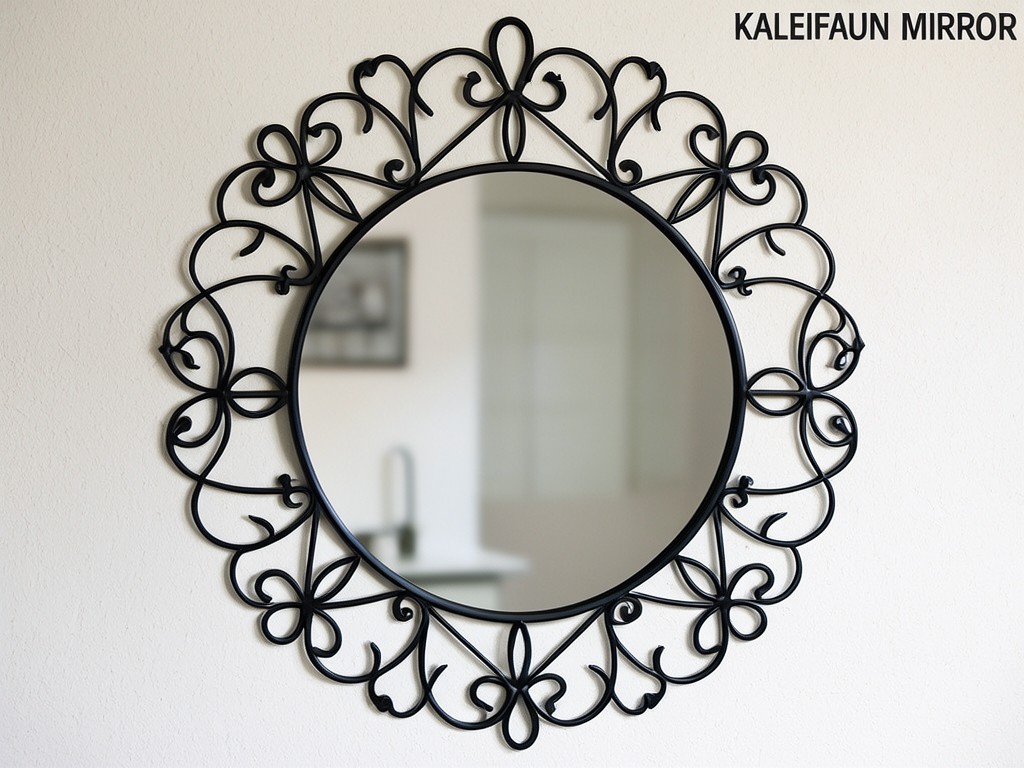
For either configuration, keep the frame section, glass diameter and hanger position tied to one drawing revision. A change to the face width can alter the visible mirror area even when the overall outside diameter stays the same.
Matching the Product to the Buyer's Need
Home décor retailers often need a consistent black finish across several diameters, so approve one finish sample and define how the other sizes relate to it. Boutique hotel and salon buyers may place more weight on secure wall mounting and repeatable replacement units; provide the intended wall type and installation method before hardware selection.
For a launch with a fixed ship date, the safest sequence is drawing approval, finish sample approval, packaging review, then production release. Retail artwork should reach the supplier early enough for a label or carton proof. Late edits can affect print approval and packing dates even when the mirror specification stays unchanged.
Use an order specification that names the reference documents, inspection points and carton configuration. That record gives the buyer a practical basis for checking pre-shipment samples and reconciling a later reorder with the first batch.
Customisation Options and Their Limits
Custom work is easiest to schedule when the buyer separates appearance decisions from structural changes. Black gloss level, matte texture, frame width, diameter, hanger location, protective pads and private-label packaging can be specified, but each change needs a clear revision record.
A new frame profile or mounting arrangement may require tooling or a revised forming setup, with a sample stage before batch approval. Artwork changes affect proofs and print setup rather than the metalwork, yet they can still delay dispatch if the final files arrive late. Confirm which changes affect cost, sample timing or minimum order quantity in the quotation.
Do not treat “black” as a complete finish specification. Agree the surface appearance using a physical sample or a written colour reference plus gloss and texture notes. Also state whether minor differences between production batches are acceptable, particularly when new stock must sit beside an earlier shipment.
Questions Buyers Ask Before Ordering
| Inspection point | Factory check | Buyer approval basis |
|---|---|---|
| Dimensions and shape | Measure outside diameter, frame face and hanger position against the current drawing. | Signed drawing with agreed measurement points and tolerances. |
| Frame and finish | Visual check for shape consistency, seam condition, coating coverage and obvious surface marks. | Approved physical sample and stated finish criteria. |
| Glass and assembly | Inspect visible glass edges, surface condition, seating and alignment within the frame. | Approved sample, specified visible area and agreed defect criteria. |
| Mounting and export packing | Check hardware placement, protective separation, edge protection and retail label placement. | Approved packing sample, label proof and order-specific carton plan. |
Which documents should be approved before the production slot is booked?
Approve the dimensioned drawing, black finish sample, mounting details and packaging artwork or label proof. Record the revision dates on the order so production and inspection use the same references.
Can the supplier confirm a ship date before the sample is signed off?
A provisional schedule may be discussed, but the production release should follow sample and drawing approval. Ask the supplier to identify the approval deadline, material preparation point and packing window that support the requested dispatch date.
What information is needed to quote a private-label order?
Provide target diameters and quantities, frame profile, finish reference, mounting preference, destination market and packaging requirements. Include artwork files and requested carton marks when available; a change in size mix or pack configuration can alter the quotation and dispatch plan.
How should reorders match an approved first batch?
Keep the signed drawing, finish reference, inspection record and packing specification with the purchase order. Ask the supplier to confirm that no material or process change affects the approved appearance before the reorder enters production.
Review the Specification Before Ordering
Send the target dimensions, frame profile, finish reference, mounting requirements and ship-date target for a specification review. Aligning the drawing and approval steps before production helps keep the retail launch schedule tied to a defined product and packing plan.







