
Wholesale semi circle wall mirror Factory: Specification, Ordering and Quality Notes
Before comparing quotations, align the visible diameter, glass thickness, edge finish, backing and hanging method. A semi-circle mirror can match a private-label specification without a new design, but small differences in those details affect installed appearance, carton size and replacement risk.
Measured Performance in Real Use
For changing rooms, academy wash areas and studio reception spaces, buyers judge the mirror by a clear reflection, a consistent curved edge and secure wall mounting. The flat edge must sit level; a slight difference in diameter or edge treatment becomes obvious when multiple units share one wall.
Moisture usually shows first at an exposed mirror edge, where backing damage can develop into dark spots. Specify an edge finish suited to the room’s cleaning and humidity conditions, and keep standing water away from the perimeter. A safety backing film can help retain fragments after breakage, but it does not make the glass unbreakable or replace suitable wall anchors.
| Usage level | Typical setting and exposure | Specification decision | Trade-off to review |
|---|---|---|---|
| Light-use interiors | Private studio or reception area with routine dry cleaning. | Choose glass thickness and edge finish to suit the diameter and mounting plan. | A lower material cost may suit limited-traffic locations, but does not address impact exposure. |
| Frequent shared use | Club changing areas or academy facilities with repeated daily use and regular cleaning. | Review backing film, protected edges and a mounting arrangement matched to the wall. | Added protection raises unit and packing cost; it cannot prevent damage from incorrect installation or direct impact. |
Specification Range and Customisation Limits
| Nominal diameter | Approx. height | Common glass thickness options | Indicative finished weight |
|---|---|---|---|
| 600 mm | 300 mm | 4–5 mm | About 1.5–2.2 kg |
| 900 mm | 450 mm | 4–5 mm | About 3.2–4.5 kg |
| 1200 mm | 600 mm | 4–5 mm | About 5.7–7.5 kg |
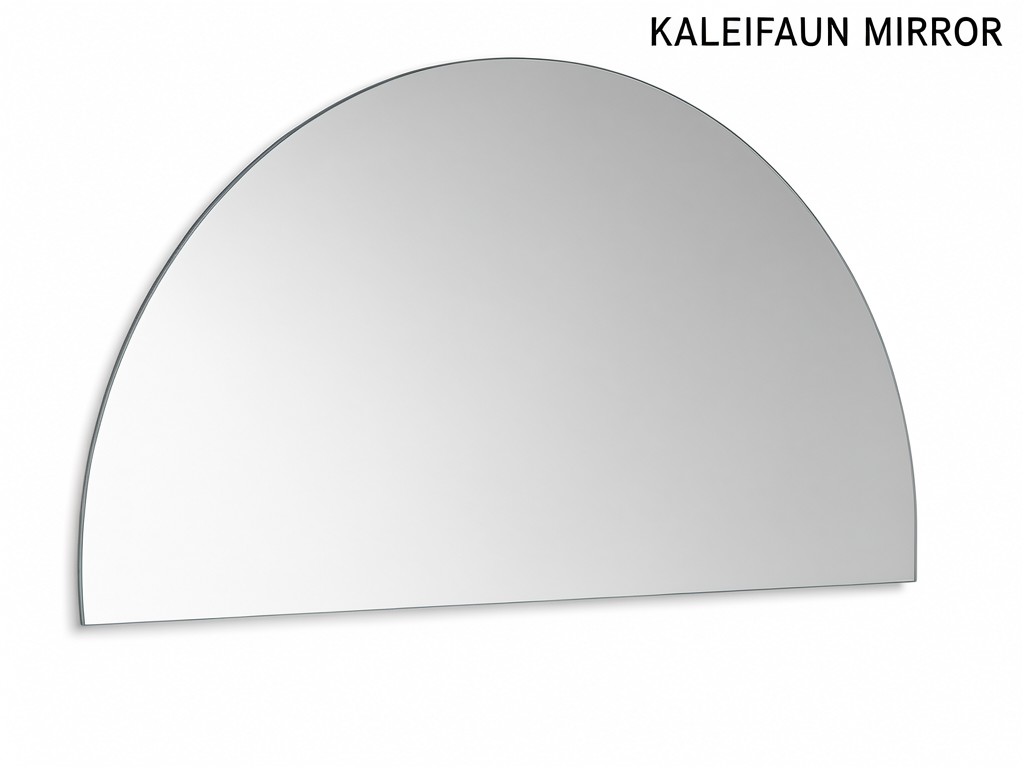
These are planning ranges, not fixed tolerances. Finished weight changes with glass thickness, backing film, frame or edge treatment, and mounting hardware. Confirm the finished outside dimensions and hanging points on the approved sample before a production order; custom diameters can also affect yield and carton dimensions.
Buying Mistakes That Lead to Returns
A product name is not a complete specification. Record the diameter, glass thickness, edge profile, backing, orientation, mounting method and acceptable appearance in the order file. Otherwise, two visually similar quotations may describe mirrors with different installed dimensions and protection.
Returns often follow a mismatch between the sample and the purchase order: a polished edge replaced by a less finished edge, a hanger in the wrong position, or a backing layer omitted from the bulk run. Confirm whether the diameter refers to the curved outside edge and specify how the flat edge is measured. For multi-unit installations, even a small variation can disrupt alignment.
Do not treat a mirror’s own weight as the full mounting requirement. The wall substrate and anchor selection determine the installation capacity, so the buyer or installer must verify compatibility at the site. Request the actual hardware configuration and fixing-point drawing rather than assuming that included fittings suit every wall.
Customisation Options and Their Limits
Changes that usually retain the base design
Private-label cartons, product labels, backing film selection and specified hanger placement can often be handled without changing the mirror outline. The approved sample should define each visible and concealed detail.
Changes that affect tooling or cost
A new diameter, altered curve, frame profile, non-standard edge or revised fixing layout can change cutting yield, finishing time and packing protection. A custom size may require a separate sample approval and minimum order discussion.
Share logo artwork as a production-ready file and confirm label position, language and carton marks before print. If the target is to match an existing private-label item, send a physical sample or dimensioned drawing; photographs alone rarely show edge finish or mounting details clearly enough.
Quality Control and Batch Consistency
Keep the approved sample as the reference
Two suppliers quoting the same specification can still differ in curved-edge smoothness, backing appearance and hanger placement. A signed sample or controlled reference unit gives the production team a visual and dimensional target. Record approved materials and hardware alongside it, so a reorder does not rely on product-name shorthand.
Batch checks should focus on dimensions, glass thickness, edge condition, reflective appearance, backing coverage and fixing location. Separate any unit with a chipped edge, visible coating damage, distorted reflection or loose hardware before packing. Keep lot identification linked to cartons and inspection records to simplify claim review and replacement decisions.
Inspection Items and Test Methods
- Measure the outside diameter, overall height and flat-edge length against the approved drawing. Check more than one point where the curved edge meets the straight edge.
- Use a thickness gauge and scale to verify glass thickness and finished unit weight against the agreed range.
- Inspect the reflective face under consistent lighting for scratches, spots, visible distortion and backing defects. Review the perimeter for chips, rough areas or coating exposure.
- Check hanger position, attachment and hardware count against the approved configuration. Confirm that the mirror sits in the intended orientation.
- Review sample cartons for separation, corner protection and movement inside the pack. A packing check can expose contact points that may cause edge damage in transit.
Inspection limits should be agreed before production, especially for cosmetic marks and dimensional variation. No single visual check confirms that a site’s wall or anchors can carry the installed mirror.
Packing, Marking and Freight Configuration
Confirm whether units ship individually boxed or in a consolidated export carton. Carton layout should separate glass faces and protect the curved edge and flat corners; the pack must also prevent the mirror from shifting during handling. Final carton dimensions depend on the mirror size and selected protection materials.
Specify the private-label name, SKU, carton count, orientation marks and destination-language labels before artwork approval. For mixed-size shipments, identify each size on the outer carton to reduce receiving errors. Ask for the packed dimensions and gross weight when comparing freight quotations, since protective packaging can add substantially to the mirror’s net weight.
For a quotation review, send the drawing or reference sample, target quantity, branding file, packing preference and destination. Submit the specification for a quotation review before artwork or production approval.







