
China gold trim bathroom mirror factory: Specification, Ordering and Quality Notes
During a private-label launch with a fixed ship date, the sample may look consistent while a later batch exposes differences in gold tone, frame joints or mirror edge coverage. For distributors and brand product managers, those details can become visible warranty claims once mirrors sit above sinks and face daily condensation and cleaning. Specify the frame finish, glass dimensions and edge protection together; approving each as a separate feature leaves room for batch variation.
Design Constraints Behind the Specification
A bathroom mirror has to hold its appearance where moisture collects along the lower edge and frame joints. A gold finish can show fingerprints, cleaner residue and small colour shifts more readily than a darker finish. Glass thickness, backing and edge sealing affect resistance to handling damage and moisture exposure; frame material and finish affect corrosion risk and how well the trim keeps its appearance.
The first complaint is often not a cracked mirror, but a visible change at the perimeter: dark spotting near an exposed edge, finish wear at a corner, or a joint that no longer sits flush. Where the mirror will be installed close to a shower or cleaned frequently, specify protected edges and a frame finish intended for bathroom use. A sample approval should record the viewed gold tone and sheen under neutral light, not just the colour name.
Specification rule: Set a reference sample for the gold finish, then assess production against it under consistent lighting. A finish name alone does not control shade, gloss or brushed direction between orders.
How to Choose Before Requesting a Quote
| Order stage | Typical planning allowance | MOQ basis | Confirm before commitment |
|---|---|---|---|
| Sample or finish approval | Often 2–4 weeks after the drawing and finish are agreed | Usually a small sample quantity; special frame tooling may change the cost | Glass size, frame profile, finish reference and mounting method |
| Repeat production | Often 4–8 weeks after specification, quantity and finish are confirmed | Standard profiles may allow a lower run; custom dimensions or finishes can require a larger batch | Available frame material, production capacity and any special components |
Use the table as a quote-planning guide, not a committed schedule: the factory should confirm timing and MOQ against the final size, finish and order mix. Before requesting pricing, provide the outside dimensions, glass thickness preference, frame profile, mounting details and target quantity. If a repeat order must match a previous batch, include the approved sample reference or retained finish record.
What Can Be Customised and What Cannot
Options That Can Be Specified
Outside dimensions, mirror shape, frame profile, gold shade and sheen, brushed or smooth appearance, mounting arrangement and private-label details can be agreed for the order. Each change can affect tooling, minimum quantity or sample timing, so confirm the combination rather than pricing options one at a time.
Limits to Record at Approval
A colour description cannot guarantee an exact match across different finish materials or production lots. Very narrow frame sections can also limit joint design and available mounting options. Treat the approved physical sample and dimensioned drawing as the control references for later orders.
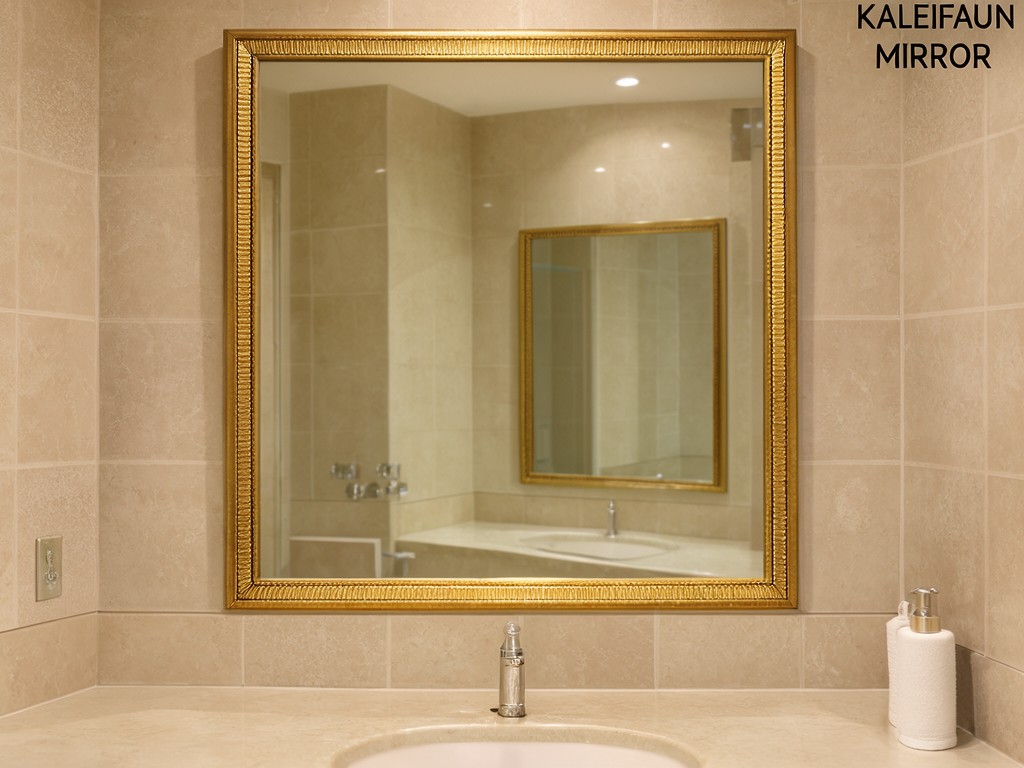
| Specification area | Common choices | Repeat-order control |
|---|---|---|
| Mirror and shape | Rectangular, round or other drawing-based shape; agreed glass thickness | Dimensioned drawing with outside size and glass size clearly distinguished |
| Gold trim | Frame material and finish selected to suit the target appearance and bathroom use | Approved finish sample, sheen and surface direction recorded together |
| Branding and mounting | Label or logo artwork, hanging orientation and fixing arrangement | Approved artwork file and mounting drawing kept with the order specification |
Keeping Repeat Orders Supplied
Moving from sample orders to container loads changes the main risk: small finish or dimensional differences become easier to spot across a larger quantity. Standard frame profiles and commonly used mirror sizes may be easier to schedule than a custom profile or one-off gold finish, but stock status must be checked when the purchase order is placed. Do not assume that a previously quoted component remains available for a later reorder.
For continuity, keep the approved drawing, finish reference, mounting details and label artwork under one product code. Ask the factory to confirm whether the repeat order uses the same frame material and finish route; an apparently similar gold option can differ in hue or reflectivity. Production checks should include overall dimensions, frame alignment, visible finish defects and mirror edge condition, with any acceptance limits agreed before the order.
Stock planning note: Separate standard components from order-specific finishes in the forecast. That distinction helps the buyer judge whether a reorder can use an existing profile or needs a new sample and confirmed production slot.
Questions Buyers Ask Before Ordering
Resolve these points at sample stage; each affects how closely a later shipment can match the approved bathroom mirror.
Can the gold frame match our finish chip exactly?
A chip is a useful target, but finish material, surface texture and lighting affect the perceived match. Approve a production-representative sample and record its sheen and surface direction as well as its colour.
What dimensions should the drawing show?
Show the overall outside dimensions, visible glass area, frame width and mounting points. A drawing that lists only the glass size can produce a finished mirror that does not fit the intended vanity space.
Does a custom size change the MOQ or schedule?
It can. A standard profile with a new cut size may have different setup needs from a custom frame profile or finish. Request a quote for the complete specification and order quantity, then confirm sample approval and production timing in writing.
Which artwork files are needed for private-label branding?
Provide the logo artwork in a clear vector format where available, plus the required label size, placement and colour information. Approve a layout proof before production so the brand mark does not conflict with mounting details or the mirror’s visible area.
Request an artwork and branding review before sample approval. Share the mirror dimensions, gold finish reference, mounting drawing and artwork file so the factory can check the specification as one repeatable product.
Send your artwork and specification for review






