
Custom high quality framed bathroom mirrors supplier: Specification, Ordering and Quality Notes
Replacement rate, not unit price, is the useful cost measure for a mirror range sold into bathroom projects. A small difference in frame finish or outer dimensions can create mixed-looking installs, while edge corrosion or glass breakage can turn a low-cost purchase into a return. Locking the drawing, finish reference and packing configuration before production helps match a private-label specification without redesigning the product.
Where Cheaper Alternatives Fall Short
In bathrooms with daily shower use, warm humid air repeatedly reaches the mirror perimeter. Lower-cost units often save at the glass edge, back protection or frame finish—the areas that show damage first. If a distributor receives panels with inconsistent outside dimensions, corner joints or finish tone, installation crews may reject otherwise usable stock and the buyer may have to replace complete units.
| Bathroom Use Condition | Complaint Seen on Returns | Specification to Control It |
|---|---|---|
| Frequent condensation near the mirror perimeter | Dark spots or deterioration that starts at an exposed glass edge | Specify edge finishing and back protection, then keep the frame-to-glass assembly clear of water traps. |
| Coastal or poorly ventilated indoor bathrooms | Frame finish dulls, stains or corrodes around joints and cut edges | Choose a frame material and finish suited to the exposure; define how corners and cut ends are protected. |
| Multiple units installed side by side | Visible variation in outside size, frame width or finish shade | Use a controlled drawing and approved finish sample; inspect dimensions and appearance against the same references by lot. |
| Parcel or pallet shipment with repeated handling | Chipped corners, cracked glass or scuffed frame faces at receipt | Match corner protection, internal separation and carton strength to mirror size and shipping route. |
What the Design Has to Balance
A larger mirror places more load on its frame, corner joints and wall fixings; glass thickness and hanging hardware therefore need to be set against the finished size and mounting method. Four-millimetre glass is common for many formats, while larger panels may call for a different glass and support specification. The final choice depends on the drawing, frame section and intended orientation, not glass thickness alone.
Moisture resistance is a system detail. Reflective backing, exposed glass edges, frame material, coating and assembly adhesive all affect how the unit fares in a humid room. Use a mirror-compatible neutral-cure adhesive where adhesive is part of the assembly; some other sealants can damage the mirror backing. The product is intended for indoor bathroom use, not continuous water contact or standing water.
Set the signed drawing and approved finish sample as the lot references. Record overall width and height, frame face width, glass specification, hardware position and finish; otherwise small production shifts can become obvious across a multi-mirror installation.
Comparing Two Standard Configurations
For a private-label range, the frame choice changes both the purchase cost and the finish controls needed from lot to lot. These are practical starting points; the required appearance, size and bathroom exposure should decide the final build.
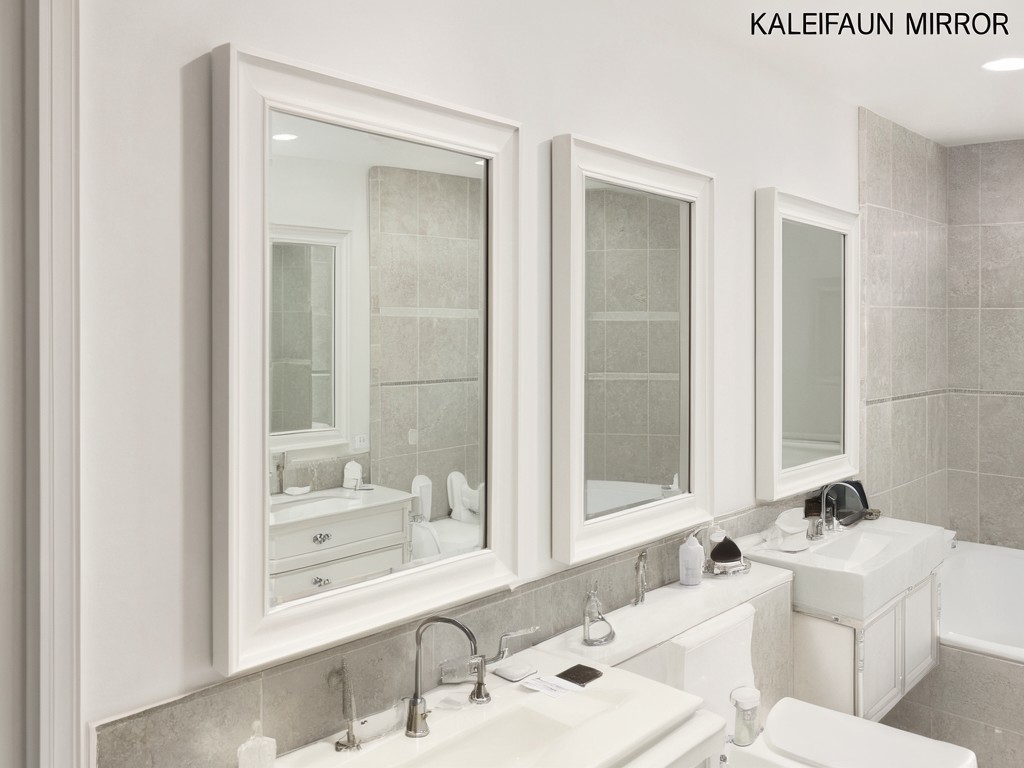
Powder-Coated Aluminum Frame
A cost-conscious choice for many standard sizes, with a relatively light frame and a broad choice of colours. Buyers should approve a physical finish sample and specify how coating is handled at cut ends and joints. A change in coating source or process can shift colour and surface texture between orders.
Choose it when the target retail price and frame appearance suit the range, and the finish can be held to a documented sample.
Stainless Steel Frame
A metal frame option for ranges that call for a distinct brushed or polished appearance. It typically carries a higher material and finishing cost than aluminum. Grade, surface finish and fabrication details must be agreed; stainless steel is not immune to staining where deposits remain or the finish is poorly maintained.
Consider it where the specified look justifies the added cost and buyers can keep the surface reference consistent across replenishment lots.
Buying Mistakes That Lead to Returns
Install and receiving complaints often trace back to details that were not fixed before sampling. Check these points before approving a production order:
- Measure the complete outside dimensions, not only the visible glass. Frame width changes the finished size and can affect fit within a cabinet or wall recess.
- Confirm portrait or landscape orientation, fixing locations and hanging hardware against the installation drawing. A correctly made mirror can still be unusable if the fittings land in the wrong position.
- Approve the actual frame finish under suitable lighting. Digital colour references alone may not capture differences in gloss, texture or metallic appearance.
- Do not compare quotations on glass thickness or frame material alone. Include edge treatment, mirror backing protection, hardware, carton protection and inspection scope in the specification.
- Ask how each lot will be checked against the approved sample. Uncontrolled substitutions can create dimension or finish drift that is costly to sort after import.
What Can Be Customised and What Cannot
A supplier can usually work to a buyer’s specified mirror dimensions, frame profile, finish colour, corner style, hanging orientation, fixing method and private-label carton or product marking. Changes to a frame profile may require new tooling or setup; the cost is easier to assess once the profile drawing and order volume are fixed. Using an existing profile can reduce setup expense, but it may limit the available face width or corner detail.
Glass and frame constraints still apply. A requested outer size must suit the selected frame sections, glass format, joint construction and packing method. Confirm tolerances on the drawing, especially for size-matched ranges, and approve a production-intent sample before releasing artwork or bulk packaging. Artwork should identify the retail panel, carton markings, language requirements and barcode position where applicable.
Keeping Repeat Orders Supplied
For distributors and importers, repeat-order control matters as much as the first approval. Keep the product drawing, glass and frame specification, finish reference, approved sample record and packaging artwork tied to the same item code. If a coating source, frame section or assembly detail changes, review the effect on appearance and fit before the next lot is released.
A practical receiving plan checks dimensions, finish appearance, frame joints, mirror edges, fittings and carton condition. Lot identification on cartons and production records helps trace a reported issue to the relevant shipment. For a specification review, share the drawing, target quantity, finish reference and destination packaging needs through the supplier inquiry page.
Packing, Marking and Freight Configuration
Mirror packing should protect corners and faces while preventing units from striking one another in transit. Individual foam or formed protectors, a rigid carton and internal separation are common starting points; larger formats or longer freight routes may require pallet or crate packing. Agree the pack-out against the finished mirror dimensions and shipping route, since added protection affects carton size, pallet count and freight cost.
Before production, confirm carton marks, item code, orientation or handling symbols, quantity per carton, barcode placement and any importer or retailer labels. A packaging sample or pack-out review can catch label, clearance and stacking issues before the full order ships. Request a specification review with the mirror drawing and destination details to align product controls and freight protection.
Specification Review
Send the target dimensions, frame material and finish, glass and edge requirements, mounting details, order quantity and packing destination. A specification review can identify fit, finish-control and freight-protection decisions before sample approval and production release.







