
Custom Project Supply Gold Bathroom Mirror Producer: Specification, Ordering and Quality Notes
Consistency is set at the forming stage: frame profile, corner geometry and glass dimensions must be fixed against one approved drawing before project quantities are released. A practical production route cuts and edge-finishes the mirror glass, applies the reflective backing, fabricates the frame, coats its visible surfaces in the selected gold finish, then assembles and checks the completed unit. Each step has a cost implication; a more involved frame profile or finish can require dedicated fixtures and more first-article adjustment.
For distributors and private-label buyers matching an existing project specification, the useful control point is the approved first article—not a broad product description such as “gold mirror.” Record whether gold refers to the frame or the glass tint, then lock the frame section, mirror size, mounting arrangement, finish sample and packaging method. Repeating that reference reduces avoidable variation between project batches; changing any of those details after approval can affect tooling, unit cost and the production schedule.
Where This Product Beats Standard Alternatives
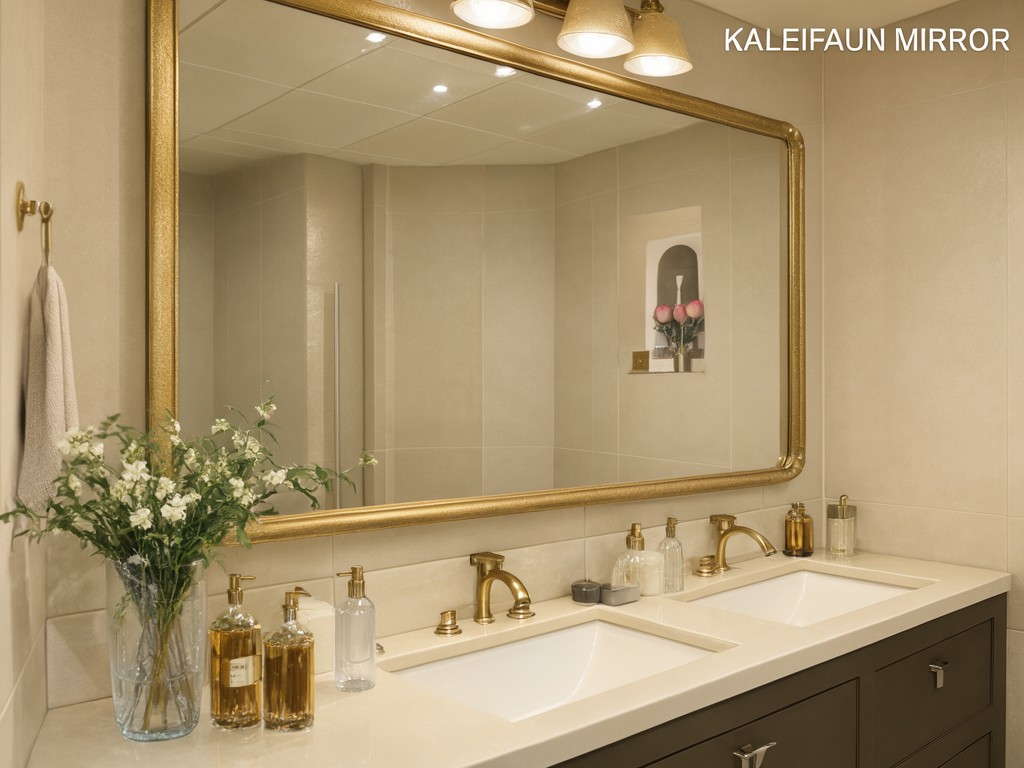
In hotel bathrooms, apartment fit-outs and coordinated vanity packages, a specified gold frame can tie the mirror to taps, lighting or cabinet hardware. A stock mirror may be quicker to buy, but its profile, frame depth or gold tone can differ from the project schedule. Custom project supply makes sense when those visible details need to match across rooms or when the available mounting arrangement does not suit the installation plan.
The cost benefit comes from repeating an approved configuration rather than repeatedly adapting unrelated stock. Consider these trade-offs before fixing the order:
- A simple, repeatable frame section usually needs less setup than a shaped or mitred profile; the latter can be justified when the room design depends on that detail.
- A larger production quantity can spread fixture and finish-approval costs across more units, but it does not remove the need to confirm colour and dimensions against the signed sample.
- An exposed metal frame may suit frequent-use bathrooms better than a decorative edge treatment whose coating or joins need extra protection during transit and installation.
Size, Weight and Specification Range
For vanity installations, the mirror width and height should be checked against the basin, wall space and fixing points on the project drawing. Glass thickness and frame construction affect finished weight, so the mounting method must be reviewed with the complete assembly—not selected from glass thickness alone. The figures below are planning references; final dimensions and mounting capacity should follow the approved product drawing and site requirements.
| Usage Level | Size and Glass Selection | Construction and Review Point |
|---|---|---|
| Private ensuite or single vanity | Set width and height to the vanity schedule; 4–5 mm mirror glass is a common starting point, subject to size and support. | Confirm wall fixing positions and finished weight, including frame and backing. |
| Hotel guest bathroom, repeated room layout | Use the room schedule to hold one approved size across the repeat order; thickness is selected against dimensions and mounting design. | Check first-article dimensions, corner alignment and finish under the intended bathroom lighting. |
| Shared or frequent-use washroom | Specify dimensions and glass build for the mounting system and expected handling; avoid choosing a large format without a weight review. | Review frame rigidity, edge protection, fixing access and replacement-unit requirements. |
For preliminary freight and fixing estimates, mirror glass contributes roughly 2.5 kg per square metre for each millimetre of thickness. A 5 mm sheet is therefore about 12.5 kg/m² before adding the frame, backing, fittings or protective packing. Use the complete packed-unit weight for handling and transport plans.
Assumptions Buyers Should Stop Making
A gold appearance does not define a single material or finish. Buyers sometimes approve a colour name but leave the process, sheen and reference sample open; the resulting units can vary visibly between suppliers or production runs. Name the substrate and finish route, and approve a physical sample under lighting close to the installation environment.
Nor does a bathroom location make every mirror edge or frame joint immune to moisture. Water can reach exposed backing or poorly protected edges, while cleaning products and repeated wiping can mark some coatings. Specify edge treatment, frame material and finish for the intended room conditions, then inspect the sample for joins, coating coverage and mirror-edge appearance.
Lower Setup Complexity
A standard frame section and a small set of repeat sizes reduce profile tooling and changeovers. This route usually suits buyers prioritising reorder simplicity and a controlled unit cost.
Project-Specific Geometry
A custom profile, corner detail or non-standard mounting arrangement can better match a fit-out, but may call for dedicated tooling, extra sample review and a longer setup window. Confirm expected repeat volume before approving that added cost.
Customisation Options and Their Limits
Finish selection is easiest to control when the buyer approves a physical sample and records the substrate, sheen and colour reference in the specification. Process choice shows up later as a difference in appearance, setup cost and suitability for the frame material. The options below are typical routes for a gold-tone frame; exact availability depends on the selected profile and order quantity.
| Finish and Colour Option | Typical Fit | Buyer Approval Point |
|---|---|---|
| Gold-tone anodised aluminium | Aluminium frame profiles where a metallic appearance is required. | Approve the actual profile sample; tone and sheen depend on the alloy and finish process. |
| Gold-tone powder coating | Metal frames requiring a selected colour and sheen across the visible surface. | Confirm coating coverage at corners and joints, plus the approved colour sample. |
| Gold-tone plated stainless steel | Selected profiles where the specified metal substrate and plated appearance suit the design. | Set the colour and sheen by sample; confirm how edges and fabricated joins are finished. |
Frame colour, profile, mirror dimensions, glass thickness, edge finish, backing and mounting hardware can be specified together. A gold-tinted mirror is a different product choice from a clear mirror with a gold frame; state which is required before quotation. Artwork or branding can also be reviewed where the project calls for it, but placement and method need approval against the mirror drawing.
Stock Availability and Reorder Planning
Stock availability depends on the frame profile, glass size, finish route and whether the order uses existing production tooling. Standard components may shorten preparation, while a new profile or non-stock gold finish adds sample and setup stages. Ask for the lead-time basis to distinguish material availability, sample approval and production time rather than treating them as one fixed period.
For repeat projects, retain the approved first article, drawing revision, finish sample reference and packing specification with the purchase record. Higher repeat volume can spread tooling and setup costs across more units; however, a large order may need earlier material planning and a longer production slot. Staged releases can help align delivery with room completion, provided the finish and component references remain unchanged.
Before placing a reorder, check whether the original profile or coating material remains available and whether the latest drawing still matches the installation schedule. A small specification change can alter the frame tooling or packing fit, so flag revisions before production booking.
Export Packaging and Handling Protection
Mirror damage in transit usually starts at an exposed corner, an unsupported edge or movement inside the carton. Packaging should restrain the frame without loading the glass, protect corners and keep finished surfaces from rubbing against fittings or adjacent units. The required carton and pallet arrangement depends on mirror dimensions, packed weight, route and the buyer’s receiving method.
Confirm whether units ship individually or in project quantities, and provide any carton markings, room references or private-label details before packing approval. For mixed-size shipments, a clear count and size identification on each package helps warehouse teams route units to the correct installation area. Request a packing review against the final assembly dimensions before bulk dispatch.
Specification Review
Send the project drawing or existing specification with target quantity, delivery schedule, gold-finish reference and mounting details. A review can identify which dimensions and finishes can use existing tooling, what needs first-article approval, and how the order volume affects setup and lead-time planning.
Request a specification review






