
customized antique gold bathroom vanity mirror solution: What Buyers Should Check Before Ordering
The build method decides whether an antique gold frame keeps its appearance in a humid bathroom and whether repeat orders match the approved sample. For a private-label programme, agree on the frame material, finish process, mirror dimensions and mounting details before production; changing these after approval can alter colour, mass and fit.
What Actually Determines Performance
| Specification | Available basis | Buyer check |
|---|---|---|
| Mirror glass | Commonly 4–6 mm, subject to size and support design | Confirm thickness, edge finish and backing protection on the approved drawing. |
| Frame construction | Formed aluminum, stainless steel or brass, according to profile and cost target | Check frame section, corner joints and finished outside dimensions. |
| Antique gold appearance | Brushed or aged metallic effect with a compatible protective topcoat | Approve a physical finish sample under consistent lighting. |
| Size and mass | Made to the agreed width, height, depth and frame profile | Set dimensional and finished-mass limits against the approved sample and drawing. |
A vanity mirror is judged by more than its reflective area. Frame geometry affects the outside size and wall clearance; glass thickness and frame material affect total mass and the load on wall fixings. If the unit sits close to a sink or shower, specify the intended bathroom exposure and confirm the finish and mirror backing system for that use.
The practical decision rule is to freeze the dimensions, mounting points and finish reference together. A change to one can shift fit or appearance across a retail range, and small differences between lots can lead to mixed displays, replacement requests or avoidable returns.
Material Options and Their Trade-offs
Frame material sets the starting point for cost, profile detail and finished mass. The selected antique gold coating must also suit the substrate; the same colour recipe can read differently on different metals or after surface preparation changes.
Aluminum Frame
A practical choice for larger formats where lower frame mass helps with handling and wall installation. It supports formed profiles, but the coating system and pretreatment need to be selected for aluminum rather than copied from a steel or brass sample.
Steel or Brass Frame
Steel can suit narrow, rigid profiles; brass may suit a metal-led appearance and formed decorative details. Both options can add mass or material cost, so compare the finished unit weight and mounting arrangement before fixing the retail specification.
Finish approval rule: Use a signed or retained physical sample as the colour reference. A screen image cannot define the metallic tone, brushing direction or degree of ageing with enough consistency for repeat production.
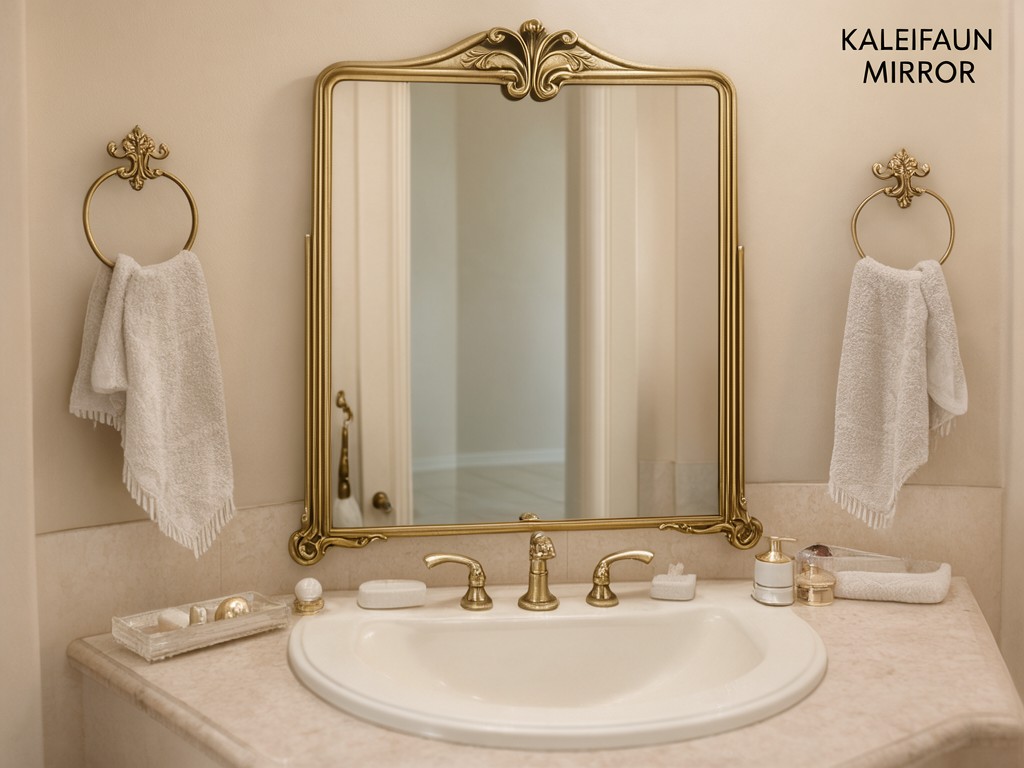
Mirror glass should be specified alongside its backing and edge treatment. Bathroom moisture can reach exposed edges or damaged backing, so a frame that covers the perimeter, sound edge finishing and careful packing all contribute to service life.
Construction Method and Its Effect on Consistency
Consistency is set at the forming stage. A repeatable frame profile and controlled corner assembly hold the outside dimensions, squareness and glass seating position; manual adjustment at final assembly can conceal a poor fit on one unit but create a visible size or alignment drift across the lot.
A typical sequence uses profile forming or cutting, corner joining, surface preparation, finish application, mirror preparation and final assembly. The exact sequence depends on the selected frame and finish system. Keep the finish process consistent across parts within an order, since separate coating runs may create differences in shade or sheen.
Process choice shows up later as fit variation, uneven corner gaps, finish wear or a mismatch between a replacement unit and the original display. For custom profiles, approve a first article before the full run and record the measurement points that define width, height, frame depth and mounting-hole location.
OEM and ODM Programme Structure
An OEM order can retain an existing mirror design while changing the finish, dimensions, packaging or retail identification to match a private-label specification. ODM development is appropriate when the frame profile, mounting arrangement or size needs a new design. Separating these scopes helps the buyer avoid paying for design changes that the range does not require.
For either route, issue one controlled specification pack: dimensioned drawing, material and finish description, physical colour sample, mounting details, allowable production variation and packaging requirements. Artwork should identify the intended label position and any carton marks before print approval.
A clear approval record matters most when a buyer reorders after a season or changes a supplier contact. Retain the approved unit or finish coupon and tie it to the product code and revision so later lots have a single reference.
How Consistency Is Held Across Batches
Lot-to-lot drift often appears first in finish tone, frame dimensions or finished mass. A shade change can split a coordinated assortment on the retail floor; a size or mass change can affect carton fit, wall hardware selection and replacement compatibility.
Factory checks should compare production units with the approved drawing and physical sample. Dimensional checks cover the outer frame, depth, diagonals and fixing locations. Weight checks can flag a material or assembly change, while visual inspection under consistent lighting helps identify colour, sheen and brushing differences.
Finish adhesion and resistance to moisture exposure can be assessed on representative samples using methods suited to the coating system. Record the sample, method and observed condition for each production run; do not treat one acceptable sample as proof that all later batches will match without process controls.
A retained reference, inspection record and batch identification give the buyer a basis to investigate a complaint. Agree in advance which characteristics require a measurement limit and which require visual comparison, rather than leaving acceptance to an informal judgement at dispatch.
Volume Planning and Lead Time
Lead time depends on whether the frame profile, finish and packaging already exist. A standard configuration usually requires less preparation than a new profile or finish match. Custom tooling, sample approval, coating trials and printed packaging can add steps before the production slot is confirmed.
For a planned launch, share the target order quantity, delivery window, destination and packaging format at quotation stage. This gives the factory a basis to check material availability and carton configuration before committing to a schedule. If demand is uncertain, discuss split shipments or a staged order, while accounting for the possibility that separate finish batches may show slight variation.
The purchase order should refer to the approved drawing and finish sample revision. Any change to size, mounting, label or carton after approval can affect production readiness and should be reviewed before the order enters the line.
Stock Availability and Reorder Planning
Stock status depends on the configuration. A standard size or frame may be available for repeat purchase, while a custom antique gold shade, profile or retail pack may require a new production run. Confirm whether available stock matches the current finish reference and packaging specification before using it to cover a launch shortfall.
Reorder against the same product code, drawing revision and sample reference. If the buyer changes one element, such as glass thickness or frame depth, check the resulting mass, mounting method and carton dimensions rather than treating the change as a colour-only revision.
For retailer replenishment, keep batch identification on the order and carton records. That trace helps separate a finish complaint from handling damage and supports a like-for-like replacement when units from different production runs appear together.
Setup, Use and Replacement Parts
Mounting hardware must suit the mirror’s finished mass and the wall construction at the installation site. Specify the intended fixing method and hardware supply scope with the order; the same mirror can require different wall anchors in different markets or building types.
Bathroom humidity can shorten finish and backing life if water repeatedly reaches exposed edges or joints. Advise end users to wipe standing water with a soft cloth and avoid abrasive pads or strong cleaners on the frame. Periodic checks of wall fixings and frame joints can identify looseness before the mirror shifts.
For a breakage or finish claim, provide the product code, batch reference, photographs and installation details. Replacement glass, frame components or mounting hardware may be available by configuration; confirm dimensions and revision before ordering parts, since near-identical sizes can have different fixing locations.
Review Your Specification Before Production
Send the target dimensions, frame material, antique gold reference, mounting details, order volume and packaging requirements for a specification review. Confirming these points against the intended private-label product can reduce batch mismatch and avoid changes after sample approval.







