
direct factory gold framed rectangle bathroom wall mirror suppliers: What Buyers Should Check Before Ordering
Most quality disputes start with a consistency gap: one shipment has a warmer gold frame, a slightly different outside dimension, or a mirror edge that shows damage after unpacking. For private-label and wholesale buyers, those differences can cost more in returns and warranty claims than a lower purchase price saves. Check how the supplier controls the glass, aluminum profile, finish and packing across repeat batches before comparing unit quotes.
Where Cheaper Alternatives Fall Short
| Inspection point | Factory check | Why it affects landed cost |
|---|---|---|
| Overall dimensions and squareness | Measure frame outside dimensions and compare diagonals with the approved drawing. | Out-of-square frames can complicate installation and drive replacements. |
| Gold finish appearance | Compare pieces under consistent lighting with the signed sample; check visible faces for shade variation, marks and coating damage. | A shade mismatch across one retail range can lead to customer complaints even when the mirror remains usable. |
| Glass and reflective surface | Inspect for edge chips, visible defects and distortion from a normal viewing position. | Glass defects found after installation are costly to inspect, collect and replace. |
| Frame assembly and packing | Check corner joints, rear fixings and protective packaging on packed samples. | Loose joints or weak edge protection can turn freight damage into warranty expense. |
A low quote often reflects less control over profile cutting, frame assembly or finish sorting. Those savings do not help if different production lots no longer match the approved sample. Ask for the inspection record format and a clear defect-handling process before placing a repeat order.
Matching the Product to the Buyer's Need
Start with the packed outside dimensions, mounting position and target retail price. A larger glass panel adds weight and raises freight exposure; a heavier mirror may also need a more protective carton and suitable wall fixings. Set these requirements before approving a gold finish sample, since frame proportions affect how the colour reads around the glass.
Thinner Mirror Glass
A thinner glass option can reduce unit weight and freight cost. Confirm the frame support and packing design for the chosen size; a saving on glass is not useful if the edge protection cannot prevent breakage in transit.
Thicker Mirror Glass
A thicker option adds weight and may suit a larger format where the frame and mounting arrangement support it. Budget for the added shipping weight and confirm the fixing method against the finished mirror mass.
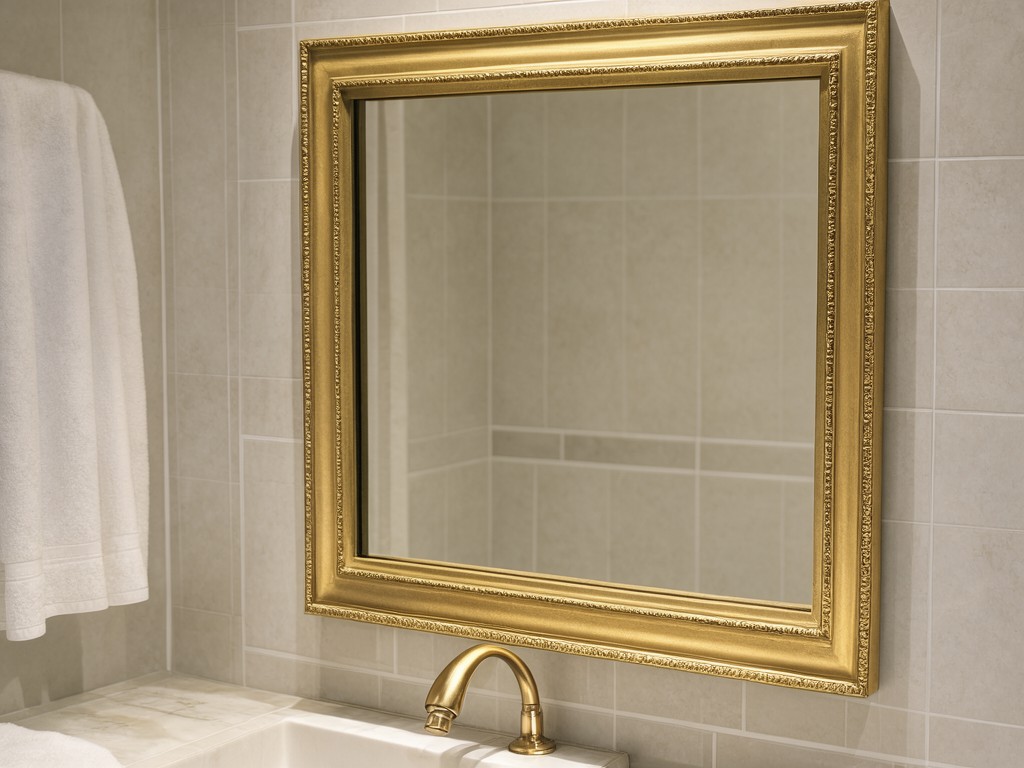
| Gold finish appearance | Typical visual direction | Buyer approval point |
|---|---|---|
| Champagne gold | Paler, less saturated gold appearance. | Approve against the intended room palette and retail sample under consistent light. |
| Warm gold | More saturated yellow-gold appearance. | Keep a signed reference sample; anodized colour can vary with the aluminum alloy and production lot. |
| Gloss level | Changes reflected highlights and the visibility of surface marks. | Confirm the finish on the actual frame profile, not only on a colour card. |
The least expensive configuration is not automatically the lowest-cost choice after sale. Compare likely breakage, finish complaints and replacement handling against the price difference, then lock the approved glass and frame specifications into the purchase order.
Quality Control and Batch Consistency
Wear shows up at the same point every season when frame edges, joints or mounting parts receive less protection than the visible face. Bathroom humidity also makes exposed mirror edges and damaged frame finishes more likely to draw complaints. Request checks at incoming glass inspection, after frame finishing, during assembly and before carton closure rather than relying on a final visual sort alone.
For OEM and private-label orders, the approved sample should define the profile shape, gold tone, glass appearance, fixing layout and carton protection. A supplier should be able to identify production lots and retain inspection records that connect those checks to the shipment. Where the bathroom environment or finish exposure is a concern, agree on a suitable finish or humidity evaluation before production; do not assume every gold finish has the same resistance.
Batch approval rule: use one signed physical sample and a dimensioned drawing as the release reference. If the aluminum alloy, finish batch, glass source or assembly method changes, require written notice and reapproval before the next lot ships.
Stock Availability and Reorder Planning
The complaint that repeats across reorders is a product that looks close to the first shipment but does not match it in frame shade, dimensions or packing. Gold anodizing may depend on the aluminum profile and production lot, so ask whether the supplier can reserve compatible material or must restart sourcing for each order. Confirm the reorder process before a launch, particularly if retail replenishment depends on matching existing stock.
Lead time depends on finished-goods stock, glass cutting, frame finishing and carton availability. A stock mirror may ship sooner, but private-label labels, inserts or a non-stock dimension can add production steps. Agree on the reorder quantity, forecast window, carton artwork deadline and any available spare mounting parts in the same schedule. Ask how the supplier will identify a backorder or material change before it affects your delivery date.
Setup, Use and Replacement Parts
Before installation, check the wall type, mirror weight and fixing points against the supplied instructions. Use suitable wall anchors for the substrate; the included fixing hardware may not suit every wall. Keep the frame clear of abrasive cleaners and standing water, and dry the edges after cleaning so moisture does not remain against exposed glass or finish.
For service claims, record the carton label or batch code, damage location and installation condition. Ask the supplier which items can be supplied separately—such as mounting brackets, screws or a complete replacement mirror—and which require replacement as a full unit. Spare-part availability depends on the frame profile and production run, so confirm retention periods and claim terms in writing rather than assuming a later match.
Discuss Your Mirror Program
Share your target dimensions, gold finish reference, order volume and packaging requirements for a project review. A factory discussion can clarify sample approval, batch checks, reorder timing and the cost trade-offs that matter after the mirror reaches the customer.







