
durable gold bathroom mirror top factory: What Buyers Should Check Before Ordering
Scope of Supply and Physical Form
| Order stage | Indicative quantity basis | Planning lead time |
|---|---|---|
| Pre-production sample | 1–2 units; sample and freight charges quoted separately | Usually 2–4 weeks after drawing and finish approval |
| Production order | Often 50–100 units per size and finish; confirm at quotation | Usually 30–45 days after sample sign-off and deposit |
| Repeat order | Depends on frame profile, glass size, and finish-batch minimums | Confirmed against material availability and the approved specification |
The build method decides how well the mirror keeps its dimensions, edge protection, and gold tone from one production lot to the next. Supply can include a float-glass mirror, sealed reflective backing, aluminum frame with a gold anodized finish, mounting hardware, and export packaging. Confirm whether the quote includes all of these items or covers the mirror assembly only.
For bathrooms, moisture exposure at the glass edge and frame joints matters as much as the face appearance. A frame can hide minor edge variation, but it cannot correct a mirror cut out of square. Agree on the finished outside dimensions, corner construction, orientation, and hanger position before the sample is released.
Specification Range and Customisation Limits
Process choice shows up later as differences in frame fit, finish shade, and packing dimensions. Common project specifications use mirror glass around 4–6 mm thick and finished sizes from compact vanity formats to full-length panels; the approved drawing, rather than a general range, should control each order. Lock the glass thickness, frame profile, corner detail, mounting points, and gold finish reference in the same revision.
A finish name such as “gold” is not a usable colour limit on its own. Approve a physical finish sample under agreed lighting, then retain that sample as the comparison reference for repeat lots. Small shade drift across separate finish runs can make a coordinated bathroom range look mismatched at retail.
- Specify finished width and height, corner radius, and allowable dimensional variation on the drawing.
- Record glass thickness, edge treatment, backing seal, frame alloy or profile, and hanger arrangement.
- Treat changes to profile, finish chemistry, or glass thickness as specification changes; each can affect fit, weight, tooling, and reorder timing.
Segment-Specific Requirements
Hotel and multi-unit residential buyers often need several mirror sizes to share one gold tone and frame language. A shade difference between vanity mirrors delivered in separate lots can trigger room-by-room replacements, extra installation labour, and complaints about the overall bathroom set. Retail private-label buyers also need carton labels and product identifiers to match their assortment records.
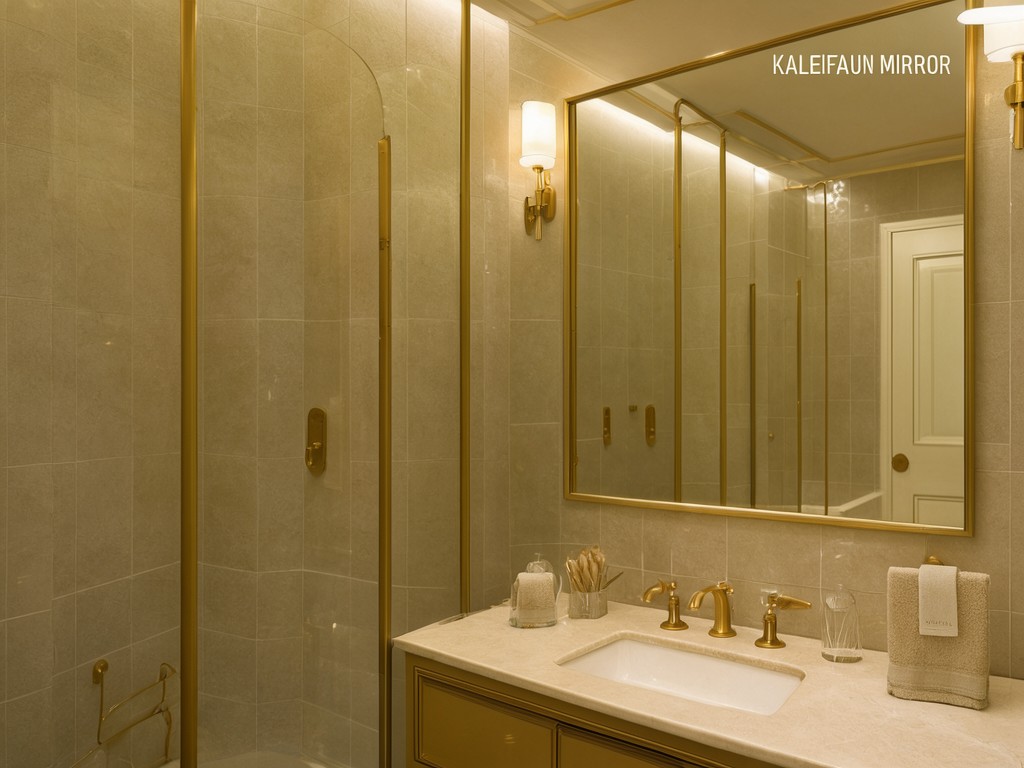
For projects with frequent replenishment, retain the approved frame profile and finish reference, and tie each lot to its glass and finish records. Batch traceability helps identify whether a mismatch came from the glass size, the frame run, or the finish batch before replacement stock is ordered.
Working as a Production Partner, Not a Catalogue Supplier
Private-label programs usually need an existing mirror specification repeated accurately, not a new design exercise. Share the current drawing, approved sample, finish reference, packing requirements, and any installation constraints. A production review can then flag conflicts such as hanger positions that interfere with the frame profile or carton dimensions that leave too little edge protection.
Gold Anodized Aluminum
Anodizing forms the colour finish on the aluminum surface. It suits programs that value a consistent metallic appearance and a defined frame profile. The alloy and surface preparation affect the final shade, so both should remain controlled across replenishment orders.
Gold Powder-Coated Aluminum
Powder coating creates a separate surface layer and can offer a broader choice of gold tones. It can change the edge appearance and profile fit, so it is not a direct substitute for an anodized sample. Choose one finish route for the approved production specification.
A clear sample-approval checkpoint reduces variation before volume production. Keep the signed drawing and approved finish sample with the purchase order; late changes to either can require new material, a revised sample, or a different production slot.
How Consistency Is Held Across Batches
Consistency is set at the forming stage. Frame cutting and joining determine outside dimensions and squareness; glass cutting determines the gap between the mirror and frame. If either drifts, assemblers may force the fit, which can stress corners or leave uneven reveals. Those defects can turn one production variation into a repeat-order problem.
A practical inspection plan checks dimensions, diagonal measurements, frame joints, hanger placement, glass appearance, backing coverage, and unit weight against the approved sample or drawing. Visual checks should compare gold tone under consistent lighting. Finish adhesion and surface wear can be assessed on production samples where the buyer’s specification calls for those checks; acceptance limits should be agreed before the order.
Ask for lot identification on cartons and a retained production sample for each approved finish run. Without a traceable reference, a colour or size complaint can be difficult to separate from warehouse lighting, installation alignment, or damage in transit.
Setup, Use and Replacement Parts
Damp rooms expose the mirror’s edges, backing, frame joints, and mounting hardware to repeated humidity changes. Install to the specified wall fixing method, keep the frame clear of standing water, and avoid cleaners that can attack the finish or backing seal. Abrasive pads can mark a metallic surface even when the mark is difficult to see under showroom lighting.
Replacement planning depends on whether the damaged component is the glass, frame, hanger, or complete assembly. For a private-label range, confirm which parts can be supplied separately and whether a replacement glass panel can be fitted without changing the approved frame. Record the product code and original dimensions before requesting parts.
Ordering, Tooling and Lead-Time Questions
Can an existing frame profile match our approved mirror without new tooling?
Send the profile drawing or a physical sample for review. A close catalogue match may still differ in wall thickness, corner geometry, or hanger clearance, so confirm the finished assembly before committing to quantity.
What changes the minimum order quantity?
Separate sizes and gold finishes can require separate material and finish runs. Combining quantities under one size and finish may make planning more efficient, while a custom profile or low-volume colour can raise the minimum. Confirm the MOQ by SKU rather than for the overall purchase order.
When does the production lead time start?
The production clock generally starts after drawing and finish approval, deposit confirmation, and agreement on packaging. Sample changes, unavailable frame material, or mixed-SKU orders can alter the schedule; ask for the confirmed ship window on the order acknowledgement.
Discuss Your Mirror Specification
Send your drawing, target quantity by size, finish reference, and packing requirements for a production review. Contact the team to discuss your project before sample approval and production scheduling.







