
Factory Price Custom Gold Arch Mirror Exporter - Bulk Supply and Specification Guide
Cost and durability pull in opposite directions once a gold finish, custom arch profile and export carton all enter the specification. A lower-cost frame can suit a compact retail mirror, while a larger wall mirror places more demand on profile stiffness, corner joints and glass support. Agreeing the outline, finish sample and mounting arrangement before production helps a private-label buyer hold the design without paying for an unnecessary redesign.
For an importer, the key is to define the visible dimensions separately from the overall dimensions. The drawing should identify glass thickness, arch radius, frame face width, gold tone, backing and hanging hardware. A signed sample or approved finish reference then gives production a practical target for repeat orders; without it, “gold” can cover noticeably different shades and gloss levels.
Scope of Supply and Physical Form
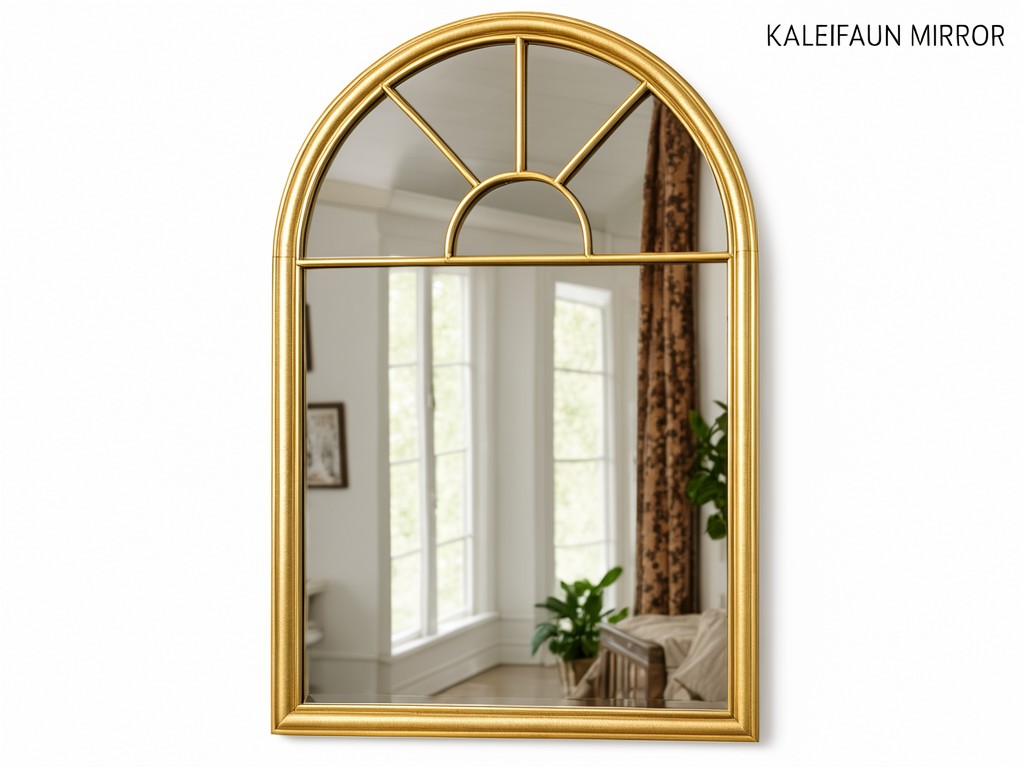
The product is a framed wall mirror with a vertical rectangular body and a rounded arch at the top. Bulk supply can follow a buyer’s existing drawing or approved reference sample; the frame profile, glass, backing, hanging fittings and retail pack are specified as one item.
- Specify overall width and height, visible mirror area, top-curve radius and frame face width.
- Choose the mirror glass and backing arrangement, plus wall hooks, brackets or another agreed mounting method.
- Set the gold tone, surface sheen, logo placement and carton marks against approved artwork or physical references.
Design Constraints Behind the Specification
A clean arch depends on a controlled relationship between the curve, the frame profile and the glass edge. If the radius changes but the frame face width does not, the visible border can look uneven around the crown. The drawing should show whether dimensions refer to the outer frame or the glass, and should mark the radius or provide a full-scale template for non-standard curves.
Mounting position also affects the build. A narrow frame may preserve more mirror area, but it leaves less material for concealed hardware; a wider profile gives more room for attachment points and can add weight. For private-label repeat orders, record the approved drawing revision, finish reference and hardware position together so a later batch does not rely on interpretation of the product name alone.
Materials and Construction Trade-offs
Material selection sets the balance between frame cost, finished weight and finish choice. The table compares common routes; the final selection depends on dimensions, the approved gold sample and the buyer’s retail price point.
| Construction choice | Cost and finish implications | Best fit |
|---|---|---|
| Formed aluminum profile with gold anodized finish | Lower frame mass; the available tone and sheen depend on the profile and finish process. Form the profile before finishing to avoid damage at bends. | Wall mirrors where reduced shipping weight matters and the finish can be matched to an anodized sample. |
| Formed steel profile with gold coating | Adds frame mass and may raise freight cost; powder coating or another agreed coating can offer a different surface appearance from anodized aluminum. | Designs that call for a heavier frame feel or a specified coating appearance. |
| Mirror glass and backing | Mirror glass thickness affects weight and support requirements. A backing film or board adds material and should be defined in the quotation. | Select by panel size, intended mounting and the buyer’s handling requirements. |
Construction Method and Its Effect on Consistency
Production typically starts with the approved drawing and finish reference. The glass is cut to the specified arch, its edges are finished, and the mirror coating and backing are prepared to the agreed construction. The frame profile is formed to the same outline, finished, then joined to the mirror assembly with the specified hardware and support points.
Consistency depends on fixing the dimensions that affect appearance and fit: outer size, arch radius, frame width, glass-to-frame clearance and hanger location. Buyers should approve a production sample or a first-piece reference before the full order proceeds. A tolerance schedule should identify which dimensions are controlled and where a small variation is acceptable, rather than treating every outline measurement as interchangeable.
Measured Performance in Real Use
For a wall mirror, buyers chiefly judge flatness of the reflection, secure frame-to-glass support, finish appearance and whether the hanging hardware suits the finished mass. A larger glass panel needs appropriate support and protective packing; a thin or poorly supported assembly is more exposed to flex and edge damage during handling. Confirm the intended wall fixing and installation surface with the buyer, since the mirror’s hardware does not establish the load capacity of the wall.
Gold finishes can show scratches, rub marks or shade variation more readily than a buyer expects from a product image. Agree a physical finish sample and define the acceptable visual range under normal retail lighting. For repeat supply, retain the approved sample or a documented colour reference alongside the order specification.
Size, Weight and Specification Range
Production dimensions are drawing-led. Common requests fall around 400–900 mm wide and 1,200–2,000 mm high, but the usable range depends on glass thickness, frame section, hanging arrangement and carton limits. Larger or wider panels need a separate review of frame support and freight packaging.
Finished weight should be quoted from the approved dimensions and selected materials, not estimated from the outline alone. Include glass thickness, frame metal, backing and fittings in the weight basis, and distinguish product weight from packed weight for freight planning.
Matching the Product to the Buyer's Need
Keep the existing product design and adjust only the variables required by the private-label specification. Two practical routes are:
Match an Existing Specification
Send the current drawing, target dimensions, approved gold reference, hardware details and packaging artwork. This route limits changes to the existing design and supports like-for-like reorder discussions.
Adapt a Reference Sample
Provide the sample with a marked list of required changes. Confirm which details must remain fixed, such as arch proportion or frame width, and which may change, such as overall size, finish tone or carton label.
Before a bulk order, align the drawing revision, finish approval, tolerances, artwork and sample sign-off in one quotation record. That gives both sides a clear basis for production and reorder pricing.
Packing, Marking and Freight Configuration
Arch corners and exposed glass edges need protection from contact inside the carton. Packing should be set against the mirror’s dimensions, finished weight and shipment method, with the packed sample approved before the order is closed.
- Confirm individual protective wrapping, corner protection, inner supports and outer carton strength for the chosen freight route.
- Provide carton dimensions and gross weight for the buyer’s freight booking; confirm whether each carton carries one mirror or a consolidated pack.
- Approve private-label artwork, product identifiers, handling marks and destination-market wording before print production.
Request a quotation review with the drawing or sample, target quantity, delivery destination and packaging brief. The review can confirm which details match the current design, which need approval, and how material and carton choices affect the unit price. Send your specification for quotation review.







