
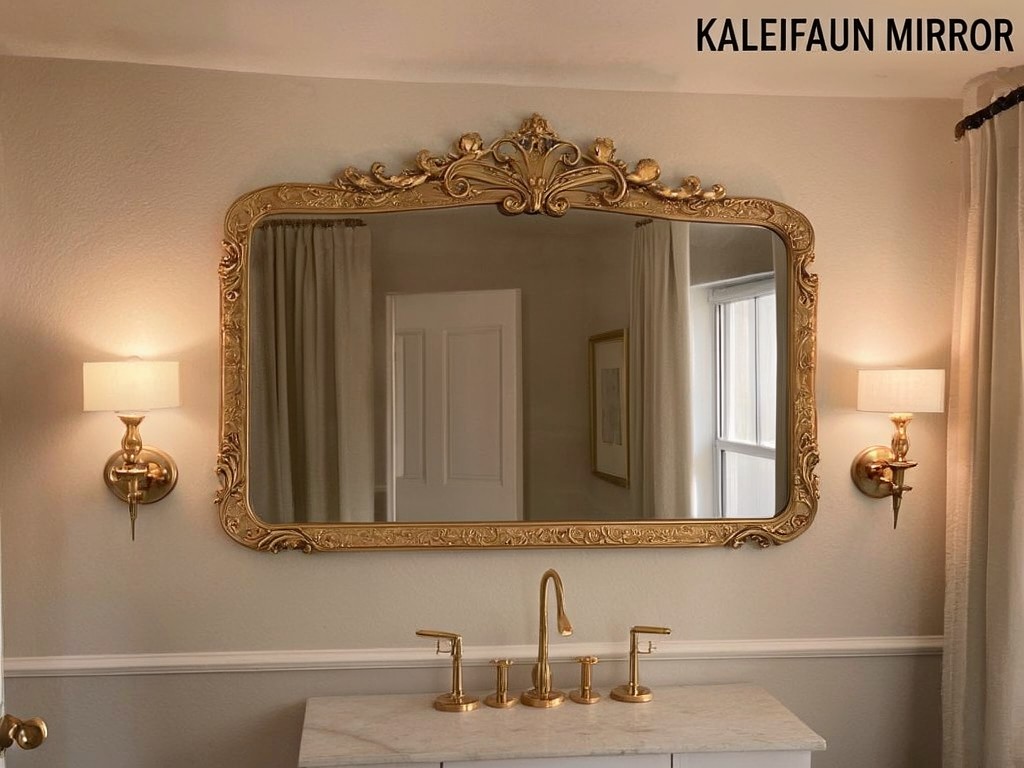
Low price gold wall mirror factory price: Specification, Ordering and Quality Notes
How It Is Built and What That Changes
Process choice shows up later as variation in frame dimensions, mirror fit and gold shade between production lots. A typical value-focused build uses cut float mirror glass with a protective backing, set into a molded polystyrene frame or a routed MDF frame. The frame receives a gold-colored coating or metallic film; the chosen substrate and finish route shape both the unit price and the way the surface looks under retail lighting.
Molded polystyrene keeps frame weight and forming cost down, but its profile and coating appearance depend on mold condition and finish control. MDF allows a more solid, routed profile and a paint-based finish, though added material and finishing steps usually raise cost and shipment weight. Glass thickness, frame width and hanger placement also affect the finished unit, so substitutions made to lower a quote can change the approved appearance or fit.
Typical size options
300 × 400 to 600 × 900 mm
Mirror glass
Usually 3–4 mm
Finished unit weight
Often about 2–8 kg
Frame material
Molded PS or routed MDF
Keep the approved reference intact. If the reorder must match an existing item, confirm the glass size, overall frame size, profile depth and gold finish against the approved sample. A nominal size alone does not lock these details.
Where This Product Beats Standard Alternatives
For price-led retail programs, a molded frame can deliver a decorative gold look without the cost of a heavier timber or metal frame. That saving is most useful when the retailer accepts a standard profile and size. Changing the frame design, coating specification or glass dimensions to chase a lower unit price can create a different product, not a like-for-like replacement.
Gold finish drift is a frequent source of mismatch across replenishment lots. Differences in coating formulation, application and substrate color can make adjacent mirrors look warmer, cooler or more reflective. Keeping the finish reference and material route fixed reduces that risk; it does not make separate production lots identical under every light source. A buyer should approve the expected shade range before the first bulk order.
The lower-cost frame also has limits. A thin molded profile may show marks or coating wear sooner at exposed corners than a deeper, painted MDF profile. For a collection where the frame is handled often or sits close to competing metallic finishes, the added frame and finishing cost may be justified by a closer visual match and a more substantial feel.
How to Choose Before Requesting a Quote
When matching an existing private-label item, compare the full build rather than the product title or outer dimensions. A change from a molded PS frame to MDF alters the weight and surface character; a change in glass size changes the visible glass-to-frame proportion. Send the factory a drawing or physical reference and identify which dimensions and finish details are fixed.
| Construction choice | Cost and product effect | Confirm before quoting |
|---|---|---|
| Molded polystyrene frame with gold-colored coating or film | Usually the lower-cost, lighter route for a standard profile. Finish appearance depends on the specified gold tone and application. | Profile dimensions, coating or film reference, corner appearance and hanger position. |
| Routed MDF frame with applied gold paint | Allows a solid, routed profile and a paint-based finish. Material and finishing steps generally add cost and weight. | MDF section, edge treatment, paint sheen and approved gold shade. |
| 3–4 mm mirror glass, subject to size and design | Glass thickness affects weight and the way the mirror seats in the frame; the frame must suit the selected glass. | Glass cut size, overall dimensions, edge finish and backing arrangement. |
| Common retail sizes from 300 × 400 to 600 × 900 mm | Larger formats use more glass and frame material and raise finished weight; actual weight depends on the full configuration. | Glass size versus outside size, orientation and target finished weight. |
Ask for the quote to identify the selected materials and finish route. If those details remain open, two prices may describe different mirrors, and a later reorder can bring a visible change in frame profile, unit weight or gold tone.
Assumptions Buyers Should Stop Making
A low unit price is not proof that the quoted mirror matches a prior order. These assumptions commonly turn a small specification gap into a mismatch claim or a costly corrective reorder:
- “Gold” is a complete finish specification. It is not; define the approved shade, sheen and finish reference.
- The listed size refers to the glass. Confirm whether it means glass dimensions or the outer frame dimensions.
- A sample and a bulk reorder will look identical without a retained reference. Agree how the approved sample or finish reference will be used for repeat orders.
- A lighter mirror is automatically a better-value item. Lower weight may reflect thinner glass, a lighter frame or both, so compare the construction before comparing prices.
- A change in frame material is only a sourcing detail. It can change profile definition, weight, surface appearance and how the gold finish reads beside the glass.
Who Uses It and Where It Matters
Importers and private-label product teams select gold wall mirrors when a decorative finish needs to sit within a fixed retail price point. The product is often bought as a coordinated home-accessory item, so shade consistency across several sizes can matter as much as the appearance of a single mirror.
- Home décor retailers use standard sizes for bedroom and dressing-area assortments, where repeat orders need to keep a consistent frame profile and gold tone.
- Furniture and home-accessory distributors may combine multiple mirror sizes in one collection; coordinated dimensions and finish references help avoid visible variation on the same display.
- Hospitality buyers may specify mirrors for guest rooms or vanity areas, where the frame finish must match other fixtures and replacement units should fit the original wall position.
For projects with frequent handling or a requirement to match other metallic surfaces, confirm the finish against the actual room or product references. A gold-colored mirror frame will not necessarily match a gold-colored light fitting from another supplier.
Stock Availability and Reorder Planning
Stock availability depends on the selected size, frame profile and gold finish. A standard size and existing frame may have a shorter replenishment path than a new profile or a finish that needs a separate material setup. Confirm current availability against the exact specification rather than assuming that a similar-looking stock item is an approved substitute.
For repeat orders, retain the approved sample details, drawing and finish reference with the purchase specification. Record glass dimensions separately from overall frame dimensions, and keep the glass thickness, frame material and hanger position fixed unless the product manager approves a change. This makes lot-to-lot differences easier to identify before they reach retail and reduces the risk of returns caused by a visible mismatch.
If demand is uneven, discuss whether the factory can reserve the agreed frame or finish materials for planned reorders. Availability and reservation terms vary by supplier and specification, especially when the frame profile is not part of the regular range.
Ordering, Tooling and Lead-Time Questions
A standard frame profile usually avoids new tooling charges; a custom profile may require a mold or forming tool, with cost and lead time dependent on the design and supplier process. A sample approval stage is useful where the gold shade, frame depth or glass-to-frame proportion must match an existing range.
Can the Factory Match an Existing Private-Label Mirror?
Usually, if you provide a physical sample or a dimensioned drawing with clear finish references. Confirm which details are mandatory, including outside size, glass size, frame profile, glass thickness, hanger position and gold sheen. The factory should identify any material substitution before the sample is approved.
When Does a New Frame Design Need Tooling?
A new molded polystyrene profile can require a dedicated mold, while a standard profile may be available without new tooling. Routed MDF designs follow a different production route and may not use the same mold setup. Share the profile drawing early so the supplier can confirm the process, tooling charge and sample schedule.
What Changes the MOQ and Lead Time?
A stocked frame, standard size and existing finish generally involve fewer setup decisions than a custom profile or specially matched gold tone. MOQ and lead time depend on the factory’s material availability, order mix, sample approval and production schedule; request those terms against the final specification, not a preliminary product name.
What Should Be Supplied for a Branded Order?
Provide the logo artwork and placement, any label or product-marking requirements, the approved gold reference and the mirror drawing. State whether branding applies to the frame, a label or other product literature so the supplier can confirm the available method and any setup cost.
To request a sample, send the target outer dimensions, mirror size, frame material preference, gold finish reference and expected order quantity. Contact the factory to discuss a sample request and confirm a quote against your private-label specification.







