
Matte gold bathroom mirror distributor: Specification, Ordering and Quality Notes
The Problem Buyers Keep Paying For
When a brand extends an existing range, the first complaint is often not a broken mirror; it is a replacement unit whose gold tone or frame proportions differ from the approved sample. In a bathroom, condensation then exposes weak points: finish wear at joints, corrosion around unsealed edges, or backing damage that appears as dark spots. Buyers reduce repeat claims by locking the glass, frame, finish reference and inspection method together before the reorder.
A matte gold bathroom mirror distributor needs batch controls as well as a sellable design. A small change in glass thickness can alter weight and mounting requirements; a finish adjustment can shift the apparent colour under warm retail lighting. Specify both the functional build and the visual acceptance sample, rather than relying on a colour name alone.
What the Design Has to Balance
| Choice | Buyer trade-off | Decision rule |
|---|---|---|
| 4 mm mirror glass | Lower glass mass can ease handling and freight, but large formats need careful backing and support design. | Confirm panel size, mounting points and intended wall fixing before approval. |
| 5 mm mirror glass | Adds weight and material cost; it may suit a larger panel where a firmer assembly is preferred. | Use when the frame and wall hardware are sized for the added load. |
| Matte gold anodized aluminum | Finish appearance depends on the aluminum and process; matching a previous lot requires a retained reference. | Approve production against a physical sample under agreed lighting. |
| Matte gold powder-coated aluminum | Can offer broader colour and texture selection; coating build and edge coverage need process control. | Choose when the approved finish target and bathroom exposure are stated clearly. |
A narrow frame gives a lighter visual profile but leaves less room to conceal glass edges and retain the panel. The frame section, glass thickness and mounting arrangement should therefore be reviewed as one assembly, not as separate catalogue selections.
What Actually Determines Performance
Bathroom exposure is repeated condensation, damp air and temperature change—not occasional splash alone. Define the mirror backing, edge protection, frame finish and joint details for that service condition; appearance at pack-out does not show how an exposed edge will behave after installation.
Silvered mirror glass uses a reflective metal layer with protective backing coatings. Scratches or chips at the edge can give moisture a route beneath the backing, so edge finishing and careful handling matter alongside the coating system. The rear surface also needs protection from contact with unsuitable adhesives or packing materials.
For the frame, powder coating and anodizing do not produce identical colour or texture. Set a master sample, define the acceptable visual range, and keep the selected process unchanged on repeat orders unless the buyer approves a revised sample. A finish name such as “matte gold” is not a batch-control specification by itself.
Requirements by Buyer Segment
Brand Product Managers
For a range extension, match the existing product’s outer dimensions, frame profile and finish appearance before changing glass or hardware. A modest price reduction can cost more in returns if the substitute changes the mirror’s visual proportion or mounting position.
Procurement Officers
For repeat purchasing, use a controlled specification with revision status, approved sample identification and agreed packaging details. Compare quotations on the complete delivered configuration, including wall hardware, protective packaging and any retail labelling—not on mirror dimensions alone.
For hospitality or multi-unit residential projects, the buyer should also confirm installation orientation and wall-fixing compatibility. A mirror that arrives intact but requires unplanned site adaptation can still create a costly project complaint.
Working as a Production Partner, Not a Catalogue Supplier
- A production partner confirms the glass size, edge finish, frame section, finish route and mounting arrangement before quoting the repeatable build.
- For OEM supply, the buyer can provide brand artwork, packaging files and a controlled finish sample; the factory reviews them against the product geometry and packing method.
- For ODM development, sample approval should cover the assembled mirror and its mounting hardware. A frame-only finish sample cannot confirm edge concealment, glass retention or final appearance.
- If a component or finish must change because of material availability, hold the affected order for approval rather than substituting silently. That decision protects colour continuity and reorder records.
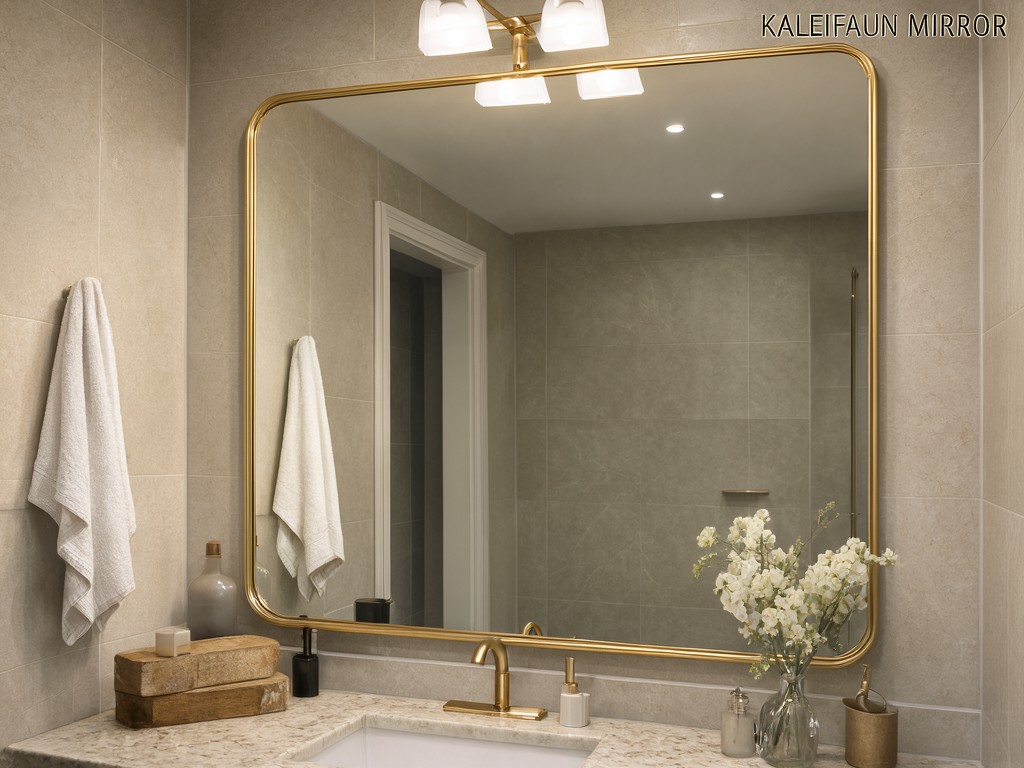
On a club programme that reorders twice a season, the same principle applies to a distributor’s replenishment cycle: retain the approved build details and compare each new lot with the accepted reference before shipment release.
Quality Control and Batch Consistency
During a private-label launch with a fixed ship date, inspection needs to catch visual and assembly defects before retail cartons close. The checks below should be agreed for the order and recorded by batch; acceptance limits depend on the approved drawing and sample.
| Area at risk | Likely complaint | Practical factory check |
|---|---|---|
| Mirror image and glass edges | Distortion, chips, scratches or visible dark marks near an edge. | Inspect reflection and edges under consistent lighting; verify dimensions against the approved drawing. |
| Matte gold frame surface | Shade drift, gloss variation, coating marks or exposed areas at corners. | Compare with the retained finish sample and inspect corners, joints and contact points. |
| Frame-to-glass assembly | Loose fit, uneven reveal, glass movement or a frame that sits out of square. | Check assembly alignment, retention and mounting points on finished units. |
| Carton and transit protection | Corner damage, glass breakage or finish abrasion on arrival. | Review cushioning, edge protection and carton restraint for the actual shipping configuration. |
Where a buyer requires humidity or coating exposure checks, define the method and acceptance criteria before production. A test without agreed conditions may produce a result that cannot be compared with the next batch.
Capacity, Tooling and Scheduling
Production timing depends on the approved size, frame profile, finish route, glass availability, packaging and order quantity. A standard profile with an established finish sample usually needs fewer development steps than a new frame section or a colour matched from a digital image alone.
Tooling needs vary by design. A new extrusion profile or dedicated forming component may add setup work, while changing only carton artwork may not affect the mirror process. Confirm whether the quoted schedule begins after drawing approval, finish sample approval, deposit, or all three; that start point prevents avoidable ship-date disputes.
For repeat orders, reserve capacity against a frozen specification and forecast. If the buyer changes dimensions or finish after materials are committed, the supplier should identify the effect on cost and dispatch before proceeding.
Ordering, Tooling and Lead-Time Questions
- What should I send for a repeat-order quote? Provide the approved drawing or dimensions, glass thickness, frame profile, finish reference, mounting details, quantity and packaging requirements. Include the previous order or sample identification if the new batch must match an existing range.
- Does a matte gold colour image confirm the finish? No. Screen images vary by display and lighting. A physical sample or retained production reference gives a more useful basis for colour and surface comparison.
- When can the factory confirm MOQ and lead time? After review of the frame construction, finish process, glass size, packaging and any new tooling. Sample approval and material availability can also affect the schedule.
- Can private-label artwork be added to the order? Yes, subject to the agreed carton or product labelling area. Submit final artwork with the required language, barcode and handling information before packaging approval.
- How should freight protection be specified? Confirm unit separation, corner protection, carton strength and pallet configuration against the selected shipping route. Packaging approval should use a packed unit, not a loose mirror alone.
Discuss Your Mirror Programme
Share your target dimensions, finish reference, order volume and ship window for a production review. We can assess the repeat-order controls, sample route and packaging requirements against your project.
Discuss your project






